The city is testing an AI tool to support its understaffed outreach services department, but advocates worry it won’t be accessible to many vehicle dwellers.


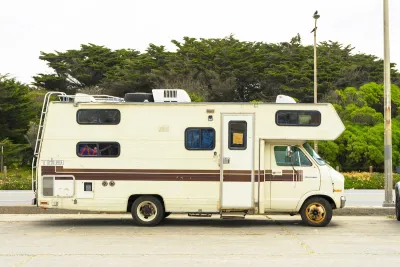
San Francisco is enacting a two-hour parking limit on large vehicles (defined as vehicles longer than 22 feet or taller than 7 feet) to prevent people from living in them on city streets, reports David Sjostedt in The San Francisco Standard.
To help residents navigate the new regulations, the city is “exploring the launch of an AI chatbot,” with few other details available from the mayor’s office. “The Standard has learned that at least two San Francisco homelessness nonprofits — Larkin Street Youth Services and Tipping Point Community, founded by Mayor Daniel Lurie — are testing AI tools that could make them more efficient.”
Larkin Street CEO Sherilyn Adams defended the move, saying “It’s still a human-to-human interaction, and it’s still the case manager in making the ultimate determination.” However, advocates worry the tool is another way to dehumanize the inherently interpersonal process of social work. Additionally, many homeless people don’t have smartphones and require long-term relationships to engage with social workers.
“Several RV dwellers confirmed to The Standard that outreach workers had informed them of the impending ban and permitting process, but most remain skeptical of the promises of permanent housing.” Others who only speak Spanish say the city has not engaged in meaningful Spanish-language outreach.
FULL STORY: City rolls out its parking ban for RV dwellers. Then asks AI to explain it

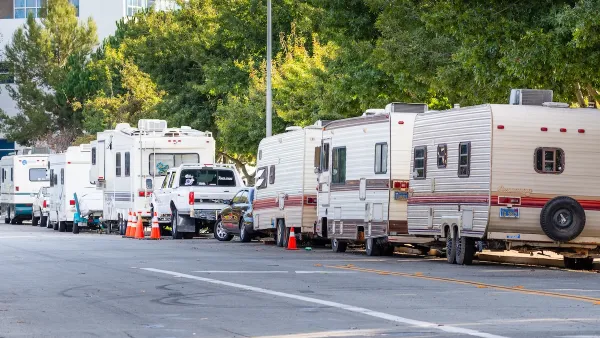
San Francisco Could Redefine RVs to Restrict Living in Vehicles
The SFMTA is considering expanding the definition of RVs to include mobile homes, box trucks, and other campers.
San Francisco Could Ban Overnight RV Parking
Advocates say the proposal would further destabilize the lives of people forced to live in their vehicles.
Judge halts 'hasty' HUD changes to homelessness grants
Service providers said the sudden changes would have imperiled thousands of Americans and forced more people into homelessness.

The state-sanctioned urbicide of Austin
People don’t kill cities. Freeways do.

US to reduce Colorado River water deliveries to Mexico
A new Colorado Treaty amendment reduces Mexico’s Colorado River water allocation by 250,000 acre feet.

New Jersey’s second-largest city bans standalone data centers
Jersey City will continue to allow co-location facilities, such as those meant for research institutions that store their own data.

Amtrak not solely to blame for New Jersey commuter rail's unreliability, report finds
A new study from the Garden State Initiative found that NJ Transit’s budget grew 20% across a 4 year period, but reliability declined significantly over the same period.

EPA erases limits on planet-warming pollution from power plants
Under Monday’s plan, power plants would still have some limits on how much mercury, arsenic and other contaminants they can emit.

Phoenix announces new on-demand transit service, more frequent RAPID buses
Both new services will launch in October, and are part of Phoenix's Project Effective Access Solutions for Easing Congestion.

FREE Course: Walkable City 1: Why Walkability?
After describing his path towards focusing on walkability as the essence of good planning, Jeff Speck marches through his five principal reasons for making more walkable places.
Reinventing Malls: Planning Alchemy—Turning Gray Fields Into Gold
The course focuses on the opportunities and imperatives that shape reinvention of mall sites.

Eagle County Government
Harvard University Graduate School of Design
Nashville Planning Department
The Architects Foundation
University of Cincinnati Online
The Pocatello Development Authority
The Urban Renewal Agency of the City of Pocatello
Journal of the American Planning Association