High housing costs are driving more people under 35 to move back in with their parents, in many cases delaying other milestones like marriage and children.


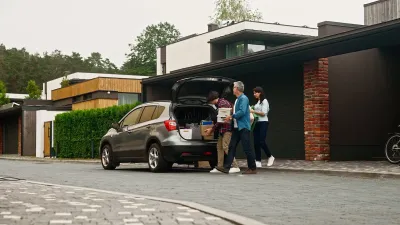
More young people are living with their parents due to high housing costs, reports Rohan Shah in Fortune. Today, about 1.5 million or 6.3 percent more Americans under 35 live at home than ten years ago.
Over the past decade, urban rents have climbed about 4% per year, while wages for full-time workers have increased by only 0.6% annually. That means it’s harder than ever to live in a big city on the typical salary — especially if you’re a new graduate without much work experience.
This is largely due to an inadequate housing supply in the places it’s needed most. As Shah points out, most cities restrict development (or make it prohibitively expensive) through land use and zoning regulations. By contrast, Austin, Texas, which has significantly relaxed its zoning codes in the last few years, has seen a boom in construction and a drop of as much as 22 percent in rents. In Austin, just 6 percent of working adults live with their parents. In Los Angeles, that number is 20 percent. Even in nearby San Antonio, Texas, 14 percent of young adults live with their parents.
Shah outlines the potential benefits and drawbacks of living with parents. People can save money on rent and save up to buy a home. “Indeed, homeownership rates among those 25 to 34 have risen slightly since 2016.” However, the arrangement can also hamper social relations and offer less access to good jobs. “It’s possible high rents translate into high barriers to adulthood, too.”
FULL STORY: https://fortune.com/2025/10/08/does-gen-z-live-with-their-parents-housing-study-15-million-more/

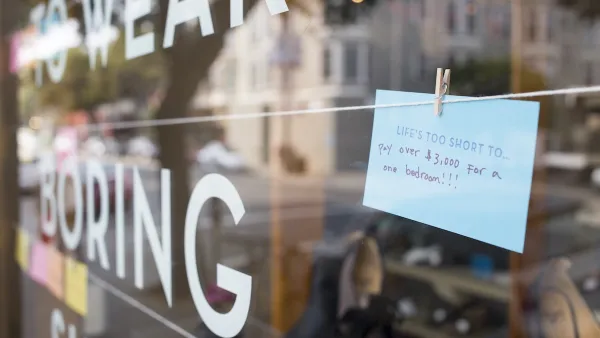
San Francisco Rents are Spiking Faster Than Anywhere Else in the US. Here's Why.
Resurgent demand and a low vacancy rate is driving up rents in San Francisco despite national rent prices dropping by 1 percent since last year.
‘Residual Income’ Study Reveals Two-Thirds of Working Age Renters Struggle to Make Ends Meet
Half of U.S. renters are considered ‘rent burdened,’ but an even larger number of households have a hard time affording basic necessities after rent.
US Rents Squeezing Low-Income Tenants
Despite a recent — and slowing — apartment construction boom, renters at the lower end of the income scale are still struggling to find housing.

Planetizen Federal Action Tracker
A weekly monitor of how Trump’s orders and actions are impacting planners and planning in America.

The state-sanctioned urbicide of Austin
People don’t kill cities. Freeways do.

US to reduce Colorado River water deliveries to Mexico
A new Colorado Treaty amendment reduces Mexico’s Colorado River water allocation by 250,000 acre feet.

Baltimore to break ground on $50 million Transit Priority Project
The project will bring faster bus trips, safer streets and better bike connections to Baltimore.

Airbnb launches $250 million 'last-dollar financing' housing accelerator, makes first investment in Austin
The company will put $6.4 million towards affordable housing development in Texas’ capital.

Guerilla urbanists are building DIY bus stop benches in Chicago
A before-and-after of one of the bus stops with a new bench. The new benches are not officially sanctioned or permitted, but the residents who placed them hope they will be the start of a network of DIY benches across the city.

FREE Course: Walkable City 1: Why Walkability?
After describing his path towards focusing on walkability as the essence of good planning, Jeff Speck marches through his five principal reasons for making more walkable places.
Reinventing Malls: Planning Alchemy—Turning Gray Fields Into Gold
The course focuses on the opportunities and imperatives that shape reinvention of mall sites.

Eagle County Government
Harvard University Graduate School of Design
Nashville Planning Department
The Architects Foundation
University of Cincinnati Online
The Pocatello Development Authority
The Urban Renewal Agency of the City of Pocatello
Journal of the American Planning Association