The revised National Electric Vehicle Infrastructure program guidance prioritizes funding for projects sited on locations owned by the EV charging operator and near existing amenities.


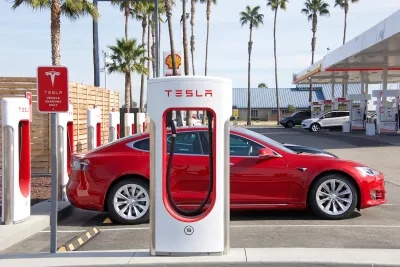
New guidance from the Federal Highway Administration (FHWA) aims to “streamline” the National Electric Vehicle Infrastructure (NEVI) program by encouraging projects built at existing gas stations, among other changes, reports James Ochoa in Auto Blog.
The Trump administration was forced to restart the NEVI program after a judge ruled it had illegally canceled the funding. In a press release, Transportation Secretary Duffy doubled down on the administration’s position, saying, “While I don’t agree with subsidizing green energy, we will respect Congress’s will and make sure this program uses federal resources efficiently.”
The new guidance calls on states to “consider the proximity of existing off-highway travel centers, fuel retailers, and small businesses to proposed charging locations. FHWA encourages co-locating chargers at retail locations with onsite amenities that could provide safe locations and restrooms.”
Currently, most charging operators like Electrify America and Tesla operate primarily on properties they don’t own, while large fuel chains own strategic off-highway locations. In a statement responding to the changes, Tesla disagreed with tying funding to site ownership, noting, “EV charging companies are focused on delivering reliable and safe charging experiences for consumers at scale, and Tesla respectfully disagrees with prioritizing site ownership over other more important qualifications.”
FULL STORY: Your Next EV Charge Might Take Place at a Gas Station

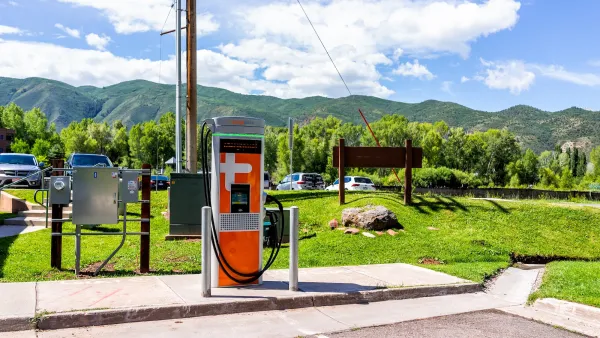
USDOT Cancels Over $100 Million in Sustainable Transportation Funds for Colorado
The administration is pulling funding for what it calls “woke” and “redundant” clean energy projects including EV charging infrastructure.
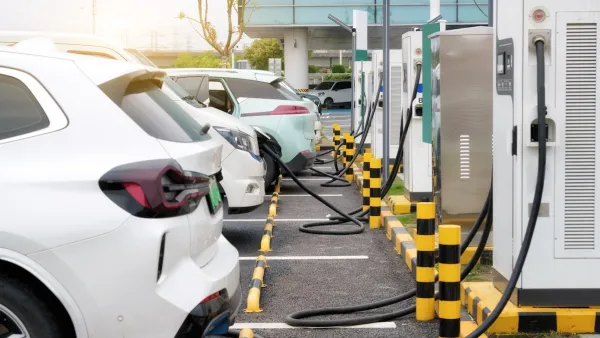
USDOT Issues New Rules for EV Charging Grants After Judge Forces Administration to Unfreeze Funds
The Trump administration is reviving the National Electric Vehicle Infrastructure program, revising its guidelines to eliminate consumer protections, environmental reviews, labor standards, and other provisions from the Biden-era program.
New York State Finances $60M Loan for EV Charging Infrastructure
Gov. Hochul announced the investment just as a federal program for EV charging infrastructure was halted by administration officials.

The state-sanctioned urbicide of Austin
People don’t kill cities. Freeways do.

US to reduce Colorado River water deliveries to Mexico
A new Colorado Treaty amendment reduces Mexico’s Colorado River water allocation by 250,000 acre feet.

New Jersey’s second-largest city bans standalone data centers
Jersey City will continue to allow co-location facilities, such as those meant for research institutions that store their own data.

Amtrak not solely to blame for New Jersey commuter rail's unreliability, report finds
A new study from the Garden State Initiative found that NJ Transit’s budget grew 20% across a 4 year period, but reliability declined significantly over the same period.

EPA erases limits on planet-warming pollution from power plants
Under Monday’s plan, power plants would still have some limits on how much mercury, arsenic and other contaminants they can emit.

Phoenix announces new on-demand transit service, more frequent RAPID buses
Both new services will launch in October, and are part of Phoenix's Project Effective Access Solutions for Easing Congestion.

FREE Course: Walkable City 1: Why Walkability?
After describing his path towards focusing on walkability as the essence of good planning, Jeff Speck marches through his five principal reasons for making more walkable places.
Reinventing Malls: Planning Alchemy—Turning Gray Fields Into Gold
The course focuses on the opportunities and imperatives that shape reinvention of mall sites.

Eagle County Government
Harvard University Graduate School of Design
Nashville Planning Department
The Architects Foundation
University of Cincinnati Online
The Pocatello Development Authority
The Urban Renewal Agency of the City of Pocatello
Journal of the American Planning Association