The Cablebús system transports more than 100,000 people each day and dramatically reduces commute times in the Mexican capital.


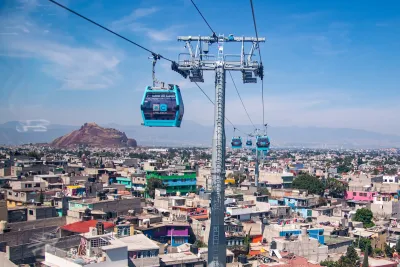
Mexico City’s Cablebús aerial gondola system, launched in 2021, is quickly becoming an important part of the city’s transportation system.
As Carlos Rosado van der Gracht explains in Yucatan Magazine, Mexico City has infamously bad traffic, with 7.5 million registered vehicles on its roads. Now, the cable car system has cut some commutes from two hours or more to 17 minutes. “Unlike cities like Zacatecas, this is not a tourist attraction; it’s a form of public transit designed to connect some of the city’s most densely populated and geographically challenging neighborhoods, often located on steep hillsides in the eastern and northern reaches of the city and beyond into the greater CDMX metropolitan area in surrounding Mexico State.”
The system adds to Mexico City’s robust public transit offerings, which include the second-largest Metro system in North America and seven bus rapid transit (BRT) lines.
FULL STORY: Mexico City’s New Cable Car Solution to Epic Traffic Jams


Mexico City Aerial ‘Cablebus’ Provides Key Connection to Peripheral Neighborhoods
Unlike many aerial gondolas, Mexico City’s Cablebus is largely used by commuters and residents from communities farther from the city center.
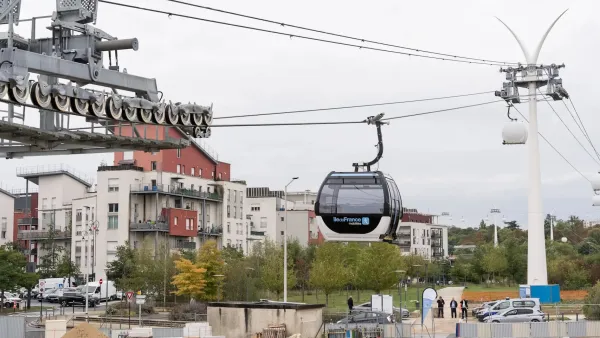
Paris Opens Europe’s Longest Aerial Gondola Line
The new cable car line, France’s seventh, is expected to carry roughly 11,000 passengers per day.
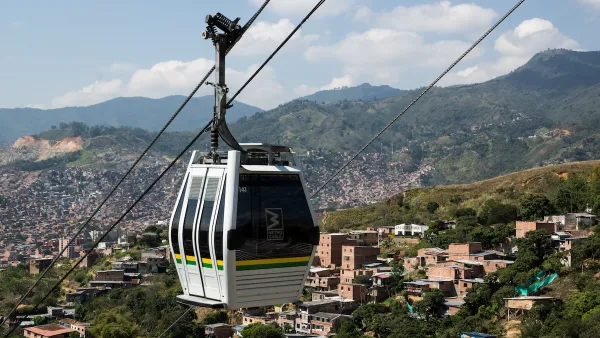
In U.S., Urban Gondolas Face Uphill Battle
Cities in Latin America and Europe have embraced aerial transitways — AKA gondolas — as sustainable, convenient urban transport, especially in tricky geographies. American cities have yet to catch up.

Planetizen Federal Action Tracker
A weekly monitor of how Trump’s orders and actions are impacting planners and planning in America.

The state-sanctioned urbicide of Austin
People don’t kill cities. Freeways do.

US to reduce Colorado River water deliveries to Mexico
A new Colorado Treaty amendment reduces Mexico’s Colorado River water allocation by 250,000 acre feet.

5 New England states march closer to 800 megawatt wind energy project
Securing federal approval for the project may be complicated under the Trump administration, which has historically been hostile towards domestic wind power.

Baltimore to break ground on $50 million Transit Priority Project
The project will bring faster bus trips, safer streets and better bike connections to Baltimore.

Airbnb launches $250 million 'last-dollar financing' housing accelerator, makes first investment in Austin
The company will put $6.4 million towards affordable housing development in Texas’ capital.

FREE Course: Walkable City 1: Why Walkability?
After describing his path towards focusing on walkability as the essence of good planning, Jeff Speck marches through his five principal reasons for making more walkable places.
Reinventing Malls: Planning Alchemy—Turning Gray Fields Into Gold
The course focuses on the opportunities and imperatives that shape reinvention of mall sites.

Eagle County Government
Harvard University Graduate School of Design
Nashville Planning Department
The Architects Foundation
University of Cincinnati Online
The Pocatello Development Authority
The Urban Renewal Agency of the City of Pocatello
Journal of the American Planning Association