Fueled by new funding and community partnerships, these projects are replacing heat-trapping asphalt with trees and vegetation to create cooler, healthier school environments.


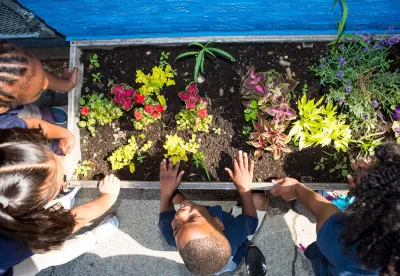
Schoolyard greening projects in Southern California have reached a major milestone, fueled by $150 million in state grants approved in 2022. About a dozen organizations are transforming asphalt-covered campuses into green spaces, providing shade, vegetation, and safer play areas for students. Advocates say the work is urgently needed as many children attend schools in areas with little tree canopy and extreme heat, with asphalt temperatures reaching 142 degrees in some San Fernando Valley campuses.
As reported by Adolfo Guzman-Lopez, groups like the Trust for Public Land, North East Trees, and TreePeople are leading the charge. North East Trees recently completed a major project at Buchanan Elementary in Highland Park, removing 400 tons of asphalt and planting 150 trees, including fruit varieties like peach and avocado. These efforts not only cool down campuses but also help absorb and collect stormwater.
Momentum for schoolyard greening is growing, with organizations tapping into philanthropic contributions and local funding sources like the Los Angeles Unified School District (LAUSD)’s Measure US and state Proposition 2 bonds. TreePeople alone has 28 active projects in Los Angeles County, building on the vision of late CEO Cindy Montañez. While thousands of schools still need greening, advocates say projects are becoming easier to fund and implement, reflecting a broader commitment to creating safe, shaded, and nature-rich environments that students both need and deserve.
FULL STORY: Schoolyard greening projects hit milestone as advocates see the 'most impact ever'


Planetizen Federal Action Tracker
A weekly monitor of how Trump’s orders and actions are impacting planners and planning in America.

The state-sanctioned urbicide of Austin
People don’t kill cities. Freeways do.

US to reduce Colorado River water deliveries to Mexico
A new Colorado Treaty amendment reduces Mexico’s Colorado River water allocation by 250,000 acre feet.

5 New England states march closer to 800 megawatt wind energy project
Securing federal approval for the project may be complicated under the Trump administration, which has historically been hostile towards domestic wind power.

Baltimore to break ground on $50 million Transit Priority Project
The project will bring faster bus trips, safer streets and better bike connections to Baltimore.

Airbnb launches $250 million 'last-dollar financing' housing accelerator, makes first investment in Austin
The company will put $6.4 million towards affordable housing development in Texas’ capital.

FREE Course: Walkable City 1: Why Walkability?
After describing his path towards focusing on walkability as the essence of good planning, Jeff Speck marches through his five principal reasons for making more walkable places.
Reinventing Malls: Planning Alchemy—Turning Gray Fields Into Gold
The course focuses on the opportunities and imperatives that shape reinvention of mall sites.

Eagle County Government
Harvard University Graduate School of Design
Nashville Planning Department
The Architects Foundation
University of Cincinnati Online
The Pocatello Development Authority
The Urban Renewal Agency of the City of Pocatello
Journal of the American Planning Association