The St. Louis Art Place Initiative purchases city-owned vacant properties and rehabilitates them, offering homeownership opportunities to local artists.


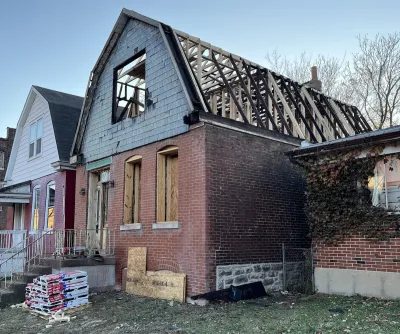
A St. Louis nonprofit builds housing exclusively for artists, incorporating an art studio into each home they build. Frank Navarrete describes the project in Shelterforce, noting that “When artists come to Kaveh Razani, the initiative’s co-director, some haven’t filed their taxes in years, others don’t know where to find an affordable studio, and few know how to get their ducks in a row to buy a house.”
The St. Louis Art Place Initiative “acquires city properties that have lain vacant for years and rehabilitates them for occupancy. These homes are built for artists of all types: painters, dancers, hairdressers, architects, chefs.” These artists usually meet low- or middle-income requirements that allow the program to receive federal funding.
“But the nonprofit’s focus on artists wasn’t just a creative way to capture a slice of the low- to middle-income population that’s in need of housing,” Navarrete adds. “It was also a path to access funding for housing opportunities from art-related groups, like The Incarnate Word Foundation, the Carnegie Mellon Arts Foundation, and the Regional Arts Commission.”
Read the full story: In St. Louis, Artist Housing Opens Up Homeownership Opportunities


NYC has Lost 4% of its Resident Artists Since 2019
Advocates argue the city should build more affordable housing reserved for artists, who are being increasingly priced out.

How a San Francisco Land Trust is Preserving Affordable Housing for Artists
The Artist Space Trust has received $10 million in properties bequeathed by artists that will become permanently affordable housing.
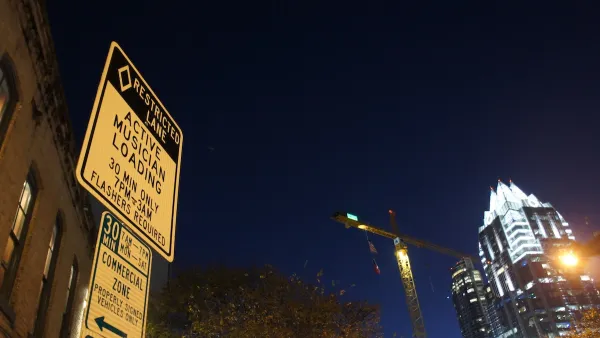
SXSW Panel Addresses Housing Affordability for Artists
Musicians are increasingly hard-pressed to find affordable housing in Austin, a city known for its music scene.

Planetizen Federal Action Tracker
A weekly monitor of how Trump’s orders and actions are impacting planners and planning in America.

California plans to bury El Niño’s downpour
If the state plays its cards right, it may be able to store a billion acre-feet of El Niño’s water in aquifers.

Chicago breaks ground on $3 billion megadevelopment
The new neighborhood, titled Foundry Park, will one day host 3,700 residences.

California High-Speed Rail Authority CEO resigns after $600,000 scandal
Under Ian Choudri, the authority used taxpayer dollars to fund first class flights and trips to nightclubs.

Want to study the Missouri River? Soon, you may need unanimous approval from 10 states
Legislation would require 10 governors’ permission to study or build projects moving water outside the basin.

Desperate measures: Advocates weigh draining Lake Powell to fill Colorado River
Draining the reservoir could reduce evaporation losses by a couple hundred thousand acre-feet.

FREE Course: Walkable City 1: Why Walkability?
After describing his path towards focusing on walkability as the essence of good planning, Jeff Speck marches through his five principal reasons for making more walkable places.
Reinventing Malls: Planning Alchemy—Turning Gray Fields Into Gold
The course focuses on the opportunities and imperatives that shape reinvention of mall sites.

City of Rosemead
Rutgers University, Edward J. Bloustein School of Planning and Public Policy
One Hundred Miles
Hunter College, City University of New York (CUNY)
The Architects Foundation
University of Cincinnati Online
City of Cambridge
Montrose County
The Pocatello Development Authority