Advocates argue the city should build more affordable housing reserved for artists, who are being increasingly priced out.


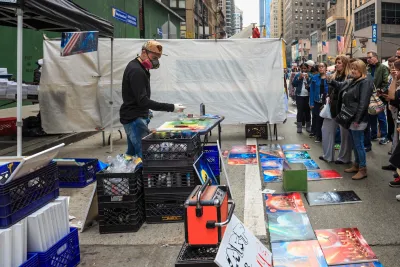
New York City’s artist population grew by roughly 35 percent between 2004 and 2019, but since then, the city has lost over 4 percent of its artists, signaling growing unaffordability for the city’s creative class.
As Samantha Maldonado explains in Next City, designating housing for artists is tricky: “For one, the city’s human rights law prohibits housing discrimination on the basis of occupation — a provision that has been in place since the eighties and was updated in 2016.” A proposed city ordinance could change that.
No new affordable housing for artists has been built in New York City since 2015, when an 89-unit affordable development in East Harlem received over 53,000 applications for residency. But artist advocates say creating affordable housing and studio space specifically for artists is a safeguard against displacement for people who create some of the city’s most important cultural resources. According to Eli Dvorkin, policy director of the Center for an Urban Future, the consequence of the loss of affordable artist housing “is that we’re losing not only our artists, but our identity as a city, and I would say with it, not only a key engine of our economy, but one of the key factors that makes New York a place where people from all over the world want to visit and want to live.”
FULL STORY: New York City Hasn’t Built Artist Housing in a Decade. Should It?

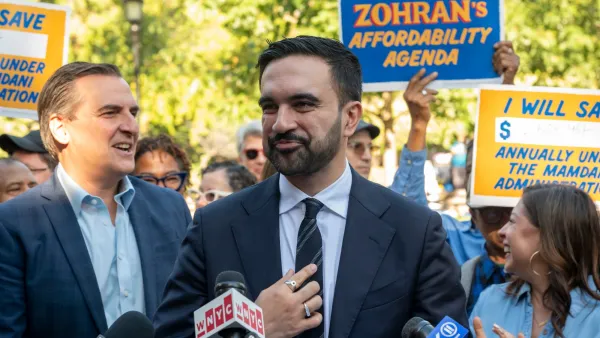
NYC Mayor Mamdani Backs Down on Expanded Rental Assistance Program, Citing $7 Billion Deficit
The new mayor had promised to expand the CityFHEPS rent assistance program to an additional 47,000 households.
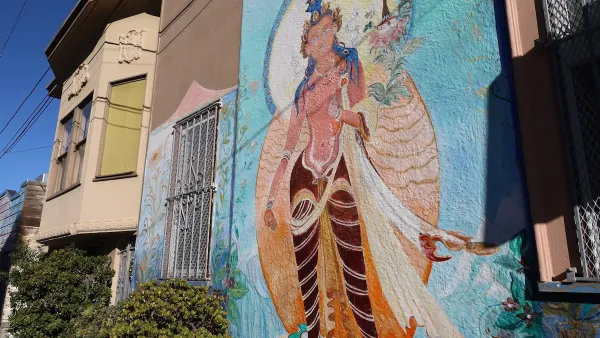
How a San Francisco Land Trust is Preserving Affordable Housing for Artists
The Artist Space Trust has received $10 million in properties bequeathed by artists that will become permanently affordable housing.
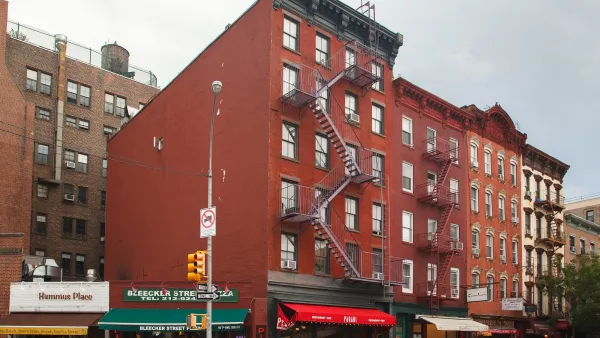
Federal cuts to voucher program put 9,000 New Yorkers at risk of homelessness
The Emergency Housing Voucher program is ending years ahead of schedule, forcing housing agencies to find new ways to support roughly 70,000 households nationwide.

Planetizen Federal Action Tracker
A weekly monitor of how Trump’s orders and actions are impacting planners and planning in America.

The state-sanctioned urbicide of Austin
People don’t kill cities. Freeways do.

US to reduce Colorado River water deliveries to Mexico
A new Colorado Treaty amendment reduces Mexico’s Colorado River water allocation by 250,000 acre feet.

Baltimore to break ground on $50 million Transit Priority Project
The project will bring faster bus trips, safer streets and better bike connections to Baltimore.

Airbnb launches $250 million 'last-dollar financing' housing accelerator, makes first investment in Austin
The company will put $6.4 million towards affordable housing development in Texas’ capital.

Guerilla urbanists are building DIY bus stop benches in Chicago
A before-and-after of one of the bus stops with a new bench. The new benches are not officially sanctioned or permitted, but the residents who placed them hope they will be the start of a network of DIY benches across the city.

FREE Course: Walkable City 1: Why Walkability?
After describing his path towards focusing on walkability as the essence of good planning, Jeff Speck marches through his five principal reasons for making more walkable places.
Reinventing Malls: Planning Alchemy—Turning Gray Fields Into Gold
The course focuses on the opportunities and imperatives that shape reinvention of mall sites.

Eagle County Government
Harvard University Graduate School of Design
Nashville Planning Department
The Architects Foundation
University of Cincinnati Online
The Pocatello Development Authority
The Urban Renewal Agency of the City of Pocatello
Journal of the American Planning Association