The signals use AI to collect data and help traffic engineers make decisions and implement changes more quickly and effectively.


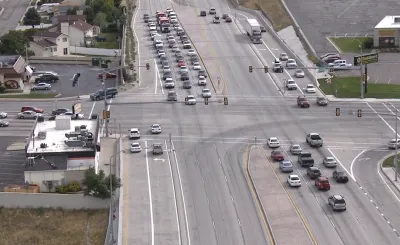
North Carolina launched the nation’s largest deployment of AI-based traffic signals, which the state hopes will improve operations and road safety. “The North Carolina Department of Transportation deployed 2,500 AI-based traffic signals at intersections across the state, according to a July 7 news release from Flow Labs, a transportation technology company.”
As Dan Zukowski notes in Smart Cities Dive, the software is not being used for real-time traffic management as of yet, but will provide data that can help traffic engineers understand how to improve operations faster based on real traffic patterns. “Engineers can now detect issues before they escalate, prioritize interventions based on real-world traffic patterns, and improve signal operations without relying on field studies, hardware deployments, or infrastructure changes.”
FULL STORY: North Carolina installs 2,500 AI-based traffic signals


Boston AI Pilot Optimizes Traffic Light Timing
The program has led to reductions in stop-and-go traffic of as much as 50 percent.

The Role of AI in Streamlining Municipal Services and Operations
Explore how artificial intelligence optimizes municipal services, enhancing efficiency in urban planning, traffic management, and public safety.

Traffic Tech is Helping Texas Curb Road Deaths
The state is deploying AI-assisted technology to identify dangerous road segments and improve signal timing.

The state-sanctioned urbicide of Austin
People don’t kill cities. Freeways do.

US to reduce Colorado River water deliveries to Mexico
A new Colorado Treaty amendment reduces Mexico’s Colorado River water allocation by 250,000 acre feet.

New Jersey’s second-largest city bans standalone data centers
Jersey City will continue to allow co-location facilities, such as those meant for research institutions that store their own data.

Amtrak not solely to blame for New Jersey commuter rail's unreliability, report finds
A new study from the Garden State Initiative found that NJ Transit’s budget grew 20% across a 4 year period, but reliability declined significantly over the same period.

EPA erases limits on planet-warming pollution from power plants
Under Monday’s plan, power plants would still have some limits on how much mercury, arsenic and other contaminants they can emit.

Phoenix announces new on-demand transit service, more frequent RAPID buses
Both new services will launch in October, and are part of Phoenix's Project Effective Access Solutions for Easing Congestion.

FREE Course: Walkable City 1: Why Walkability?
After describing his path towards focusing on walkability as the essence of good planning, Jeff Speck marches through his five principal reasons for making more walkable places.
Reinventing Malls: Planning Alchemy—Turning Gray Fields Into Gold
The course focuses on the opportunities and imperatives that shape reinvention of mall sites.

Eagle County Government
Harvard University Graduate School of Design
Nashville Planning Department
The Architects Foundation
University of Cincinnati Online
The Pocatello Development Authority
The Urban Renewal Agency of the City of Pocatello
Journal of the American Planning Association