Intersections equipped with signals that give pedestrians a seven-second head start saw a marked increase in safety.


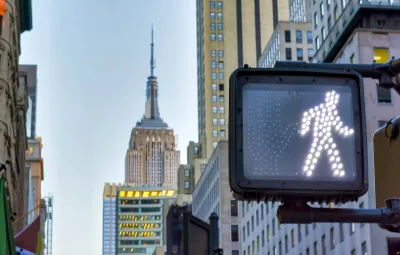
New York City intersections with traffic signals that give pedestrians a head start saw a 33 percent reduction in fatal and non-fatal injury crashes, according to a study from the Columbia University Mailman School of Public Health.
As Dan Zukowski explains in Smart Cities Dive, “Leading pedestrian intervals are a low-cost adjustment to signal timing that increases the likelihood of turning drivers yielding to pedestrians and allows slower-moving people an increased margin of safety, according to the Federal Highway Administration.” The change makes a significant impact since most pedestrian-vehicle crashes occur near the curb.
New York City’s leading pedestrian intervals of seven seconds were associated with improved safety at all types of intersections. Other cities that have installed leading pedestrian interval signals include Gainesville, St. Petersburg, and Tampa, Florida, as well as Seattle and Washington, D.C.
FULL STORY: Pedestrian-friendly traffic signals cut injuries 33% in NYC: study

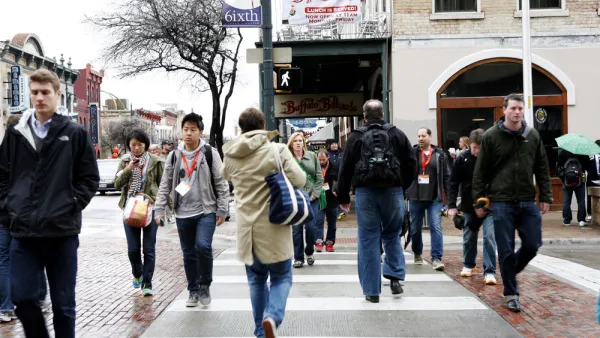
On the Life-Saving Potential of Leading Pedestrian Intervals
Giving pedestrians a head start at crosswalks is a simple fix that could save lots of lives. New York City has already seen a significant reduction in fatalities and injuries.
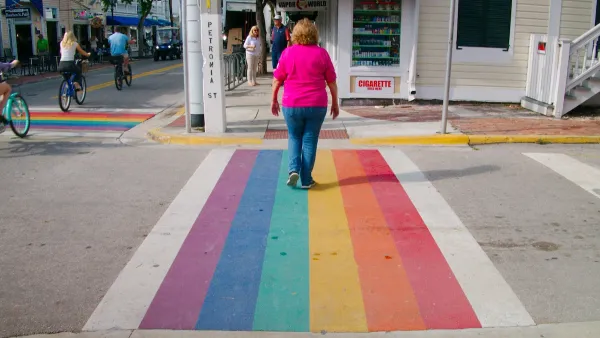
The Florida Cities Risking Everything to Save Rainbow Sidewalks
Gov. DeSantis has threatened to withhold state transportation funding and remove local leaders who don’t comply with an order to remove painted crosswalks.
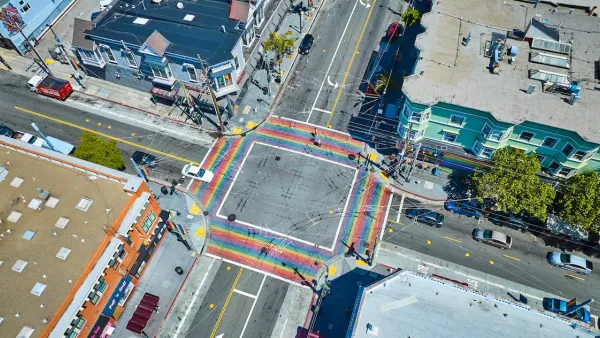
Sean Duffy Targets Rainbow Crosswalks in Road Safety Efforts
Despite evidence that colorful crosswalks actually improve intersection safety — and the lack of almost any crosswalks at all on the nation’s most dangerous arterial roads — U.S. Transportation Secretary Duffy is calling on states to remove them.

Planetizen Federal Action Tracker
A weekly monitor of how Trump’s orders and actions are impacting planners and planning in America.

The state-sanctioned urbicide of Austin
People don’t kill cities. Freeways do.

US to reduce Colorado River water deliveries to Mexico
A new Colorado Treaty amendment reduces Mexico’s Colorado River water allocation by 250,000 acre feet.

Baltimore to break ground on $50 million Transit Priority Project
The project will bring faster bus trips, safer streets and better bike connections to Baltimore.

Airbnb launches $250 million 'last-dollar financing' housing accelerator, makes first investment in Austin
The company will put $6.4 million towards affordable housing development in Texas’ capital.

Guerilla urbanists are building DIY bus stop benches in Chicago
A before-and-after of one of the bus stops with a new bench. The new benches are not officially sanctioned or permitted, but the residents who placed them hope they will be the start of a network of DIY benches across the city.

FREE Course: Walkable City 1: Why Walkability?
After describing his path towards focusing on walkability as the essence of good planning, Jeff Speck marches through his five principal reasons for making more walkable places.
Reinventing Malls: Planning Alchemy—Turning Gray Fields Into Gold
The course focuses on the opportunities and imperatives that shape reinvention of mall sites.

Eagle County Government
Harvard University Graduate School of Design
Nashville Planning Department
The Architects Foundation
University of Cincinnati Online
The Pocatello Development Authority
The Urban Renewal Agency of the City of Pocatello
Journal of the American Planning Association