The technology uses the motion of waves to create energy.


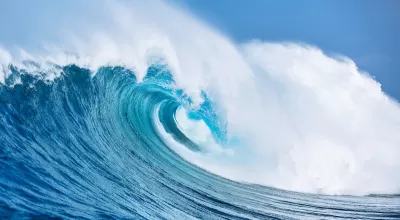
The first ‘on-shore’ wave energy project in the United States could be coming to the Port of Los Angeles, reports Paul Ridden in New Atlas.
“The idea behind the setup is to mount a number of floaters on coastal infrastructure, which rise and fall to the motion of waves. This drives hydraulic pistons to move fluid to an accumulator, which is then released to produce electricity via a generator.”
The company that will operate the project, Eco Wave Power (EWP), says it plans to expand in the United States after the pilot program. “Following a 3-month feasibility study concluded in April of this year, EWP entered into an agreement with Shell International Exploration and Production Inc to collaborate on the first US pilot. Now the company reports that it has been given the green light to install eight floaters on existing wharf structure at the east side of Municipal Pier One at the Port of LA.” EWP has identified an additional 77 sites with similar potential along the U.S. coastline.
FULL STORY: First onshore wave energy project in the US gets official nod

Sustainability Expert Becomes Dean of USC’s School of Public Policy
Chris Boone, a sustainability leader, becomes dean of the USC Price School of Public Policy, where he aims to advance interdisciplinary solutions and sustainability initiatives while building on the school’s legacy of public policy leadership.
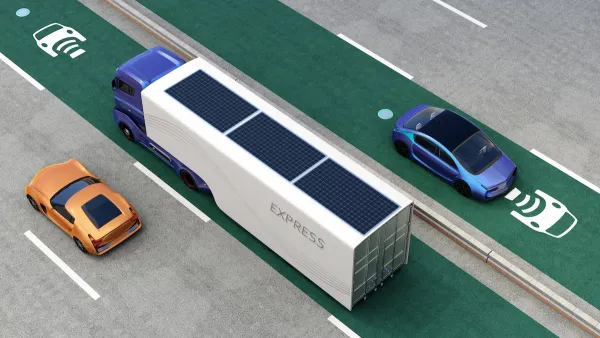
UCLA Will Build California’s First EV Charging Roadway
The ¾-mile segment will allow electric shuttles and buses to charge while driving.
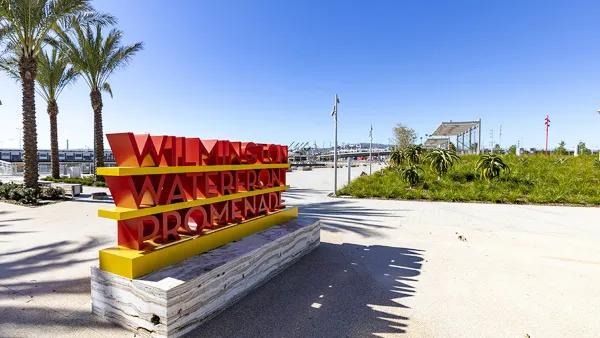
New Waterfront Park Opens at the Port of Los Angeles
The $77.3 million new park offers unprecedented public access to the water’s edge for the Wilmington community where 18% of the total land area is taken up by oil refineries — almost 3.5 times more space than is dedicated to green space.

Planetizen Federal Action Tracker
A weekly monitor of how Trump’s orders and actions are impacting planners and planning in America.

The state-sanctioned urbicide of Austin
People don’t kill cities. Freeways do.

US to reduce Colorado River water deliveries to Mexico
A new Colorado Treaty amendment reduces Mexico’s Colorado River water allocation by 250,000 acre feet.

5 New England states march closer to 800 megawatt wind energy project
Securing federal approval for the project may be complicated under the Trump administration, which has historically been hostile towards domestic wind power.

Baltimore to break ground on $50 million Transit Priority Project
The project will bring faster bus trips, safer streets and better bike connections to Baltimore.

Airbnb launches $250 million 'last-dollar financing' housing accelerator, makes first investment in Austin
The company will put $6.4 million towards affordable housing development in Texas’ capital.

FREE Course: Walkable City 1: Why Walkability?
After describing his path towards focusing on walkability as the essence of good planning, Jeff Speck marches through his five principal reasons for making more walkable places.
Reinventing Malls: Planning Alchemy—Turning Gray Fields Into Gold
The course focuses on the opportunities and imperatives that shape reinvention of mall sites.

Eagle County Government
Harvard University Graduate School of Design
Nashville Planning Department
The Architects Foundation
University of Cincinnati Online
The Pocatello Development Authority
The Urban Renewal Agency of the City of Pocatello
Journal of the American Planning Association