Car-free options for reaching the popular event.


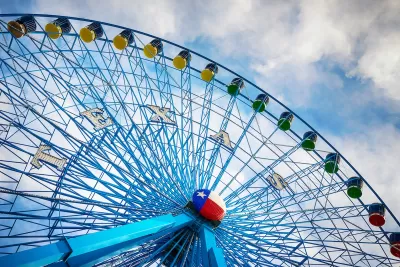
Attendees to the Texas State Fair have multiple non-driving options for getting to the event grounds, according to an article by Ileana Garland in Lone Star Live.
Rather than paying $30 for a parking spot, people visiting the fair can use the Dallas Area Rapid Transit (DART) system to access the fairgrounds. “DART is increasing train frequency and extending operating hours throughout the fair’s 24-day run. It also has a special schedule on Saturday, Oct. 12, for the Red River Showdown at Fair Park’s Cotton Bowl Stadium.”
The Denton County A-Train and Trinity Railway Express also connect with DART lines that can reach the fair.
Garland notes that the fair also has designated drop-off areas for rideshare services and bike racks at several entrances.
Read the full story: How to reach the State Fair of Texas without driving: public transit, Uber and more
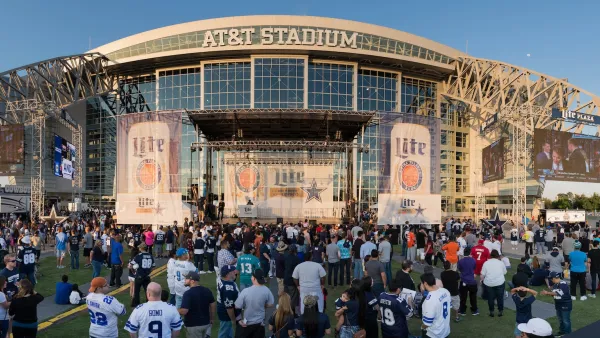
Dallas area transit prepares for World Cup, asks locals to drive
DART is adding a special shuttle service and creating back-up mechanisms to ensure it can serve all of this summer's World Cup attendees.
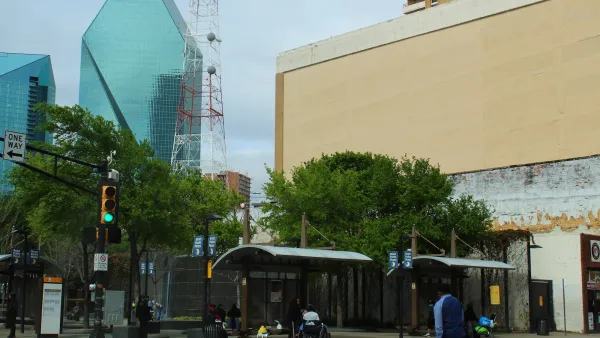
Dallas transit to invest up to $71.5M in upgraded bus shelters
The new shelters will feature solar-powered lighting and materials designed to protect riders from extreme weather.
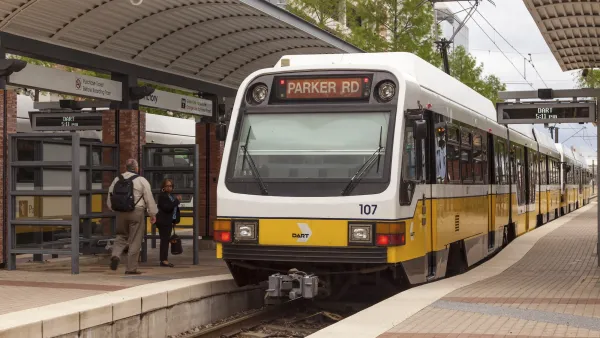
Dallas Sacrifices DART Majority Control in Bid to Keep Suburbs in Transit System
The city would give up majority control of the regional transit system for the first time in its 40-year history.

Planetizen Federal Action Tracker
A weekly monitor of how Trump’s orders and actions are impacting planners and planning in America.

Eastern Nebraska is running out of electricity
Data centers and electrification are straining eastern Nebraska’s grid, throttling economic development.

Study reveals best places in the U.S. for cycling, walking
New research from Streetlight Data examines bicycle and pedestrian miles per capita in the 100 largest U.S. cities by population.

Federal government nominates new FTA administrator
Mark Aesch is currently the founder and CEO of a transportation management consulting firm.

Developers reveal $10 billion stadium plan as ‘Hail Mary’ to keep Bears in Chicago
The plan would also boast a public park, high- and mid-rise buildings and a youth sports complex.

As Texas embraces carbon storage, a Black community questions the risks
Texas now issues permits for companies to store carbon dioxide underground. East Texas residents fear safety risks, and skeptics doubt the climate benefits.

FREE Course: Walkable City 1: Why Walkability?
After describing his path towards focusing on walkability as the essence of good planning, Jeff Speck marches through his five principal reasons for making more walkable places.
Reinventing Malls: Planning Alchemy—Turning Gray Fields Into Gold
The course focuses on the opportunities and imperatives that shape reinvention of mall sites.

City of Charlotte
City of Rosemead
Rutgers University, Edward J. Bloustein School of Planning and Public Policy
University of Michigan School for Environment and Sustainability (SEAS)
Hunter College, City University of New York (CUNY)
The Architects Foundation
City of Cambridge
The Pocatello Development Authority
The Urban Renewal Agency of the City of Pocatello