A ‘best practices’ manual guides accessibility on streets and sidewalks, but remains legally unenforceable.


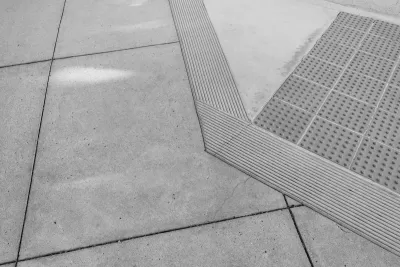
Although the Americans with Disabilities Act (ADA) is a landmark law that protects the civil rights of people with disabilities in many areas, “the ADA fails to address accessibility in areas known as the “public right-of-way,” which includes sidewalks, crosswalks, curb ramps, public transit stops, and more.”
The guidelines used since 2011 for the accessibility in the right-of-way, meanwhile, is not enforceable. As Marissa Bell explains in Streetsblog USA, the Public Right-of-Way Accessibility Guidelines (PROWAG) “was adopted by the U.S. Access Board [last year], but it still needs adoption by the departments of Justice and Transportation before it can truly make a life-changing impact for everyone who gets around in the public domain.”
Bell describes some of the most common accessibility features used in public ROW, and how they sometimes go wrong, pointing out that accessibility benefits more groups than just people with mobility impairments. “Ramps and other accessible infrastructure make life easier for everyone; it is vital that they are designed correctly or even designed at all.”
FULL STORY: PROWAG Can Make Cities More Accessible — So Here’s What You Need to Know

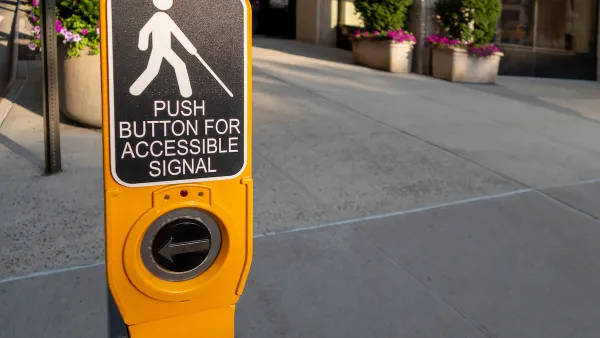
New Guidelines Bring Clarity to Accessibility Requirements
The new rules could help bridge the gaps in accessibility infrastructure and ADA compliance, making roads and sidewalks safer for everyone.
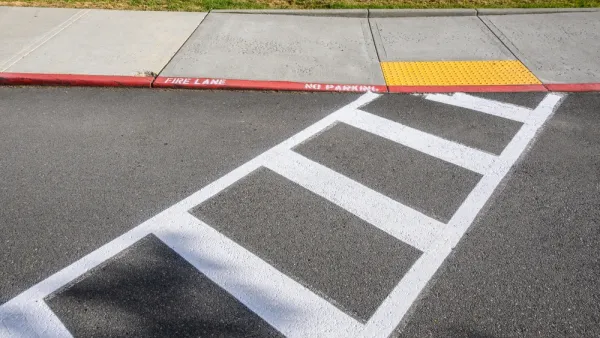
Following Lawsuit, Philadelphia to Add or Fix 10,000 Curb Cuts
Disability rights advocates won a settlement that directs the city to improve accessibility on its public roads over the next 15 years.
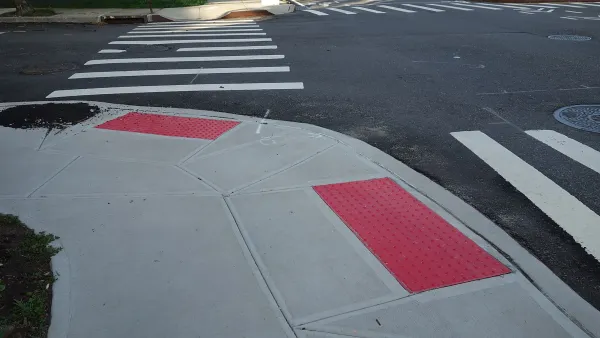
Federal Government to Enforce Accessibility Guidelines
Local agencies will soon be tasked with adhering to federal right-of-way accessibility rules: comprehensive guidelines for accessible streets and sidewalks.

Planetizen Federal Action Tracker
A weekly monitor of how Trump’s orders and actions are impacting planners and planning in America.

The state-sanctioned urbicide of Austin
People don’t kill cities. Freeways do.

US to reduce Colorado River water deliveries to Mexico
A new Colorado Treaty amendment reduces Mexico’s Colorado River water allocation by 250,000 acre feet.

5 New England states march closer to 800 megawatt wind energy project
Securing federal approval for the project may be complicated under the Trump administration, which has historically been hostile towards domestic wind power.

Baltimore to break ground on $50 million Transit Priority Project
The project will bring faster bus trips, safer streets and better bike connections to Baltimore.

Airbnb launches $250 million 'last-dollar financing' housing accelerator, makes first investment in Austin
The company will put $6.4 million towards affordable housing development in Texas’ capital.

FREE Course: Walkable City 1: Why Walkability?
After describing his path towards focusing on walkability as the essence of good planning, Jeff Speck marches through his five principal reasons for making more walkable places.
Reinventing Malls: Planning Alchemy—Turning Gray Fields Into Gold
The course focuses on the opportunities and imperatives that shape reinvention of mall sites.

Eagle County Government
Harvard University Graduate School of Design
Nashville Planning Department
The Architects Foundation
University of Cincinnati Online
The Pocatello Development Authority
The Urban Renewal Agency of the City of Pocatello
Journal of the American Planning Association