Nearly 11.2 million older adults in the U.S. are spending more than 30 percent of their household income on housing.



According to a recent report from the Harvard Joint Center for Housing Studies, nearly 11.2 million U.S. adults aged 65 and older spent more than 30 percent of their household income on housing costs. The figure is up from 9.7 million in 2016 and 8.8 million in 2011 and represents an all-time high. It’s a trend Peter Lawrence, director of public policy and government relations at Novogradac, calls “worrying” in a recent post on the national professional services organization’s blog.
Rising housing costs put seniors, many of whom live on fixed incomes, at greater risk of homelessness and make it more difficult for them to afford healthcare and food. Between the fact that the number of households headed by someone in their eighties set to double to around 17 million by 2040 and the reality that current federal housing assistance programs only support 37 percent eligible households, it’s little wonder that Lawrence and other housing and aging experts are concerned and calling for action.
The blog post discusses proposed solutions, particularly those that combine housing and healthcare, like Programs for All Inclusive Care for the Elderly (PACE) and the California Advancing and Innovating in Medi-Cal (CalAIM) program.
“Programs such as PACE and CalAIM that work to combine health and housing services serve as a model to make housing for older adults more affordable and appropriate,” Lawrence writes.


Housing Inequality More Apparent in Older Populations
A new report from the Joint Center for Housing Studies of Harvard University digs into the housing market for older Americans, finding more evidence of a widening gap between each end of the wealth spectrum.
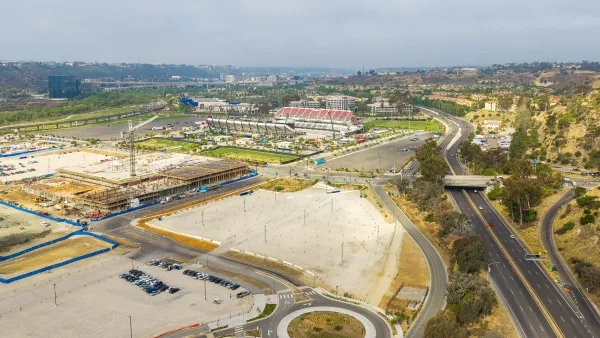
San Diego State intergenerational housing project will bring 250 homes for older adults to campus
The project is part of the university's Mission Valley campus that includes 4,600 housing units.
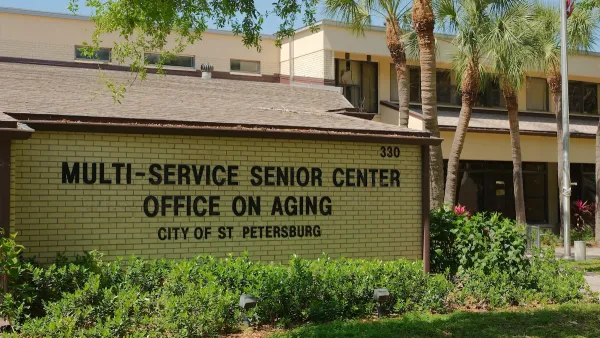
Florida Seniors Face Rising Homelessness Risk
High housing costs are pushing more seniors, many of them on a fixed income, into homelessness.

The state-sanctioned urbicide of Austin
People don’t kill cities. Freeways do.

US to reduce Colorado River water deliveries to Mexico
A new Colorado Treaty amendment reduces Mexico’s Colorado River water allocation by 250,000 acre feet.

New Jersey’s second-largest city bans standalone data centers
Jersey City will continue to allow co-location facilities, such as those meant for research institutions that store their own data.

Amtrak not solely to blame for New Jersey commuter rail's unreliability, report finds
A new study from the Garden State Initiative found that NJ Transit’s budget grew 20% across a 4 year period, but reliability declined significantly over the same period.

EPA erases limits on planet-warming pollution from power plants
Under Monday’s plan, power plants would still have some limits on how much mercury, arsenic and other contaminants they can emit.

Phoenix announces new on-demand transit service, more frequent RAPID buses
Both new services will launch in October, and are part of Phoenix's Project Effective Access Solutions for Easing Congestion.

FREE Course: Walkable City 1: Why Walkability?
After describing his path towards focusing on walkability as the essence of good planning, Jeff Speck marches through his five principal reasons for making more walkable places.
Reinventing Malls: Planning Alchemy—Turning Gray Fields Into Gold
The course focuses on the opportunities and imperatives that shape reinvention of mall sites.

Eagle County Government
Harvard University Graduate School of Design
Nashville Planning Department
The Architects Foundation
University of Cincinnati Online
The Pocatello Development Authority
The Urban Renewal Agency of the City of Pocatello
Journal of the American Planning Association