Metra will make its Covid-era bike policy permanent and install bike racks to accommodate more bikes on train cars.


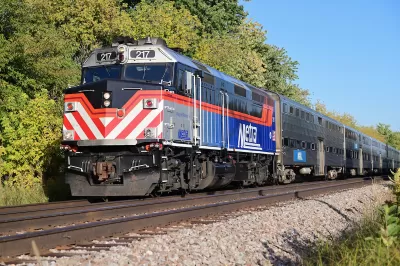
A new policy on Chicago’s Metra commuter rail system will make its pandemic-era policy of permitting bikes on all trains permanent. Metra will also install new bike racks on 50 train cars, reports AJ LaTrace in Streetsblog Chicago.
“This change comes after Metra recorded the highest number of bike trips made using the system. According to Metra, 260,000 bicyclists took trips on the system in 2023, which the organization says is higher than pre-pandemic years.” (LaTrace points out that before the pandemic, cyclists were not allowed to bring bikes on trains during all hours).
According to LaTrace, “While Metra has allowed bikes on trains since 2005, they were only permitted in the ADA area of train cars, and bicycle riders were turned away at stations if too many bikes were already on board.” The new policy includes regulations on maximum bike dimensions and prohibits gas-powered bikes and scooters.
Metra is also making changes to its fares and zone structure. Tickets will range from $3.75 to $6.75.
Read the full story: What does Metra’s permanent “bikes on all trains” policy, starting Thursday, mean for you?

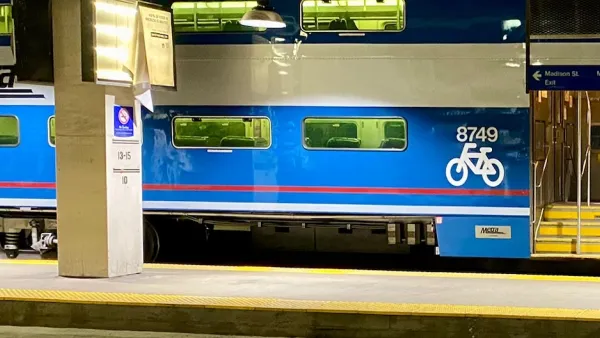
Chicago Trains Make More Room for Bikes
Since Metro launched a new bike-friendly policy in February, the number of bikes on its trains rose by 70 percent.
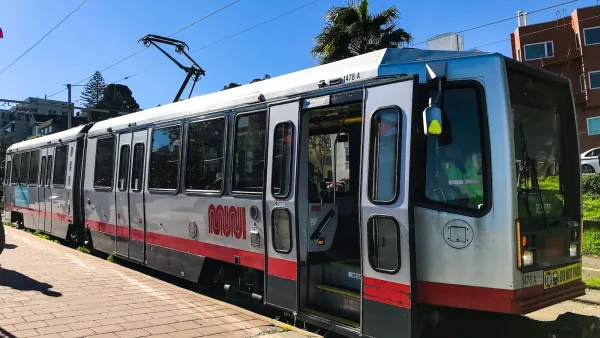
San Francisco cyclists push to allow bikes on Muni trains
The agency is one of few that bans bikes from its trains due to space constraints.
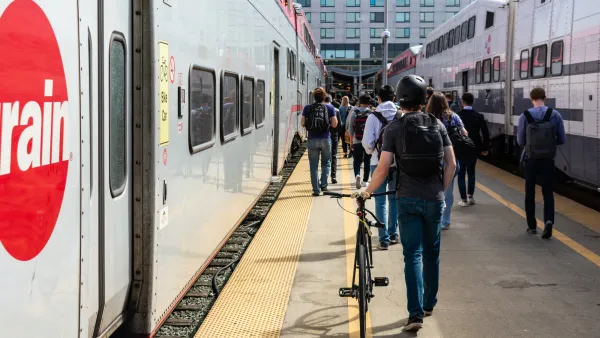
Caltrain Outlaws Cargo Bikes, Child Seats as Demand Overwhelms Bike Cars
Around 20 percent of Caltrain passengers use a bike to get to or from stations.

Planetizen Federal Action Tracker
A weekly monitor of how Trump’s orders and actions are impacting planners and planning in America.

California plans to bury El Niño’s downpour
If the state plays its cards right, it may be able to store a billion acre-feet of El Niño’s water in aquifers.

Chicago breaks ground on $3 billion megadevelopment
The new neighborhood, titled Foundry Park, will one day host 3,700 residences.

Satanic Place Names
From streams and lakes to valleys and canyons, I mapped more than 1,000 places named after the Devil.

California High-Speed Rail Authority CEO resigns after $600,000 scandal
Under Ian Choudri, the authority used taxpayer dollars to fund first class flights and trips to nightclubs.

Want to study the Missouri River? Soon, you may need unanimous approval from 10 states
Legislation would require 10 governors’ permission to study or build projects moving water outside the basin.

FREE Course: Walkable City 1: Why Walkability?
After describing his path towards focusing on walkability as the essence of good planning, Jeff Speck marches through his five principal reasons for making more walkable places.
Reinventing Malls: Planning Alchemy—Turning Gray Fields Into Gold
The course focuses on the opportunities and imperatives that shape reinvention of mall sites.

City of Rosemead
Rutgers University, Edward J. Bloustein School of Planning and Public Policy
One Hundred Miles
Hunter College, City University of New York (CUNY)
The Architects Foundation
University of Cincinnati Online
City of Cambridge
Montrose County
The Pocatello Development Authority