Residential properties can now be split, with certain restrictions, into multiple lots to spur more housing development.


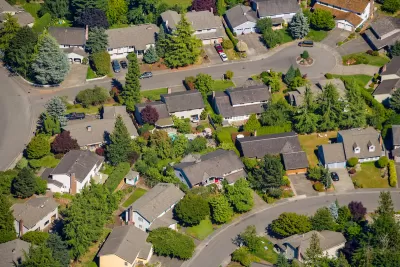
The Washington State House of Representatives voted to allow residential property owners to split their lots as part of the broader effort to increase housing production.
As Laurel Demkovich explains in Governing, House Bill 1245 would bar cities from restricting lot splitting, with certain limitations. “The new lots would need to be no smaller than 2,000 square feet, at least 40% of the size of the original lot and could not require the demolition or alteration of any affordable housing.” The law also prevents cities from requiring more than one parking space per lot or frontages wider than 20 feet.
The legislature will be hearing other housing and zoning-related bills this session. “There are pending bills to improve tenant protections and stabilize rent, allow for co-living homes – independently rented, small apartments with kitchens shared among building residents, and create denser housing construction near transit stops.”
Read the full story: Washington House Passes Bill to Allow Splitting of Residential Lots

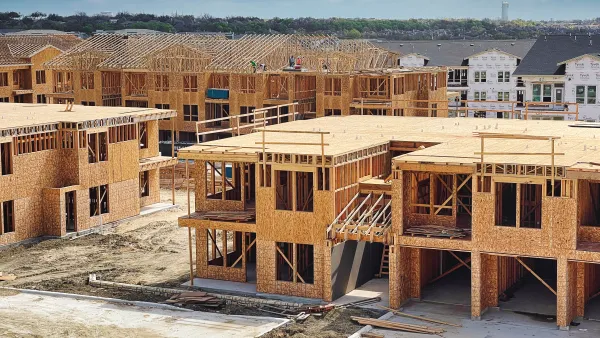
Opinion: Failed Housing Bills Could Signal California-Style Housing Crisis in Texas
Legislators in a state that so often touts its policies as the opposite of California’s defeated several bills that would have made housing construction easier, leading to concerns that a constricted housing market may exacerbate the housing crisis.
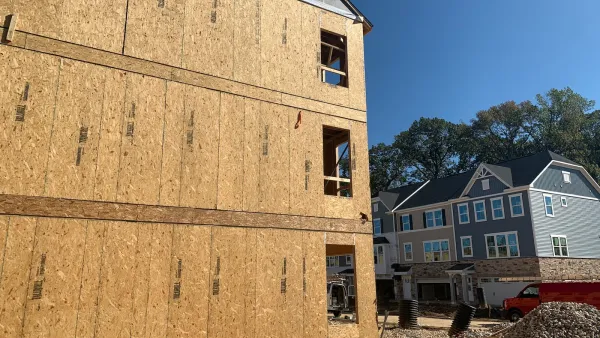
New Maryland housing laws protect developers from mid-project rule changes, encourage TOD
The laws allow developers to withhold certain fee payments from cities and counties until projects are underway to prevent delays due to code changes.
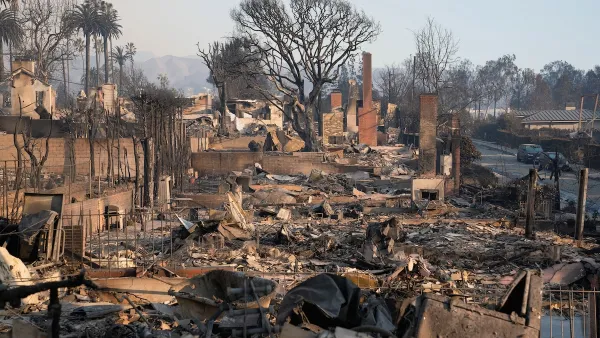
What Housing Crisis?
Los Angeles Mayor Karen Bass issued an executive order that prohibits the construction of duplexes, triplexes or fourplexes from replacing single-family-homes destroyed by the recent wildfires in Pacific Palisades, i.e., the suspension of SB 9.

Planetizen Federal Action Tracker
A weekly monitor of how Trump’s orders and actions are impacting planners and planning in America.

The state-sanctioned urbicide of Austin
People don’t kill cities. Freeways do.

US to reduce Colorado River water deliveries to Mexico
A new Colorado Treaty amendment reduces Mexico’s Colorado River water allocation by 250,000 acre feet.

Nation's most wind-powered state turns to coal as data centers increase energy demand
For the first time in decades, Iowa has increased its generation of coal power.

NYC cools commuters with city's first rain garden above a bus stop
New York City officials say the plants in the rain garden can absorb 16 gallons of rainwater during heavy storms.

Brightline West’s future may rely on $6 billion federal loan
The company has until Nov. 2 to make a $400 million equity investment into its proposed high-speed rail line.

FREE Course: Walkable City 1: Why Walkability?
After describing his path towards focusing on walkability as the essence of good planning, Jeff Speck marches through his five principal reasons for making more walkable places.
Reinventing Malls: Planning Alchemy—Turning Gray Fields Into Gold
The course focuses on the opportunities and imperatives that shape reinvention of mall sites.

Eagle County Government
Harvard University Graduate School of Design
Nashville Planning Department
The Architects Foundation
University of Cincinnati Online
The Pocatello Development Authority
The Urban Renewal Agency of the City of Pocatello
Journal of the American Planning Association