The legislation recognizes community gardens as vital urban spaces and an effective weapon against the impacts of climate change on cities.


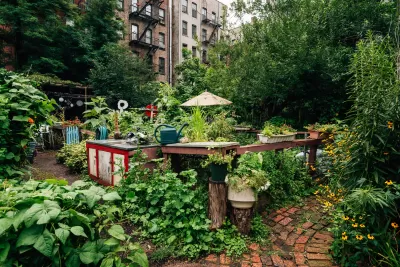
A law passed by the New York state legislature and awaiting the governor’s signature recognizes community gardens as a key tool in the fight against climate change, report David Gonzalez and José A. Alvarado Jr. in The New York Times.
The bill aims to shield gardens on city land by mandating that regulatory officials consider the possible effects of development and construction when reviewing proposals to build on gardens deemed environmental assets by a statewide task force of gardeners.
Often volunteer-run and locally funded affairs, community gardens can provide vital green space in dense urban neighborhoods, educate community members about nutrition, and bring fresh produce closer to the neighborhood. In New York City, they began proliferating in the 1970s. Today, community garden volunteers are working to adjust their infrastructure for heavier storms and more intense heat waves by adding rain barrels and planting hardier crops, among other solutions.
FULL STORY: Vital Places of Refuge in the Bronx, Community Gardens Gain Recognition

6 International Models of Urban Revitalization
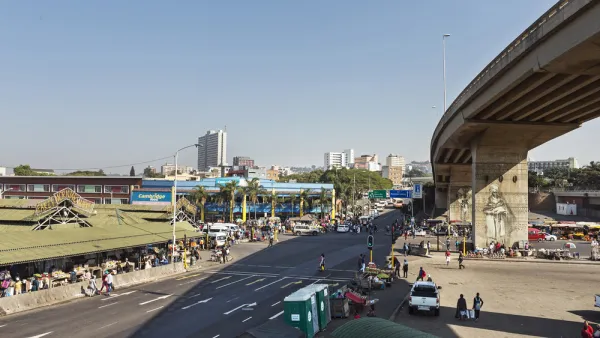
The New York Times recently published an article exploring six cities from around the world reinventing themselves for the 21st century: Paris, Sydney, Medellin, Lisbon, Singapore, and Durban.
Neuroscience and Landscape Architecture
Two new studies use EEG and fMRI to pinpoint which elements of urban parks and gardens induce brain activity associated with meditative states.
Broken Inner-City Freeway Reborn as Garden
Activists have turned the site of a former inner-city freeway in San Francisco into a community garden.

Planetizen Federal Action Tracker
A weekly monitor of how Trump’s orders and actions are impacting planners and planning in America.

The state-sanctioned urbicide of Austin
People don’t kill cities. Freeways do.

US to reduce Colorado River water deliveries to Mexico
A new Colorado Treaty amendment reduces Mexico’s Colorado River water allocation by 250,000 acre feet.

5 New England states march closer to 800 megawatt wind energy project
Securing federal approval for the project may be complicated under the Trump administration, which has historically been hostile towards domestic wind power.

Baltimore to break ground on $50 million Transit Priority Project
The project will bring faster bus trips, safer streets and better bike connections to Baltimore.

Airbnb launches $250 million 'last-dollar financing' housing accelerator, makes first investment in Austin
The company will put $6.4 million towards affordable housing development in Texas’ capital.

FREE Course: Walkable City 1: Why Walkability?
After describing his path towards focusing on walkability as the essence of good planning, Jeff Speck marches through his five principal reasons for making more walkable places.
Reinventing Malls: Planning Alchemy—Turning Gray Fields Into Gold
The course focuses on the opportunities and imperatives that shape reinvention of mall sites.

Eagle County Government
Harvard University Graduate School of Design
Nashville Planning Department
The Architects Foundation
University of Cincinnati Online
The Pocatello Development Authority
The Urban Renewal Agency of the City of Pocatello
Journal of the American Planning Association