Hundreds of residential and commercial buildings in the San Francisco Bay Area are vacant, waiting for electric connections from PG&E.


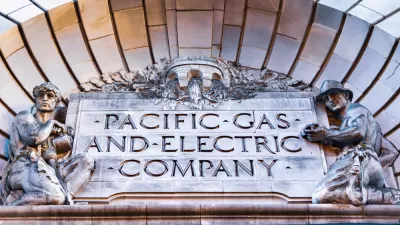
Writing in the San Francisco Chronicle, Dustin Gardiner and Julie Johnson reveal that “Hundreds of newly constructed apartment buildings and businesses in Northern California are sitting empty at any given time because the projects must wait on one entity, Pacific Gas and Electric Co., to turn on the lights.”
According to housing advocates and developers, the utility has become even slower than normal in recent years, preventing hundreds of families and businesses from purchasing and occupying new buildings. “There were 319 commercial and multi-family buildings waiting for PG&E to turn on power as of late February, according to PG&E data obtained by state Sen. Scott Wiener’s office. Of those, 134 buildings had been waiting for more than two months and 95 had been waiting for more than three months.” In rural areas, the wait can take years.
On Monday, State Senator Scott Wiener (D-San Francisco) introduced a bill aimed at holding PG&E accountable and speeding up the interconnection process. The bill, SB 83, would require investor-owned utilities to complete the process within eight weeks or provide financial compensation. San Francisco is building a case to take over PG&E infrastructure in the city and create its own utility.
This kind of delay isn’t unique to the Bay Area, or to PG&E, Gardiner and Johnson note, and rural areas face some of the longest waits. This reflects in the frustration of state lawmakers, who have proposed six measures to address the interconnection delay this year.
Read the full story: New Northern California housing often sits empty, waiting for PG&E to turn on the lights
The High Cost of Curbside Electric Vehicle Charging
There's nothing like the convenience of charging one's electric vehicle at home, assuming you have a garage, driveway, or your apartment building has a charger. California cities and utilities are working to increase EV infrastructure on all fronts.
The High Cost of Burying Power Lines
With speculation that downed power lines and exploding transformers may have caused California's most deadly and destructive wildfires, many question why utility companies don't bury these lines through fire-prone areas.
Bay area voters pass ‘crucial lifeline’ for transit
Proposition RTM, which will fund Bay Area transit, has approval from 61% of voters as of 9:45 p.m. on Nov. 3.

Planetizen Federal Action Tracker
A weekly monitor of how Trump’s orders and actions are impacting planners and planning in America.

California plans to bury El Niño’s downpour
If the state plays its cards right, it may be able to store a billion acre-feet of El Niño’s water in aquifers.

Desperate measures: Advocates weigh draining Lake Powell to fill Colorado River
Draining the reservoir could reduce evaporation losses by a couple hundred thousand acre-feet.

Chicago voters approve permanent festival grounds, penalty for vacant property owners
Currently, major summer and fall festivals take over public parks for weeks at a time, drawing criticism from nearby residents

NYC votes to cut outdoor dining red tape, speed up permitting
New York City also voted to allow the Department of Transportation to begin work on urgent projects before notifying elected officials.

California appears to reject Prop. 45
The proposition would have expanded the projects that qualify for a streamlined environmental review, effectively paring down the California Environmental Quality Act.

FREE Course: Walkable City 1: Why Walkability?
After describing his path towards focusing on walkability as the essence of good planning, Jeff Speck marches through his five principal reasons for making more walkable places.
Reinventing Malls: Planning Alchemy—Turning Gray Fields Into Gold
The course focuses on the opportunities and imperatives that shape reinvention of mall sites.

City of Rosemead
Rutgers University, Edward J. Bloustein School of Planning and Public Policy
One Hundred Miles
Hunter College, City University of New York (CUNY)
The Architects Foundation
University of Cincinnati Online
City of Cambridge
Montrose County
The Pocatello Development Authority