Trains on at least 14 intercity routes will be replaced with a fuel-efficient model with top speeds of 125 mph.


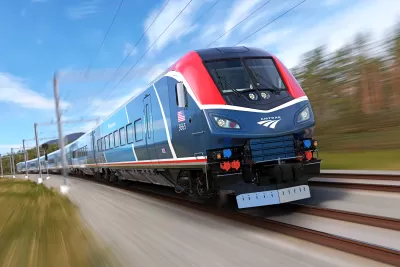
Starting in 2026, Amtrak will replace trains on 14 or more of its intercity lines with a new model capable of speeds of up to 125 miles per hour, reports Dan Zukowski for Smart Cities Dive.
The Amtrak Airo trains will be built by Siemens under a $7.3 billion contract and are more fuel-efficient than older models, with some able to operate on hybrid battery power. Funding for the new equipment will come in part from the 2021 federal infrastructure law as part of President Biden’s pledge to improve U.S. passenger rail service. Amtrak is also replacing trains on the busy Northeast Corridor next year.
Read the full story: Amtrak unveils faster, more fuel-efficient trains for intercity routes
More Passenger Rail Coming to Montana
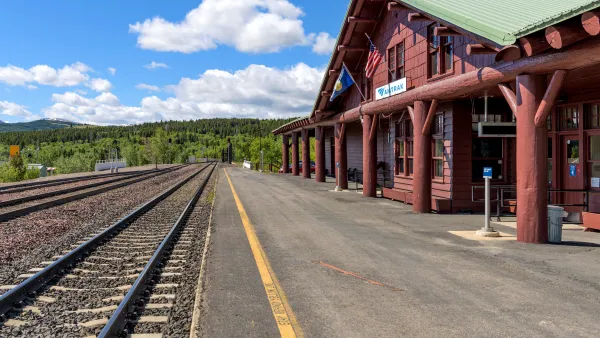
Planning is underway to restore a 45-year-defunct regional passenger rail line connecting southern Montana to Billings and Amtrak’s east-west Empire Builder line from Seattle to Chicago.
The Bright Future of U.S. Passenger Rail
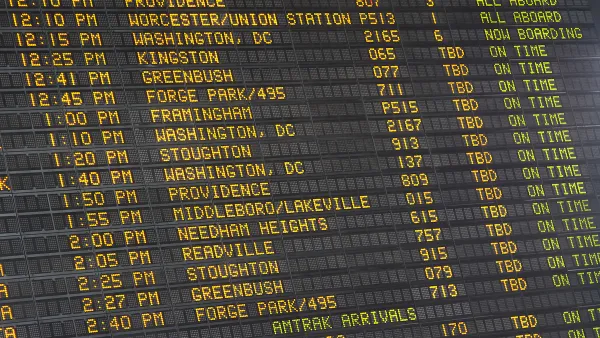
High-speed rail may still be a distant vision in the United States, but conventional passenger rail is having a resurgence.

Ohio Debates Expanded Rail Service
The state has the chance to apply for a piece of $2.3 billion in federal funding to improve and expand Amtrak service.

Desperate measures: Advocates weigh draining Lake Powell to fill Colorado River
Draining the reservoir could reduce evaporation losses by a couple hundred thousand acre-feet.

Eastern Nebraska is running out of electricity
Data centers and electrification are straining eastern Nebraska’s grid, throttling economic development.

Malls are becoming the midtowns of the future
Mall and office park redevelopments are a generational opportunity to create new nodes of urbanity.

NYC breaks ground on anti-flooding infrastructure project
New York City's new system will reduce stormwater flows to local sewers by 90%.

One Kentucky town’s secret to affordable housing
The Smoketown Community Land Trust has already built seven affordable homes for community members.

Houston gains petal-shaped cooling infrastructure to make streets more ‘delightful’
The city has installed the pavilions along 15 blocks in Houston.

FREE Course: Walkable City 1: Why Walkability?
After describing his path towards focusing on walkability as the essence of good planning, Jeff Speck marches through his five principal reasons for making more walkable places.
Reinventing Malls: Planning Alchemy—Turning Gray Fields Into Gold
The course focuses on the opportunities and imperatives that shape reinvention of mall sites.

City of Rosemead
Rutgers University, Edward J. Bloustein School of Planning and Public Policy
One Hundred Miles
University of Michigan School for Environment and Sustainability (SEAS)
Hunter College, City University of New York (CUNY)
The Architects Foundation
City of Cambridge
Montrose County
The Pocatello Development Authority