The county is evaluating its options for spurring construction of 'missing middle' housing that would provide more housing types in the D.C. suburb.


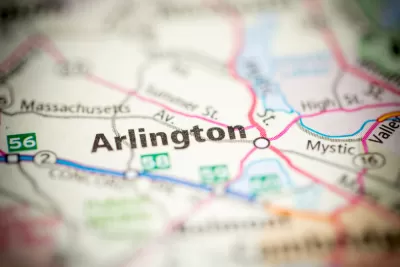
According to an article by Ally Schweitzer, Virginia's Arlington County is entering the second phase of a comprehensive study to evaluate how the county can encourage construction of "missing middle housing" to ease pressures on the local housing market.
With more than three quarters of residential land in Arlington zoned for single-family housing and average home prices reaching close to $1 million, the D.C. suburb is quickly becoming unaffordable to many households. "The county’s first 'Missing Middle' report also shows that most of Arlington’s single-family neighborhoods are at least 70% white, though non-Hispanic whites make up 61% of the county’s total population," Schweitzer writes.
The article provides a primer on the results of the study's first phase, including a definition of missing middle housing, answers to common questions, and an explanation of how rezoning can be an important tool in creating more diverse housing options and reaching affordable housing goals.
The study also assesses the environmental impacts of potential new development, claiming that denser, taller development could actually create fewer impervious surfaces and take up less land than new single-family homes. Increasing the availability of housing types, the report argues, could help reduce the negative impacts of the area's inevitable population growth.
Read the full story: Arlington County Is Studying ‘Missing Middle’ Housing. Here’s What That Means

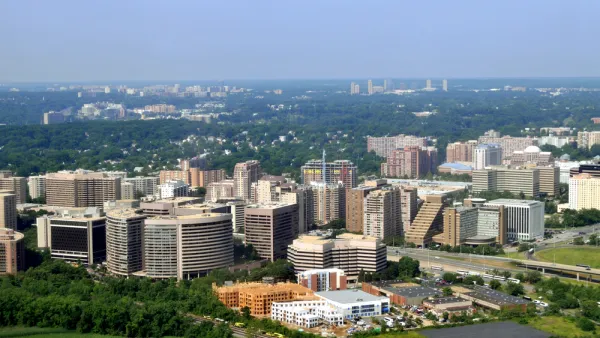
Zoning Reform Gains Momentum in Northern Virginia
Arlington County and Alexandria are moving forward with actions that could potentially launch a new era of planning and development in their respective communities.

The Trouble With QUIMBY
The idea of “quality urbanism in my back yard” has its uses, but should not be used to limit housing supply.
Court Blocks Arlington County Zoning Reform
The county’s zoning reform plan would have promoted ‘missing middle housing’ types of up to six units on lots previously zoned for single-family housing.

Planetizen Federal Action Tracker
A weekly monitor of how Trump’s orders and actions are impacting planners and planning in America.

Amtrak, CN end decades-long dispute with eight-year agreement
The new operating agreement establishes an updated framework for the companies to work together, including processes to resolve disputes.

Judges permit Denver to divert 77,000 acre feet from the Colorado River for reservoir expansion
Overuse and climate change have caused the Colorado River’s water levels to plummet.

NYC DOT wants faster, more permanent street upgrades
The city is examining ways to build more concrete infrastructure without getting entangled in 'decades-long' projects.

'Something we’ve never seen before:' rising utility rates could strain city finances nationwide
Data centers, climate change and other factors have caused utility rates in the United States to increase by 38% since 2020.

Trump to overrule local leaders, lease millions of acres of America’s Pacific Island territories’ seafloors to mining companies
International law says that the Indigenous people of America’s territories have a right to prior and informed consent regarding projects that impact their countries.

FREE Course: Walkable City 1: Why Walkability?
After describing his path towards focusing on walkability as the essence of good planning, Jeff Speck marches through his five principal reasons for making more walkable places.
Reinventing Malls: Planning Alchemy—Turning Gray Fields Into Gold
The course focuses on the opportunities and imperatives that shape reinvention of mall sites.

Harvard University Graduate School of Design
KFH Group Inc.
Greater Baltimore Committee
The Architects Foundation
University of Cincinnati Online
The Pocatello Development Authority
The Urban Renewal Agency of the City of Pocatello