The nationwide house price-to-rent ratio has hit its highest level since 1975.


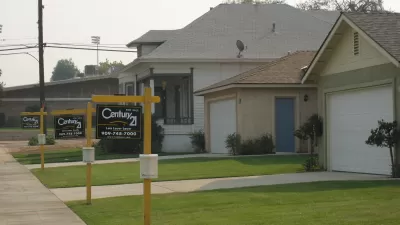
William R. Emmons, an economist at the Federal Reserve Bank of St. Louis, shares details of a key metric for explaining the current state of the housing market.
"The nationwide house price-to-rent ratio, a widely used measure of housing valuation that is analogous to the price-to-dividend ratio for the stock market, is at its highest level since at least 1975," writes Emmons.
"Rapid house price appreciation since last May, combined with a slowdown in rent growth, resulted in a surge in this ratio," explains Emmons for the combination of forces at work in the housing markets. "By February 2021, the national house price-to-rent ratio had surpassed the previous peak reached in January 2006; in March 2021, the ratio was 1% higher than its level at the peak of the housing bubble."
What does that all mean? According to Emmons, the imbalance in the house price-to-rent ratio suggests that the average house is selling for "quite a bit more" than its "fair value."
The article includes more details on the methodology for calculating the house price-to-rent ratio, an explanation of the "fair value" of a house, and a note about the difference between the current housing market and the conditions that led to the subprime meltdown and Great Recession of 2007 to 2009.
Read the full story: House Prices Surpass Housing-Bubble Peak on One Key Measure of Value


The Extreme Measures of the Pandemic 'Housing Boom'
It's hard to describe the current trends in the housing market as a "boom," though homebuying costs are surely rising.

Rents Falling, Vacancies Spiking: The NYC Rental Market Is Shifting
The rental market is triggering metrics not seen since the depths of the Great Recession, according to a new report on the state of the rental market in three New York City boroughs.

Aspen Presses Pause on New Construction, Short-Term Rentals
Residents and elected officials of the famously wealthy mountain town of Aspen don't like the way the city is headed.

Planetizen Federal Action Tracker
A weekly monitor of how Trump’s orders and actions are impacting planners and planning in America.

The state-sanctioned urbicide of Austin
People don’t kill cities. Freeways do.

US to reduce Colorado River water deliveries to Mexico
A new Colorado Treaty amendment reduces Mexico’s Colorado River water allocation by 250,000 acre feet.

Nation's most wind-powered state turns to coal as data centers increase energy demand
For the first time in decades, Iowa has increased its generation of coal power.

NYC cools commuters with city's first rain garden above a bus stop
New York City officials say the plants in the rain garden can absorb 16 gallons of rainwater during heavy storms.

Brightline West’s future may rely on $6 billion federal loan
The company has until Nov. 2 to make a $400 million equity investment into its proposed high-speed rail line.

FREE Course: Walkable City 1: Why Walkability?
After describing his path towards focusing on walkability as the essence of good planning, Jeff Speck marches through his five principal reasons for making more walkable places.
Reinventing Malls: Planning Alchemy—Turning Gray Fields Into Gold
The course focuses on the opportunities and imperatives that shape reinvention of mall sites.

Greater Baltimore Committee
Eagle County Government
Harvard University Graduate School of Design
The Architects Foundation
University of Cincinnati Online
The Pocatello Development Authority
The Urban Renewal Agency of the City of Pocatello
Journal of the American Planning Association