Learn more about twelve AAPI leaders who have designed buildings and skylines, influenced the built environment, shaped U.S. history, and advocated for communities and residents.


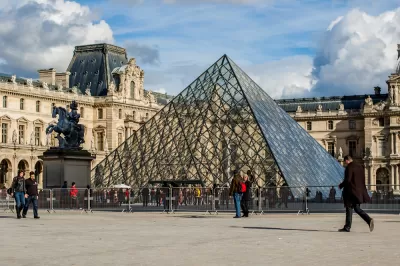
The month of May is officially Asian American and Pacific Islander (AAPI) Heritage Month which was established to recognize the contributions and influence of Asian Americans and Pacific Islander Americans to the history, culture, and achievements of the United States. In its effort to celebrate and acknowledge AAPIs who have shaped our cities and advanced the field of planning, the American Planning Association (APA)'s Planning magazine recently published this article by Taylor Moore which honors the following twelve distinguished individuals (listed in roughly chronological order):
- I.M. Pei (1917-2019)
- Fred Cordova (1931-2013)
- Norman Yoshio Mineta (1931-)
- Robert "Bob" Santos (1934-2016)
- Maxine Kahaulelio (1938-)
- Moanike'ala Akaka (1944-2017)
- Paul Ong (1949-)
- Diane Sugimura (1949-)
- Manjusha P. Kulkarni (1969-)
- Maya Lin (1959-)
- Monisha Das Gupta (1961-)
- Dawn Bohulano Mabalon (1972-2018)
APA recognizes that the above list is by no means comprehensive, but is intended to "shine a spotlight on the many ways that Asian Americans and Pacific Islanders have built careers in service of their communities, especially in the face of adversity." To learn more about each individual, please read the source article.
FULL STORY: 12 Asian Americans and Pacific Islanders Who've Shaped Our Cities

The 100 Most Influential Urbanists
These are the people that have had the most influence on the places and environments that we call home.
Vote for the Most Influential Urbanists
After accepting nearly 200 nominees for consideration, we're asking for votes to determine the "Most Influential Urbanists" of all time.
Poll: Who Are the Most Influential Urbanists?
The world has changed since Planetizen crowdsourced its "Top Urban Thinkers" in 2009. Which urban planners, designers, doers, and dreamers do you think have had the most influence on the world?

The state-sanctioned urbicide of Austin
People don’t kill cities. Freeways do.

US to reduce Colorado River water deliveries to Mexico
A new Colorado Treaty amendment reduces Mexico’s Colorado River water allocation by 250,000 acre feet.

New Jersey’s second-largest city bans standalone data centers
Jersey City will continue to allow co-location facilities, such as those meant for research institutions that store their own data.

Amtrak not solely to blame for New Jersey commuter rail's unreliability, report finds
A new study from the Garden State Initiative found that NJ Transit’s budget grew 20% across a 4 year period, but reliability declined significantly over the same period.

EPA erases limits on planet-warming pollution from power plants
Under Monday’s plan, power plants would still have some limits on how much mercury, arsenic and other contaminants they can emit.

Phoenix announces new on-demand transit service, more frequent RAPID buses
Both new services will launch in October, and are part of Phoenix's Project Effective Access Solutions for Easing Congestion.

FREE Course: Walkable City 1: Why Walkability?
After describing his path towards focusing on walkability as the essence of good planning, Jeff Speck marches through his five principal reasons for making more walkable places.
Reinventing Malls: Planning Alchemy—Turning Gray Fields Into Gold
The course focuses on the opportunities and imperatives that shape reinvention of mall sites.

Eagle County Government
Harvard University Graduate School of Design
Nashville Planning Department
The Architects Foundation
University of Cincinnati Online
The Pocatello Development Authority
The Urban Renewal Agency of the City of Pocatello
Journal of the American Planning Association