COVID-19 restrictions have highlighted the importance of abundant, multi-use open spaces accessible to all.


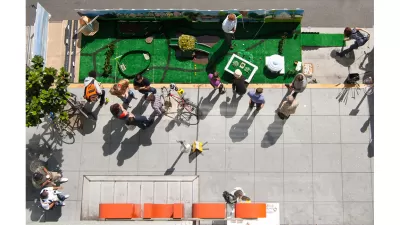
Of the many profound changes experienced by cities in 2020, writes John King, the most meaningful might be the "realization of the importance of public space in all its forms, as well as heightened expectations of what such spaces should provide." From public seating to pocket parks to vast open spaces, the restrictions on indoor(and many outdoor) activities highlighted the need for safe, accessible, and abundant public spaces.
"In a July survey conducted by the East Bay Regional Parks District, more than 20% of the respondents said they visit one of the district’s 73 parks 'weekly,' four times the amount recorded in 2019." Public spaces also took on unexpected uses, including parking lots transformed into dining spaces, vacant lots turned into COVID-19 testing sites, and parks used to distribute free food and necessities. Phil Ginsburg, general manager of San Francisco’s Recreation and Park Department, told the San Francisco Chronicle, "parks are not luxuries or sweet amenities — they’re essential infrastructure."
But some warn against "knee-jerk" reactions from city planners and officials who assume, for example, that restrictions on cars are "an absolute good." Oakland's Slow Streets program received such criticism for its expedited implementation and lack of adequate public outreach. Oakland architect June Grant argues that plans must be made at the neighborhood level, where local users know how they use their local roads and public spaces. Ryan Russo, director of Oakland’s Department of Transportation, admits that the city's policies have often failed to reflect the experiences of underrepresented communities. "It’s too easy to listen to voices that reflect your own experiences. We need to stay in conversation with the community."
Read the full story: As we kept space from one another, our public spaces revealed their new uses
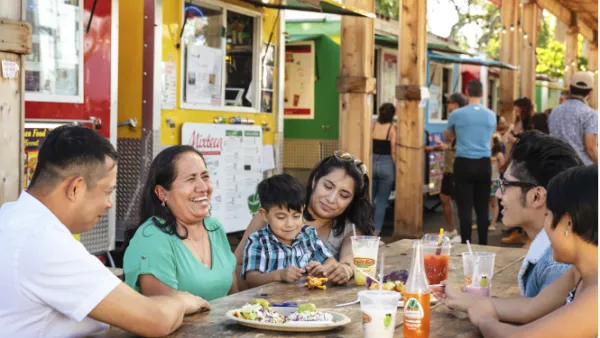
Portland Extends Pandemic Public Space Programs
PBOT will continue two highly successful COVID-era programs that allowed businesses and community groups to repurpose public spaces for pedestrian-oriented uses and engage with customers in safe, accessible outdoor settings.
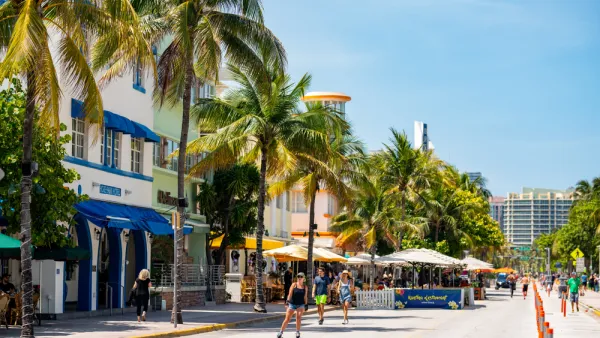
Miami Beach to Reopen Ocean Drive to Cars
The famous cruising strip was off-limits to cars during the pandemic. Now, the city is letting vehicles return with some pedestrian-oriented compromises.
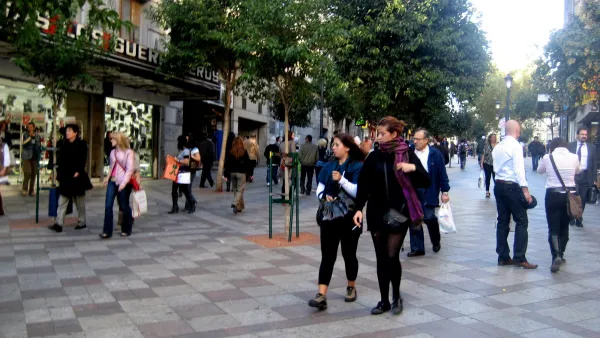
Pedestrian Malls in the 21st Century
The successes and failures of past pedestrian malls can inform the future of pandemic-induced "open streets" programs.

Planetizen Federal Action Tracker
A weekly monitor of how Trump’s orders and actions are impacting planners and planning in America.

California plans to bury El Niño’s downpour
If the state plays its cards right, it may be able to store a billion acre-feet of El Niño’s water in aquifers.

Desperate measures: Advocates weigh draining Lake Powell to fill Colorado River
Draining the reservoir could reduce evaporation losses by a couple hundred thousand acre-feet.

Housing is the top priority of Seattle’s sole new councilmember
Jenks campaigned on building 1,000 new units of affordable housing.

New tax cuts may slash $1.5 billion in funding for Miami transit, public parks
Amendment 3 will save Miami-Dade homeowners $2,700 in 2028.

Arizona, Wisconsin, Pennsylvania hope to finally advance climate goals post-midterms
The three states have spent years under Republican or divided control.

FREE Course: Walkable City 1: Why Walkability?
After describing his path towards focusing on walkability as the essence of good planning, Jeff Speck marches through his five principal reasons for making more walkable places.
Reinventing Malls: Planning Alchemy—Turning Gray Fields Into Gold
The course focuses on the opportunities and imperatives that shape reinvention of mall sites.

City of Rosemead
Rutgers University, Edward J. Bloustein School of Planning and Public Policy
One Hundred Miles
University of Michigan School for Environment and Sustainability (SEAS)
Hunter College, City University of New York (CUNY)
The Architects Foundation
City of Cambridge
Montrose County
The Pocatello Development Authority