Beauty is often known to break the rules.



"Are tall buildings that tower above their surroundings inappropriate?"
That's the question posed by Daniel Herreges to commence an article that scores provocative points about a long-held belief in how cities segregate their tallest buildings to specific, discrete neighborhoods, usually the central business district (CBD).
Another question follows, about the kinds of landscapes, exemplified by towers of rocks surrounded by flat land, and how those landscapes are usually accepted as beautiful and compare to examples in cities where tall buildings are surrounded by shorter buildings.
The article relies on visuals to raise these potential hypocrisies and make the case for allowing more tall buildings in cities, even in neighborhoods outside the CBD.
But Herreges also uses words to persuade the reader: "The point is that the argument that tall buildings should not exist near short buildings for reasons of compatibility is fundamentally about subjective preferences, and we should be intellectually honest in recognizing that."
Herreges ties the discussion back to his own writing from March of this year, about the "garbage language" of planning, of which he includes "out of scale."
Read the full story: Is This Development "Out of Scale"?

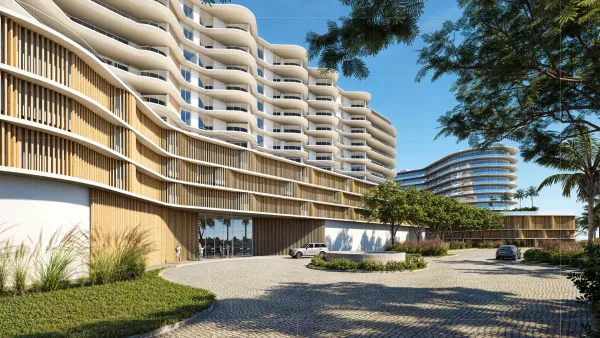
Florida developer uses Live Local Act to bypass zoning rules for massive waterfront project
The proposed Causeway Cove project would include over 900 residential units and more than 400 hotel rooms.
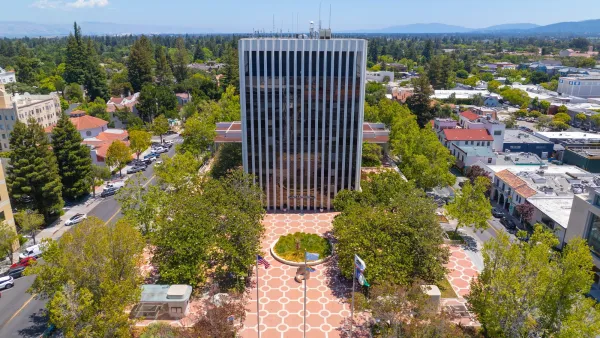
Palo Alto Councilors Propose Law to Curb Billionaire Buy-ups Amid Uproar Over Zuckerberg Compound
Mark Zuckerberg has bought 11 homes, building a massive compound with a private school and heavy security patrols.
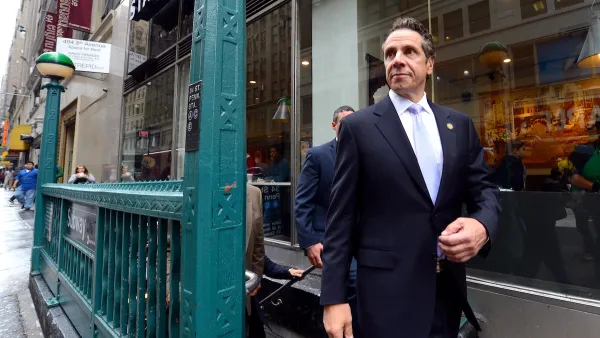
Cuomo Is the Candidate of Both NIMBYs and Developers. What Gives?
In the New York City mayoral race, odd bedfellows align to preserve the housing status quo.

Planetizen Federal Action Tracker
A weekly monitor of how Trump’s orders and actions are impacting planners and planning in America.

The state-sanctioned urbicide of Austin
People don’t kill cities. Freeways do.

US to reduce Colorado River water deliveries to Mexico
A new Colorado Treaty amendment reduces Mexico’s Colorado River water allocation by 250,000 acre feet.

Nation's most wind-powered state turns to coal as data centers increase energy demand
For the first time in decades, Iowa has increased its generation of coal power.

NYC cools commuters with city's first rain garden above a bus stop
New York City officials say the plants in the rain garden can absorb 16 gallons of rainwater during heavy storms.

Brightline West’s future may rely on $6 billion federal loan
The company has until Nov. 2 to make a $400 million equity investment into its proposed high-speed rail line.

FREE Course: Walkable City 1: Why Walkability?
After describing his path towards focusing on walkability as the essence of good planning, Jeff Speck marches through his five principal reasons for making more walkable places.
Reinventing Malls: Planning Alchemy—Turning Gray Fields Into Gold
The course focuses on the opportunities and imperatives that shape reinvention of mall sites.

Greater Baltimore Committee
Eagle County Government
Harvard University Graduate School of Design
The Architects Foundation
University of Cincinnati Online
The Pocatello Development Authority
The Urban Renewal Agency of the City of Pocatello
Journal of the American Planning Association