Some landlords in the Los Angles area aren't adhering to eviction moratoriums. In the midst of enormous financial strain, they are employing illegal tactics to forcibly remove tenants.


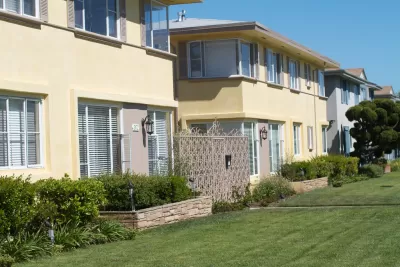
Los Angeles Police Department data shows that despite anti-eviction orders, landlords in the Los Angeles area are illegally and forcibly removing tenants from their homes during coronavirus lockdown. "Some Los Angeles landlords are still trying to oust tenants by locking them out of their homes, turning off their utilities and deploying other illegal methods," write Liam Dillon and Ben Poston who reviewed "290 instances of potential illegal lockouts and utility shutoffs across the city, according to the data."
Since the onset of shelter-in-place orders, landlord-tenant disputes have increased by 17%, according to the article. Representatives of the L.A Tenants Union, a citywide organization working on behalf of tenants to block evictions, says the group has seen a massive uptick in requests for support, especially from tenants in South Los Angeles.
Dillon and Poston discovered that a disproportionate number of the LAPD reports of landlord-tenant disputes came from neighborhoods in Black and Latino neighborhoods in South L.A., where residents are already experiencing the greatest health and financial impacts from the coronavirus in addition to extremely high rent burdens.
FULL STORY: Despite protections, landlords seek to evict tenants in Black and Latino areas of South L.A.


L.A.'s Pandemic Rent Cap to Stay in Place Until 2023
Landlords have been unable to raise rents on rent stabilized apartments in Los Angeles since March 2020. Unlike in other large cities with similar rules, Los Angeles won't be removing the rent cap anytime soon.
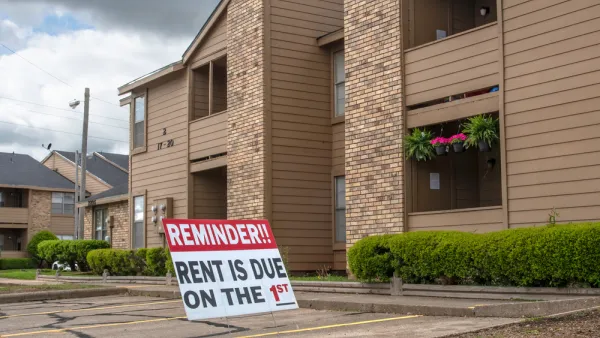
Landlords, Investors Lining Up to Evict Non-Paying Tenants
Rental housing is booming business, and some landlords and their investors see additional dollar signs in the potential to evict tenants protected by eviction moratoria up until this point in the pandemic.
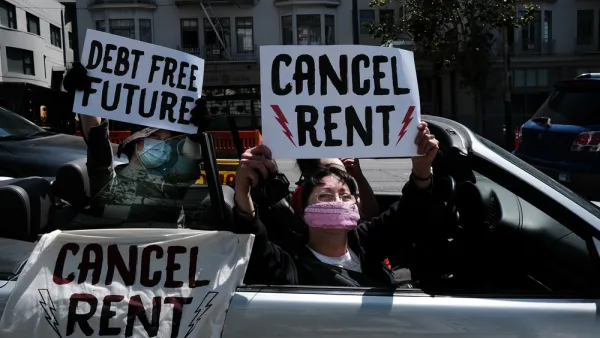
Report Breaks Down Pandemic Rent Burdens by State and Metro Area
The share of U.S. households facing rent debt is decreasing as the economy begins to recover from the pandemic, but rent debt is still concentrated by geography and demographics around the country.

Planetizen Federal Action Tracker
A weekly monitor of how Trump’s orders and actions are impacting planners and planning in America.

The state-sanctioned urbicide of Austin
People don’t kill cities. Freeways do.

US to reduce Colorado River water deliveries to Mexico
A new Colorado Treaty amendment reduces Mexico’s Colorado River water allocation by 250,000 acre feet.

5 New England states march closer to 800 megawatt wind energy project
Securing federal approval for the project may be complicated under the Trump administration, which has historically been hostile towards domestic wind power.

Baltimore to break ground on $50 million Transit Priority Project
The project will bring faster bus trips, safer streets and better bike connections to Baltimore.

Airbnb launches $250 million 'last-dollar financing' housing accelerator, makes first investment in Austin
The company will put $6.4 million towards affordable housing development in Texas’ capital.

FREE Course: Walkable City 1: Why Walkability?
After describing his path towards focusing on walkability as the essence of good planning, Jeff Speck marches through his five principal reasons for making more walkable places.
Reinventing Malls: Planning Alchemy—Turning Gray Fields Into Gold
The course focuses on the opportunities and imperatives that shape reinvention of mall sites.

Eagle County Government
Harvard University Graduate School of Design
Nashville Planning Department
The Architects Foundation
University of Cincinnati Online
The Pocatello Development Authority
The Urban Renewal Agency of the City of Pocatello
Journal of the American Planning Association