After decades of "just-good-enough when it comes to design," now may be the time for Toronto to take steps to upgrade its aesthetics.


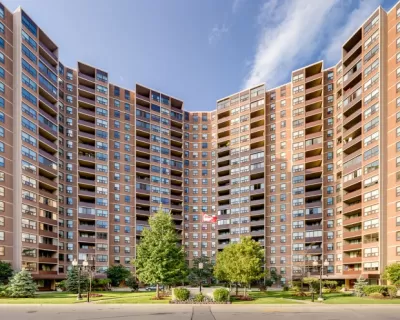
"Why must we put up with a city that is, let's face it, pretty darn ugly?" asks The Toronto Star's Editorial Board. "Especially at this time of year, when the darkness closes in and we collectively brace for the frozen months ahead. Why can't there be more beauty, more colour, more delight to get us through?"
Even though the city is "many years into the biggest building boom in its history," it's not too late to start paying more attention to design, the editorial goes on.
Beginning in the 1960s and 70s, "the city was despoiled by scores of concrete towers that stand as a visual middle finger to the ordinary mortals condemned to dwell among them. Only consciously contrarian architecture critics, with their disdain for such mundane concerns as beauty and harmony, continue to defend these monstrosities."
The editorial praises a recent call from Toronto's city council for ideas on how to beautify the city. "What are city planners for if not to plan a city that is not merely functional, but harmonious, beautiful, uplifting and yes, even surprising and delightful at times?"
Read the full story: Torontonians deserve a more beautiful city


Expanding the Concept of Transit-Oriented Development: Lessons from Abroad
Keeping transit planning and development siloed can limit opportunities to build affordable housing and vibrant neighborhoods.
A New Model for Community-Led Neighborhood Revitalization
A case study in community-led neighborhood revitalization.
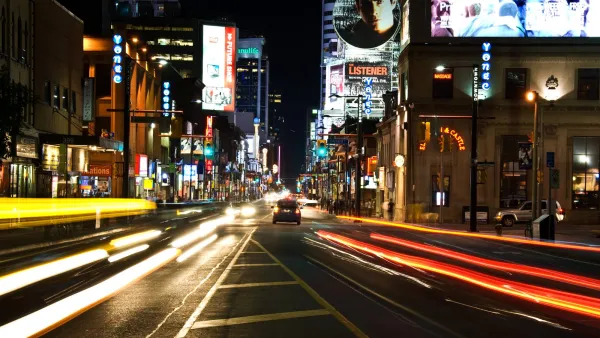
A Pedestrian-Forward Vision for Toronto Roadway
Toronto’s iconic Yonge Street is heavily used by pedestrians, and, according to this article, it's time for a revamp that acknowledges all of the street's users.

Planetizen Federal Action Tracker
A weekly monitor of how Trump’s orders and actions are impacting planners and planning in America.

California plans to bury El Niño’s downpour
If the state plays its cards right, it may be able to store a billion acre-feet of El Niño’s water in aquifers.

Chicago breaks ground on $3 billion megadevelopment
The new neighborhood, titled Foundry Park, will one day host 3,700 residences.

Satanic Place Names
From streams and lakes to valleys and canyons, I mapped more than 1,000 places named after the Devil.

California High-Speed Rail Authority CEO resigns after $600,000 scandal
Under Ian Choudri, the authority used taxpayer dollars to fund first class flights and trips to nightclubs.

Want to study the Missouri River? Soon, you may need unanimous approval from 10 states
Legislation would require 10 governors’ permission to study or build projects moving water outside the basin.

FREE Course: Walkable City 1: Why Walkability?
After describing his path towards focusing on walkability as the essence of good planning, Jeff Speck marches through his five principal reasons for making more walkable places.
Reinventing Malls: Planning Alchemy—Turning Gray Fields Into Gold
The course focuses on the opportunities and imperatives that shape reinvention of mall sites.

City of Rosemead
Rutgers University, Edward J. Bloustein School of Planning and Public Policy
One Hundred Miles
Hunter College, City University of New York (CUNY)
The Architects Foundation
University of Cincinnati Online
City of Cambridge
Montrose County
The Pocatello Development Authority