Employment in Pontiac has risen 14.2 percent since 2010, the city is fiscally sound, and development investments continue.


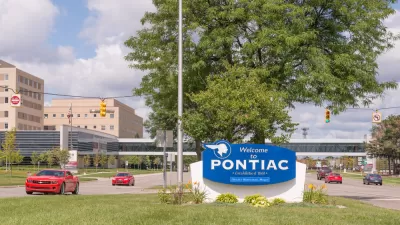
Candice Williams reports from Pontiac, Michigan, where the "budget is in the black, new businesses are opening in town and development projects are giving residents hope for a brighter future."
The news is a marked contrast to the state of the city in 2009, at the height of the Great Recession, when the city faced a $6 million budget shortfall and $100 million in accumulated debt.
The new employers in Pontiac "range from engine manufacturer Williams International, which moved to the city last year, to retail giant Amazon, which plans to build fulfillment and distribution centers on the site of the former Pontiac Silverdome starting next year in a $250 million project that will create 1,500 jobs," according to Williams.
The article includes a lot more detail on the proposed development at the Pontiac Silverdome site, as well as more on the catalytic potential of the development.
FULL STORY: Pontiac on revival track as businesses move in

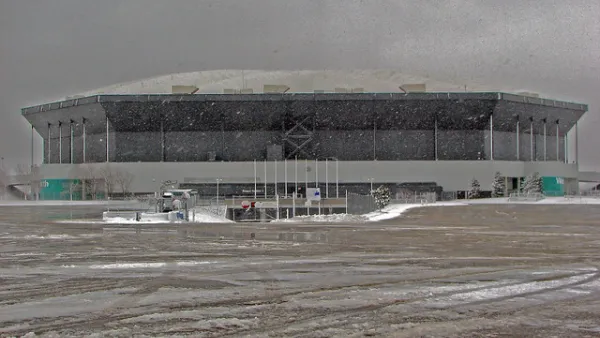
Amazon Moving in at Former Pontiac Silverdome Site
Amazon's move to the Detroit area will bring 1,500 jobs to the region at the location of a demolished NFL stadium.
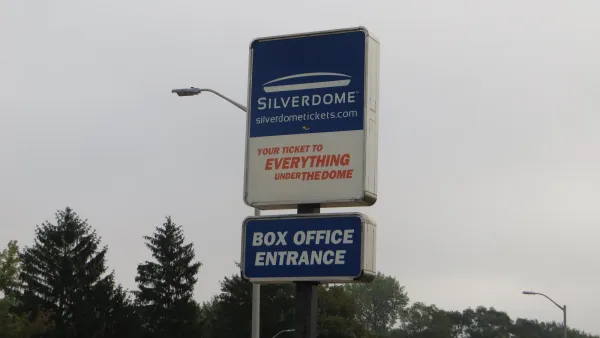
Volkswagen Emissions Cheating Scandal Produces Land Use Lawsuit in Michigan
The city of Pontiac has filed a lawsuit over the illegal storage of hundreds of Volkswagen vehicles. The vehicles have mothballed at the Pontiac Silverdome as a result of the buy-back program necessitated by the 2016 emissions cheating scandal.

Amazon launches cargo bike deliveries in DC
The e-commerce giant is deploying micromobility devices including cargo bikes and mopeds in several global markets to reduce the need for larger trucks and vans for last-mile deliveries.

Planetizen Federal Action Tracker
A weekly monitor of how Trump’s orders and actions are impacting planners and planning in America.

The state-sanctioned urbicide of Austin
People don’t kill cities. Freeways do.

US to reduce Colorado River water deliveries to Mexico
A new Colorado Treaty amendment reduces Mexico’s Colorado River water allocation by 250,000 acre feet.

Airbnb launches $250 million 'last-dollar financing' housing accelerator, makes first investment in Austin
The company will put $6.4 million towards affordable housing development in Texas’ capital.

Guerilla urbanists are building DIY bus stop benches in Chicago
A before-and-after of one of the bus stops with a new bench. The new benches are not officially sanctioned or permitted, but the residents who placed them hope they will be the start of a network of DIY benches across the city.

Mamdani overhauls NYC's Vision Zero plan with 100 new policy goals
The overhaul aims to reduce traffic deaths and make streets safer for pedestrians, cyclists and drivers through lower speed limits, new safety infrastructure and more.

FREE Course: Walkable City 1: Why Walkability?
After describing his path towards focusing on walkability as the essence of good planning, Jeff Speck marches through his five principal reasons for making more walkable places.
Reinventing Malls: Planning Alchemy—Turning Gray Fields Into Gold
The course focuses on the opportunities and imperatives that shape reinvention of mall sites.

Eagle County Government
Harvard University Graduate School of Design
Nashville Planning Department
The Architects Foundation
University of Cincinnati Online
The Pocatello Development Authority
The Urban Renewal Agency of the City of Pocatello
Journal of the American Planning Association