A new fee would add an estimated 6 percent to the cost of building new office space in San Francisco, yet not many from the business community resisted the new costs.


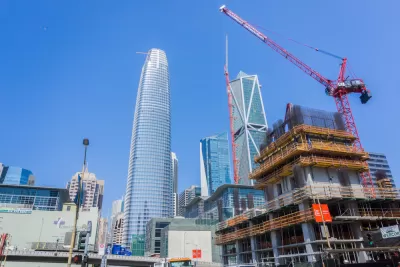
"[I]n San Francisco, which has seen jobs grow 38% since 2010, legislation to double a fee on office development over the next few years breezed through the legislative process, winning unanimous support on Tuesday from the Board of Supervisors," reports J.K. Dineen.
"The increase in the one-time fees creates an additional $170 million for affordable housing, for a total of $385 million over the next five to seven years," according to Dineen.
The legislation didn't meet much resistance, despite predictions by City Economist Ted Egan that the fee would cost the city in job creation capacity, because of the intense need for affordable housing in the city.
Read the full story: New SF fee on office buildings to pay for affordable housing sails through
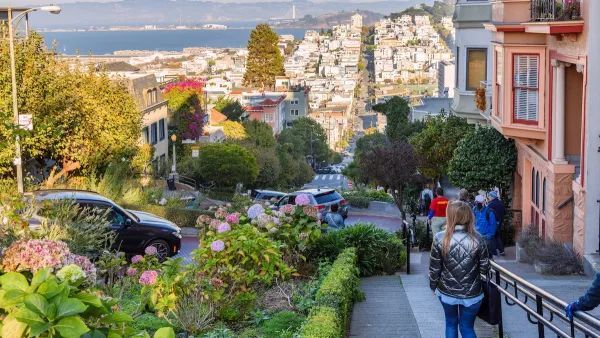
San Francisco Mayor’s ‘Family Zoning’ Plan Faces Pushback, Displacement Concerns
Newly proposed legislation aims to protect long-term tenants from displacement caused by Mayor Lurie’s proposed zoning reform plan, which would allow for more housing construction in parts of the city.

A San Francisco University Just Built Over 650 Affordable Units. Are Institutions the Answer to the Housing Crisis?
With access to planning resources not always available to private developers, universities are uniquely positioned to build housing quickly and cost-effectively.
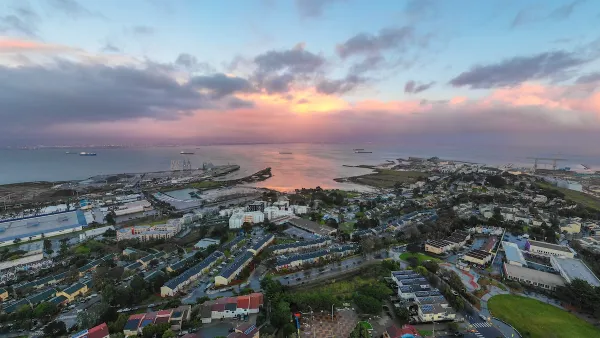
20,000 San Francisco Homes Stalled in Construction Pipeline
Despite getting permits as long as a decade ago, thousands of proposed housing units are still waiting to be built.

Planetizen Federal Action Tracker
A weekly monitor of how Trump’s orders and actions are impacting planners and planning in America.

California plans to bury El Niño’s downpour
If the state plays its cards right, it may be able to store a billion acre-feet of El Niño’s water in aquifers.

Desperate measures: Advocates weigh draining Lake Powell to fill Colorado River
Draining the reservoir could reduce evaporation losses by a couple hundred thousand acre-feet.

Mamdani’s pied-à-terre tax survives legal challenge
A panel of judges found that the plaintiffs failed to demonstrate injury as a result of New York City's implementation of the tax.

Eastern Nebraska is running out of electricity
Data centers and electrification are straining eastern Nebraska’s grid, throttling economic development.

Seattle passes record-breaking transit services expansion
Proposition 1 will double the city’s transit tax to add 95,000 more bus trips and preserve 180,000 bus trips annually.

FREE Course: Walkable City 1: Why Walkability?
After describing his path towards focusing on walkability as the essence of good planning, Jeff Speck marches through his five principal reasons for making more walkable places.
Reinventing Malls: Planning Alchemy—Turning Gray Fields Into Gold
The course focuses on the opportunities and imperatives that shape reinvention of mall sites.

City of Rosemead
Rutgers University, Edward J. Bloustein School of Planning and Public Policy
One Hundred Miles
University of Michigan School for Environment and Sustainability (SEAS)
Hunter College, City University of New York (CUNY)
The Architects Foundation
City of Cambridge
Montrose County
The Pocatello Development Authority