An initiative in the early stages in Toronto would require city planners, among other public officials, to more directly consider the needs of the female residents of the city.



Lauren Pelley reports that Toronto city staff "have outlined a plan for bringing a gender-based lens to city programs and services — in areas like housing, transit, child care, and urban planning — while establishing a new unit to make that strategy a reality."
City staff have prepared a report for implementing the gender-based considerations for presentation to Mayor John Tory's executive staff.
To exemplify the need for a gender inequity focus at the city level, Pelley cites examples like the wage gap between genders in the city and the need for public safety considerations designed specifically for women and girls. The report also notes a shortage of female leadership in the city, both in private business and in elected positions.
The gender equity effort "started with a survey from Vienna city officials two decades ago on how residents use public transportation, notes coverage from CityLab," explains Pelley. "It found women used public transit more often than men, and made more trips on foot."
Read the full story: Gender equity lens for Toronto city planning 'long overdue,' councillor says

Are Movie Studios 'Highest and Best Use' During a Housing Affordability Crisis?
Toronto's answer to the question posed in the headline is, "yes." One columnist wonders if the city can do more to balance its priorities.

Toronto Reconsidering its Parking Requirements
Parking reform is reaching new frontiers.
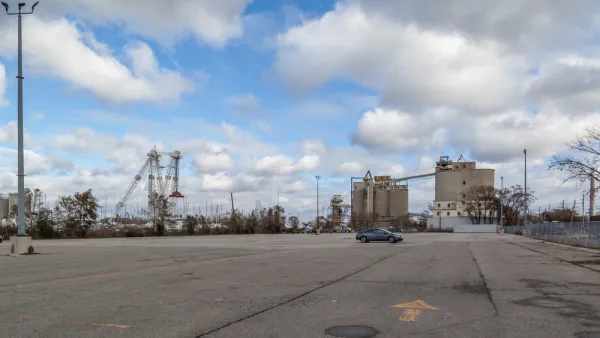
After Sidewalk Labs, a New Plan Emerges for Toronto's Waterfront
Just shy of a year after Sidewalk Labs pulled the plug on its "smart city" experiment for Quayside, Waterfront Toronto has a released a request for qualifications to move forward with a new, "people-centered" vision for the waterfront.

Desperate measures: Advocates weigh draining Lake Powell to fill Colorado River
Draining the reservoir could reduce evaporation losses by a couple hundred thousand acre-feet.

Eastern Nebraska is running out of electricity
Data centers and electrification are straining eastern Nebraska’s grid, throttling economic development.

Malls are becoming the midtowns of the future
Mall and office park redevelopments are a generational opportunity to create new nodes of urbanity.

NYC breaks ground on anti-flooding infrastructure project
New York City's new system will reduce stormwater flows to local sewers by 90%.

One Kentucky town’s secret to affordable housing
The Smoketown Community Land Trust has already built seven affordable homes for community members.

Houston gains petal-shaped cooling infrastructure to make streets more ‘delightful’
The city has installed the pavilions along 15 blocks in Houston.

FREE Course: Walkable City 1: Why Walkability?
After describing his path towards focusing on walkability as the essence of good planning, Jeff Speck marches through his five principal reasons for making more walkable places.
Reinventing Malls: Planning Alchemy—Turning Gray Fields Into Gold
The course focuses on the opportunities and imperatives that shape reinvention of mall sites.

City of Rosemead
Rutgers University, Edward J. Bloustein School of Planning and Public Policy
One Hundred Miles
University of Michigan School for Environment and Sustainability (SEAS)
Hunter College, City University of New York (CUNY)
The Architects Foundation
City of Cambridge
Montrose County
The Pocatello Development Authority