Details provided regarding the Virginia Supreme Court ruling in Helmick Family Farm, LLC v. Commissioner of Highways.


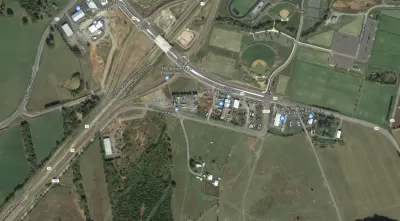
Robert Thomas writes on the Inversecondemnation blog about a recent ruling in the Virginia Supreme Court that will have an effect on eminent domain.
In the ruling for Helmick Family Farm, LLC v. Commissioner of Highways., according to Thomas, all seven justices agreed that evidence of a reasonable probability of rezoning may be admissible during an eminent domain valuation. "Where the court split 4-3 was on whether the situation on the ground (so to speak) merited the jury hearing about it," adds Thomas. "The majority concluded that the owner of a vacant plot of agriculturally-zoned land was wrongfully denied the ability to present to the jury evidence that there was a reasonable probability the property could be rezoned to a more intense use."
The ruling comes down to a question of hypotheticals, and whether the highest and best use of a property should be considered, not just its current use, as explained in the post. Thomas is clearly in support for the ruling, and expresses frustration with the legal status quo prior to the ruling, and the specific example that led to the case and the ruling.
Hat tip to Dwight Merriam for sharing news of Thomas's post, and for providing additional information on a similar example from New York.
Read the full story: Virginia SCT: Reasonable Probability Of Rezoning Is Something The Jury Should Consider

Commentary: Eminent Domain is a Slippery Slope
Can accepting eminent domain lead to accepting the loss of other, more foundational rights?

TxDOT Wages Quiet Battle to Acquire Properties for I-35 Expansion
TxDOT has filed “takings lawsuits” against holdout property owners along the eight-mile stretch of I-35 slated for widening in Austin, but property owners say the agency isn't offering just compensation.
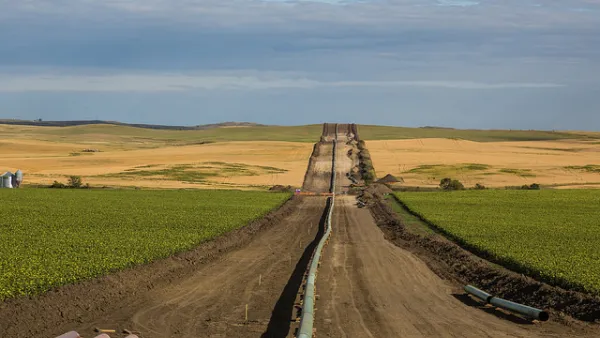
Dakota Access Pipeline Owners Win Eminent Domain Appeal in Iowa Supreme Court
The Iowa Supreme Court affirmed a lower court ruling that found that the Iowa Utilities Board was justified in giving the private owners of the Dakota Access Pipeline the use of eminent domain. Climate change was considered in the ruling.

Planetizen Federal Action Tracker
A weekly monitor of how Trump’s orders and actions are impacting planners and planning in America.

California plans to bury El Niño’s downpour
If the state plays its cards right, it may be able to store a billion acre-feet of El Niño’s water in aquifers.

Desperate measures: Advocates weigh draining Lake Powell to fill Colorado River
Draining the reservoir could reduce evaporation losses by a couple hundred thousand acre-feet.

US buildings threatened, destroyed by fires set to triple by 2060
Researchers found a high fire risk for socioeconomically vulnerable neighborhoods in the American West.

LA residents may be allowed to paint their own crosswalks
Councilwoman Katy Yaroslavsky put out a motion instructing the Los Angeles Department of Public Transportation to study the feasibility of allowing volunteers to paint crosswalks.

Dallas moves to overhaul its zoning code
The city's zoning reform will allow more multi-family and mixed-use developments.

FREE Course: Walkable City 1: Why Walkability?
After describing his path towards focusing on walkability as the essence of good planning, Jeff Speck marches through his five principal reasons for making more walkable places.
Reinventing Malls: Planning Alchemy—Turning Gray Fields Into Gold
The course focuses on the opportunities and imperatives that shape reinvention of mall sites.

City of Rosemead
Rutgers University, Edward J. Bloustein School of Planning and Public Policy
One Hundred Miles
Hunter College, City University of New York (CUNY)
The Architects Foundation
University of Cincinnati Online
City of Cambridge
Montrose County
The Pocatello Development Authority