Developers are working to attract tenants to co-working spaces, in a relationship that they say benefits companies as well as surrounding communities.



Tom Acitelli reports that more co-working ventures are becoming part of developments in opportunity zones—an ideal situation for the developments, in economically distressed communities, that need tenants.
"Co-working spaces are a natural draw, enticing start-ups and established companies looking for short-term, flexible office space. Marry the investment via the zones with such entrepreneurial spirit, and the co-working spaces can help incubate the economic turnaround the distressed areas need," reports Acitelli.
Advocates say the co-working spaces are a draw for entrepreneurs and the proximity of startups helps fuel innovation. The opportunity zones are also located in areas outside of traditional technology hubs, in places like New Orleans, Newark, and Memphis.
Still, even with an increase in co-working spaces nationwide, developers in opportunity zones say they face long-term challenges. "Given the decade-long hold that opportunity zone investments require, it will take time to see whether the returns for investors and the communities materialize," notes Acitelli.
Read the full story: How Opportunity Zones and Co-Working Spaces Joined Forces


2019 Already a Big Year For 'Smart City' Evolution
While 2019 doesn’t scream smart city revolution, we are seeing signs of significant smart city evolution.

Cities Positioning for an Expanding Venture Capital Market
Cities outside of the big coastal tech hubs have characteristics well suited for the high-tech sector.

The Days of 'Uber-for-X' May Be Over
On-demand laundry service Washio is only the most recent "Uber-for-X" startup to shut down.

Planetizen Federal Action Tracker
A weekly monitor of how Trump’s orders and actions are impacting planners and planning in America.

‘Going backwards:’ Baltimore mayor, students rally against state's transit funding plan
Maryland's proposed six-year plan provides no funding for Baltimore’s BMORE bus program and reduces its road maintenance funding.
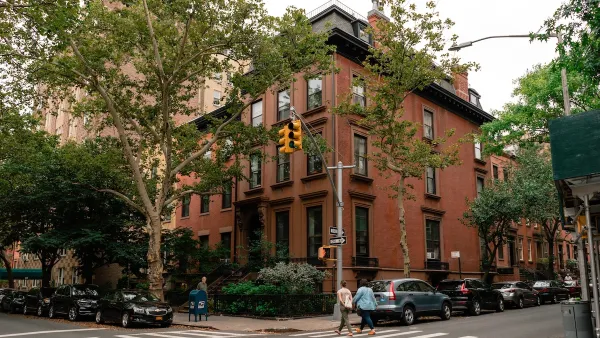
Mamdani sent nearly 6,000 pied-à-terre tax warnings to homes that didn’t qualify
A judge has ordered the administration to cancel thousands of pied-à-terre tax notices after it sent 35% of them erroneously.

Mamdani sent nearly 6,000 pied-à-terre tax warnings to homes that didn’t qualify
A judge has ordered the administration to cancel thousands of pied-à-terre tax notices after it sent 35% of them erroneously.

Detroit to transform waterfront with $2.2 billion investment
Developers will convert about 18 acres of unused parking lot space into civic spaces.

‘Going backwards:’ Baltimore mayor, students rally against state's transit funding plan
Maryland's proposed six-year plan provides no funding for Baltimore’s BMORE bus program and reduces its road maintenance funding.

FREE Course: Walkable City 1: Why Walkability?
After describing his path towards focusing on walkability as the essence of good planning, Jeff Speck marches through his five principal reasons for making more walkable places.
Reinventing Malls: Planning Alchemy—Turning Gray Fields Into Gold
The course focuses on the opportunities and imperatives that shape reinvention of mall sites.

City of Thousand Oaks
City of Wisconsin Rapids
Harvard University Graduate School of Design
The Architects Foundation
University of Cincinnati Online
Northern Illinois Transit Authority (NITA)
The Pocatello Development Authority
The Urban Renewal Agency of the City of Pocatello