The developers of a large residential development in the Seat Village neighborhood of San Diego is including a large number of apartments affordable to low-income residents, but in a separate building.


"The developer of an East Village [San Diego] highrise apartment building wants to house its poorer renters in a separate building next door," reports Phillip Molnar.
"If approved, the project would mark the first time a downtown developer has put low-income units in a different building as opposed to incorporating them into the same complex," according to Molnar.
The developer is proposing a 32-story tower that will include 387 market-rate housing units. A smaller, eight-story building will house 38 low-income apartments.
The news brings to mind controversies of yesteryear—like the Extell Development Company development approved by the New York City Department of Housing Preservation and Development in 2014, creating a controversy about the architecture and development of affordable housing that attracted national attention.
Read the full story: Proposed San Diego complex would have separate building for low-income renters

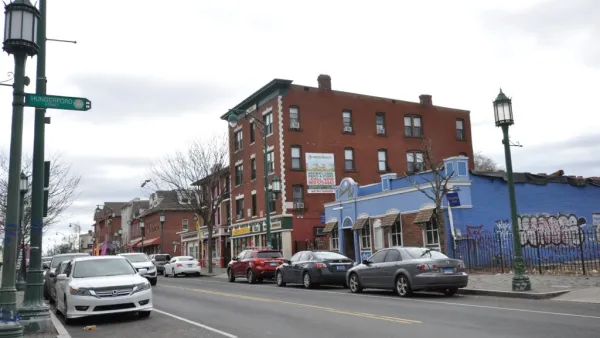
Low-Income Housing Tax Credits: 'Erecting Pockets of Poverty'
The state of Connecticut deploys almost all of its federal housing funding in impoverished communities, according to this bombshell investigatory report.

Op-Ed: Why Cities Need the 'Poor Door'
Drawing on a distinction between equality and equity, Rick Jacobus argues that so-called 'poor doors' are a necessary compromise to promote affordable housing and neighborhood integration.

San Diego establishes $8.5M affordable housing fund
The new fund will let local nonprofits and developers apply for funding to shore up the city's affordable housing stock.

Planetizen Federal Action Tracker
A weekly monitor of how Trump’s orders and actions are impacting planners and planning in America.

California plans to bury El Niño’s downpour
If the state plays its cards right, it may be able to store a billion acre-feet of El Niño’s water in aquifers.

Chicago breaks ground on $3 billion megadevelopment
The new neighborhood, titled Foundry Park, will one day host 3,700 residences.

Move over, LA: St. Louis gears up for Olympics, invests millions in downtown redevelopment
The Missouri city will host the 2028 Olympic soccer group stage and knockout matches.

Satanic place names
From streams and lakes to valleys and canyons, I mapped more than 1,000 places named after the Devil.

California High-Speed Rail Authority CEO resigns after $600,000 scandal
Under Ian Choudri, the authority used taxpayer dollars to fund first class flights and trips to nightclubs.

FREE Course: Walkable City 1: Why Walkability?
After describing his path towards focusing on walkability as the essence of good planning, Jeff Speck marches through his five principal reasons for making more walkable places.
Reinventing Malls: Planning Alchemy—Turning Gray Fields Into Gold
The course focuses on the opportunities and imperatives that shape reinvention of mall sites.

City of Rosemead
Rutgers University, Edward J. Bloustein School of Planning and Public Policy
One Hundred Miles
Hunter College, City University of New York (CUNY)
The Architects Foundation
University of Cincinnati Online
City of Cambridge
Montrose County
The Pocatello Development Authority