There's plenty of vacant or underutilized land to be found in Miami-Dade County, if you know where and how to look.


Rene Rodriguez and Sarah Moreno share news of a new mapping tool by researchers at the University of Miami that locates vacant and underutilized land in Mimi-Dade County.
Rodriguez and Moreno share the data illustrated by the mapping tool as counter evidence to claims by local developers about land scarcity in the county. According to the new Land Access for Neighborhood Development tool (LAND), "there are actually 500 million square feet of vacant or underutilized land scattered across Miami-Dade County. The land is either publicly or institutionally owned."
The LAND tool is the work of the Miami Housing Solutions Lab at the University of Miami's Office of Civic and Community Engagement (CCE).
"The program, which is free to use and available to the public, collects and visualizes data from the Miami-Dade County Property Appraiser," according to Ridriguez and Moreno. "It allows users to apply various filters to searches, so they can distinguish vacant, available city lots from county-owned land previously used but no longer needed by government agencies. (They’re called surplus lots.)"
FULL STORY: Developers say there’s no vacant land in Miami. This tool shows half a billion square feet.

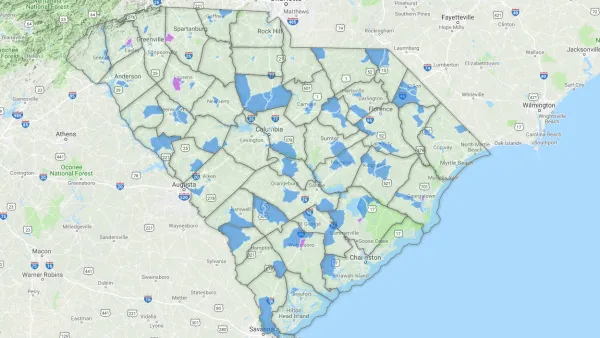
District By District, Maps Trace Neighborhood Opportunity Across the U.S.
Down to the level of individual census tracts, a team of researchers has developed national maps showing where upward mobility is probable, and where it isn't.

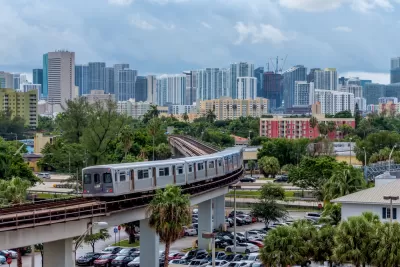
Miami to Launch America's First Fully Electric Bus Rapid Transit Line
The project, led by Miami-Dade County, will link Dadeland South to Florida City via a 20-mile dedicated lane.
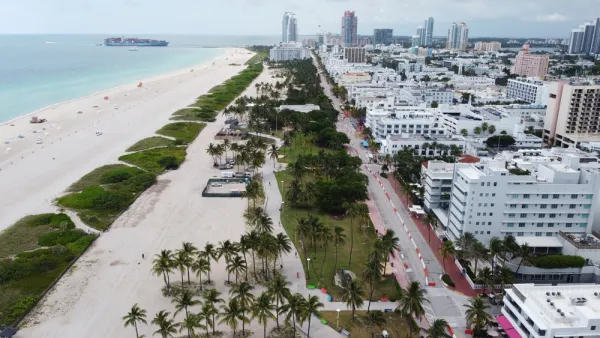
Miami Loses Population for the First Time Since 1970
Already one of the nation’s hottest real estate markets before the Covid-19 pandemic, the region became unaffordable for many middle-income households in the last few years.

The state-sanctioned urbicide of Austin
People don’t kill cities. Freeways do.

US to reduce Colorado River water deliveries to Mexico
A new Colorado Treaty amendment reduces Mexico’s Colorado River water allocation by 250,000 acre feet.

New Jersey’s second-largest city bans standalone data centers
Jersey City will continue to allow co-location facilities, such as those meant for research institutions that store their own data.

Amtrak not solely to blame for New Jersey commuter rail's unreliability, report finds
A new study from the Garden State Initiative found that NJ Transit’s budget grew 20% across a 4 year period, but reliability declined significantly over the same period.

EPA erases limits on planet-warming pollution from power plants
Under Monday’s plan, power plants would still have some limits on how much mercury, arsenic and other contaminants they can emit.

Phoenix announces new on-demand transit service, more frequent RAPID buses
Both new services will launch in October, and are part of Phoenix's Project Effective Access Solutions for Easing Congestion.

FREE Course: Walkable City 1: Why Walkability?
After describing his path towards focusing on walkability as the essence of good planning, Jeff Speck marches through his five principal reasons for making more walkable places.
Reinventing Malls: Planning Alchemy—Turning Gray Fields Into Gold
The course focuses on the opportunities and imperatives that shape reinvention of mall sites.

Eagle County Government
Harvard University Graduate School of Design
Nashville Planning Department
The Architects Foundation
University of Cincinnati Online
The Pocatello Development Authority
The Urban Renewal Agency of the City of Pocatello
Journal of the American Planning Association