Suburban cities are growing especially quickly, but many big cities are also dramatically upping their housing production.


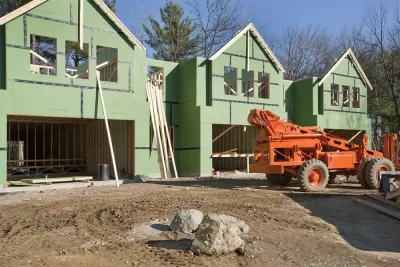
Governing has identified some of the most productive housing markets around the nation, drawing on the Census Bureau to compile 2018 residential construction permitting data for cities with populations exceeding 50,000.
A majority of the 582 cities reviewed issued more permits last year than their historic averages, and more than 135 cities issued permits at double that rate. Oakland, CA issued nearly four times more permits than its annual average.
Apex, North Carolina issued the most permits of any city surveyed, followed by Fort Meyers, Florida. Austin led the list of cities with populations of 300,000 or more, followed closely by Atlanta and Reno.
"Generally speaking, it's the southern cities and parts of the West Coast where growth remains the strongest," Macias writes. Those regions are gaining jobs and population at a similarly rapid rate.
Throughout the country, suburbs outside of cities with hot housing markets had "especially high permitting rates." That includes Frisco in the Dallas-Fort Worth area; Redmond, east of Seattle; Georgetown, outside Austin; and Buckeye, near Phoenix.
FULL STORY: Building Booms and Busts: Where Housing Construction Is Up, and Where It's Slowing Down


Planetizen Federal Action Tracker
A weekly monitor of how Trump’s orders and actions are impacting planners and planning in America.

The state-sanctioned urbicide of Austin
People don’t kill cities. Freeways do.

US to reduce Colorado River water deliveries to Mexico
A new Colorado Treaty amendment reduces Mexico’s Colorado River water allocation by 250,000 acre feet.

Airbnb launches $250 million 'last-dollar financing' housing accelerator, makes first investment in Austin
The company will put $6.4 million towards affordable housing development in Texas’ capital.

Guerilla urbanists are building DIY bus stop benches in Chicago
A before-and-after of one of the bus stops with a new bench. The new benches are not officially sanctioned or permitted, but the residents who placed them hope they will be the start of a network of DIY benches across the city.

Mamdani overhauls NYC's Vision Zero plan with 100 new policy goals
The overhaul aims to reduce traffic deaths and make streets safer for pedestrians, cyclists and drivers through lower speed limits, new safety infrastructure and more.

FREE Course: Walkable City 1: Why Walkability?
After describing his path towards focusing on walkability as the essence of good planning, Jeff Speck marches through his five principal reasons for making more walkable places.
Reinventing Malls: Planning Alchemy—Turning Gray Fields Into Gold
The course focuses on the opportunities and imperatives that shape reinvention of mall sites.

Eagle County Government
Harvard University Graduate School of Design
Nashville Planning Department
The Architects Foundation
University of Cincinnati Online
The Pocatello Development Authority
The Urban Renewal Agency of the City of Pocatello
Journal of the American Planning Association