The Natural Resources Management Act enjoyed bipartisan support in both houses of Congress. But it left out contentious issues like wildfires, greenhouse gas emissions, and protecting wildlife corridors.


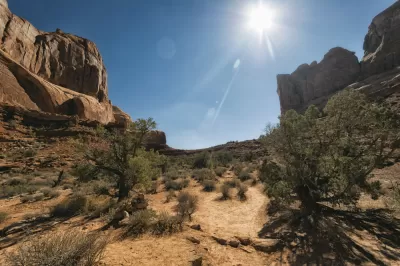
The largest public lands protection bill since 2009, the Natural Resources Management Act adds over 1.3 million acres of wilderness and creates four new national monuments, writes Carl Segerstrom. The bill also protects 367 miles of rivers and permanently reauthorizes the Land and Water Conservation Fund. It's on its way to President Trump after passage in the Senate and the House.
While it's a comforting example of bipartisanship, Segerstrom points out that the bill punts on the more controversial aspects of "updating public-lands laws for the 21st century." He goes on, "Rather than address the overarching issues facing public-lands management, such as wildfires, greenhouse gas emissions and protecting wildlife corridors for endangered species, the new lands bill is [pork barrel politics]."
Substantive environmental policymaking, meanwhile, isn't something the current Congress seems capable of, Segerstrom says. "Bedrock environmental laws that drive public-land policy, such as the Wilderness Act, Endangered Species Act, National Environmental Policy Act and Federal Land Policy and Management Act, were all signed during or before 1976." Without Congressional leadership, policy on public lands tends to volley back and forth depending on who's in the White House. Amid the bill's 700 pages, Segerstrom notes, the word "climate" does not appear.
FULL STORY: New bill leaves lands protected, lawmaking neglected


Trump Administration Wants to Remove Conservation From Approved 'Uses' of Public Land
The Department of the Interior moved to officially rescind the Public Lands Rule passed in 2024, which elevates the conservation of public lands to the same level of protection as other uses.

National Parks Layoffs Will Cause Communities to Lose Billions
Thousands of essential park workers were laid off this week, just before the busy spring break season.

Hawai'i Researchers Tackle Climate Challenges in National Parks
University of Hawaiʻi researchers are using advanced remote sensing technologies to protect cultural resources in five Hawaiʻi national parks from climate change impacts while training students in cutting-edge environmental science techniques.

The state-sanctioned urbicide of Austin
People don’t kill cities. Freeways do.

US to reduce Colorado River water deliveries to Mexico
A new Colorado Treaty amendment reduces Mexico’s Colorado River water allocation by 250,000 acre feet.

New Jersey’s second-largest city bans standalone data centers
Jersey City will continue to allow co-location facilities, such as those meant for research institutions that store their own data.

Amtrak not solely to blame for New Jersey commuter rail's unreliability, report finds
A new study from the Garden State Initiative found that NJ Transit’s budget grew 20% across a 4 year period, but reliability declined significantly over the same period.

EPA erases limits on planet-warming pollution from power plants
Under Monday’s plan, power plants would still have some limits on how much mercury, arsenic and other contaminants they can emit.

Phoenix announces new on-demand transit service, more frequent RAPID buses
Both new services will launch in October, and are part of Phoenix's Project Effective Access Solutions for Easing Congestion.

FREE Course: Walkable City 1: Why Walkability?
After describing his path towards focusing on walkability as the essence of good planning, Jeff Speck marches through his five principal reasons for making more walkable places.
Reinventing Malls: Planning Alchemy—Turning Gray Fields Into Gold
The course focuses on the opportunities and imperatives that shape reinvention of mall sites.

Eagle County Government
Harvard University Graduate School of Design
Nashville Planning Department
The Architects Foundation
University of Cincinnati Online
The Pocatello Development Authority
The Urban Renewal Agency of the City of Pocatello
Journal of the American Planning Association