Transit and cycling advocates say fake and misused placards result in crowded streets and limit mobility.


Joe Anuta writes that the de Blasio administration has plans to crack down on abuse of city-issued parking placards. Placards are currently laminated cards that can be duplicated, and enforcement of parking regulations has been lax because police officers do not want to write citations for other city employees.
"A replacement system called Pay-by-Plate will be rolled out in 2021 and will allow traffic enforcement agents to scan a license plate and immediately determine whether the owner has a valid placard, is authorized to park in the spot and even if the meter has been paid," says Anuta.
However, critics say the best solution would be to reduce the number of placards significantly. Currently, about 125,000 placards have been issued for 10,000 parking spaces. Placard users often park in and block bike and bus lanes, impeding traffic and adding to congestion throughout the city.
FULL STORY: De Blasio vows to end physical parking placards in second crackdown attempt

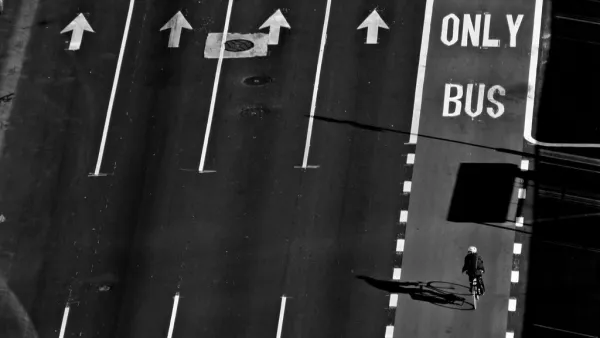
More Bus Lane Cameras Coming to N.Y.C.
New state legislation will allow the city to expand the network of cameras and step up enforcement.
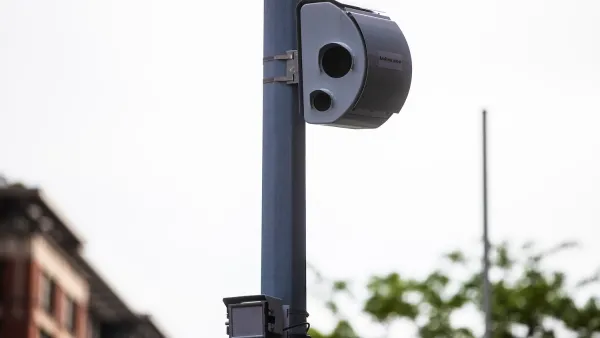
NYC to Expand Red-Light Camera Program, Target 'Ghost Cars'
The city plans to add 450 new cameras to catch red light violations.
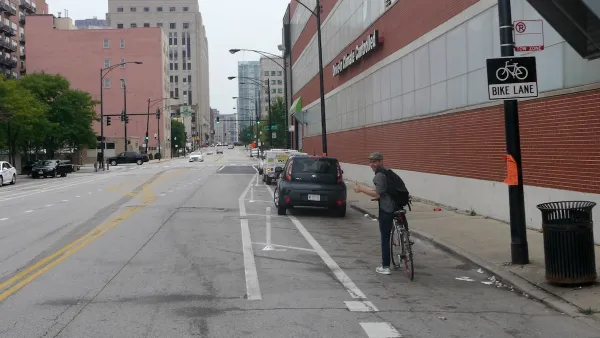
Chicago Pilot Would Keep Bike and Bus Lanes Clear — Without the Police
A proposal supported by many city officials and road safety advocates would shift right-of-way enforcement to ‘Rapid Response Aides’ to free up police resources and clear blocked lanes more quickly.

Planetizen Federal Action Tracker
A weekly monitor of how Trump’s orders and actions are impacting planners and planning in America.

The state-sanctioned urbicide of Austin
People don’t kill cities. Freeways do.

US to reduce Colorado River water deliveries to Mexico
A new Colorado Treaty amendment reduces Mexico’s Colorado River water allocation by 250,000 acre feet.

Baltimore to break ground on $50 million Transit Priority Project
The project will bring faster bus trips, safer streets and better bike connections to Baltimore.

Airbnb launches $250 million 'last-dollar financing' housing accelerator, makes first investment in Austin
The company will put $6.4 million towards affordable housing development in Texas’ capital.

Guerilla urbanists are building DIY bus stop benches in Chicago
A before-and-after of one of the bus stops with a new bench. The new benches are not officially sanctioned or permitted, but the residents who placed them hope they will be the start of a network of DIY benches across the city.

FREE Course: Walkable City 1: Why Walkability?
After describing his path towards focusing on walkability as the essence of good planning, Jeff Speck marches through his five principal reasons for making more walkable places.
Reinventing Malls: Planning Alchemy—Turning Gray Fields Into Gold
The course focuses on the opportunities and imperatives that shape reinvention of mall sites.

Eagle County Government
Harvard University Graduate School of Design
Nashville Planning Department
The Architects Foundation
University of Cincinnati Online
The Pocatello Development Authority
The Urban Renewal Agency of the City of Pocatello
Journal of the American Planning Association