In the past ten years, Downtown Seattle has built more housing than all of San Francisco.


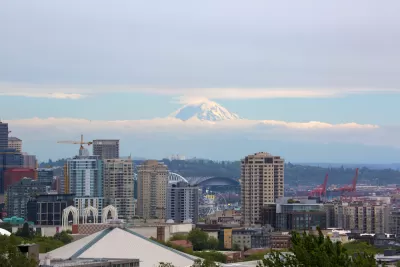
In the Seattle Times, real-estate reporter Mike Rosenberg unpacks the components of Seattle's ongoing construction boom.
Nearly half of all apartments in central Seattle were built this decade, according to a report from the Downtown Seattle Association. Looking ahead, more than two-thirds of buildings currently under construction are residential, and mainly apartments. Sixty-six major projects are currently under construction in the central part of the city. That represents a decline from the peak of the boom in 2017—when 74 projects were underway—but continues an overall trend toward more building.
Housing in particular boomed downtown in 2017, with a record 5,700 new units. In 2018, that number fell to 3,800, but is on track to rise to 5,600 by 2020. On the office side, expansions by Amazon, Facebook, and Google will bring a record 4.5 million square feet of new office space to the city in 2019.
The market doesn't appear to be slowing on any front. "Really the only thing that may stop the frenzy is the growing shortage of developable sites left," Rosenberg suggests. "Parking lots and low-slung buildings are disappearing, and two-thirds of developable land in the city is reserved only for single-family houses."
FULL STORY: Seattle construction still booming and won’t end anytime soon

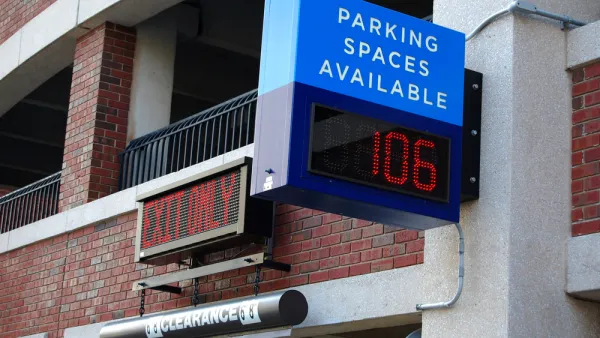
Transit Up, Parking Down in Seattle
Facing an affordability crisis, Seattle is betting on dense, walkable development. The transition away from guaranteed parking promises to be no easier here than elsewhere.
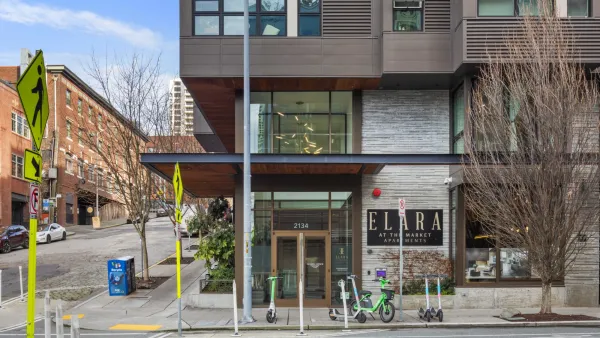
Seattle's first social housing building gets 10,000 resident applications
The Elara at the Market development includes 150 affordable housing units.
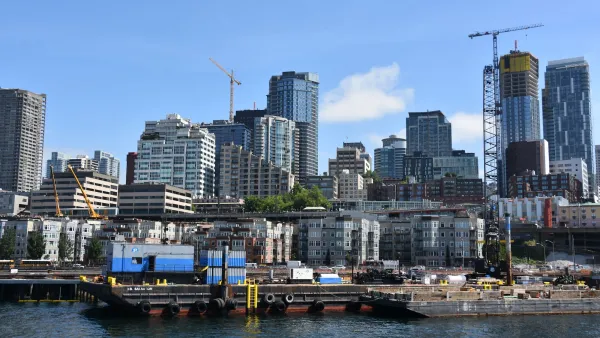
Seattle upzoning proposal seeks to boost density, support eco-friendly building materials
A city committee advanced the plan to target areas already open to multifamily development for additional density and encourage passive house and mass timber construction.

The state-sanctioned urbicide of Austin
People don’t kill cities. Freeways do.

US to reduce Colorado River water deliveries to Mexico
A new Colorado Treaty amendment reduces Mexico’s Colorado River water allocation by 250,000 acre feet.

New Jersey’s second-largest city bans standalone data centers
Jersey City will continue to allow co-location facilities, such as those meant for research institutions that store their own data.

Amtrak not solely to blame for New Jersey commuter rail's unreliability, report finds
A new study from the Garden State Initiative found that NJ Transit’s budget grew 20% across a 4 year period, but reliability declined significantly over the same period.

EPA erases limits on planet-warming pollution from power plants
Under Monday’s plan, power plants would still have some limits on how much mercury, arsenic and other contaminants they can emit.

Phoenix announces new on-demand transit service, more frequent RAPID buses
Both new services will launch in October, and are part of Phoenix's Project Effective Access Solutions for Easing Congestion.

FREE Course: Walkable City 1: Why Walkability?
After describing his path towards focusing on walkability as the essence of good planning, Jeff Speck marches through his five principal reasons for making more walkable places.
Reinventing Malls: Planning Alchemy—Turning Gray Fields Into Gold
The course focuses on the opportunities and imperatives that shape reinvention of mall sites.

Eagle County Government
Harvard University Graduate School of Design
Nashville Planning Department
The Architects Foundation
University of Cincinnati Online
The Pocatello Development Authority
The Urban Renewal Agency of the City of Pocatello
Journal of the American Planning Association