Linking up the last part of the Grand Rounds trail would create a continuous pedestrian and biking loop around the city.


A newly proposed master plan for Minneapolis includes details for a five-mile link that would close the gap in the city’s Grand Rounds trail, reports Jessica Lee. If the last leg is completed, the route would extend the now 50-mile trail and provide a continuous loop around the city.
Lee says that city officials by 2009 had made five unsuccessful attempts to build the extension. This latest effort is part of the East of the River Park Master Plan and would connect trails in the southeast and northeast of the city.
Stakeholders generally agree about what should happen on the north and south ends of the proposed extension. The middle section, however, would include land owned by the University of Minnesota, which is not fully on board with the plan. The route would also traverse a BNSF Railway rail yard and require the construction of bridges, a costly prospect, notes Lee.
The city’s park and recreation board will vote on the master plan in February. If approved, it will continue on to the Metropolitan Council, the Minneapolis regional planning organization, which oversees funding for the trail.
FULL STORY: Momentum building to fill in Grand Rounds’ missing link

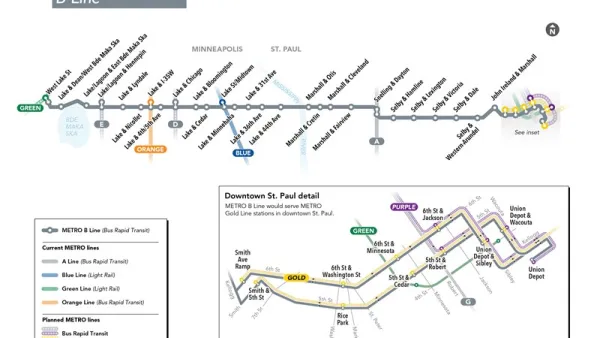
New Bus Rapid Transit Route Breaks Ground in the Twin Cities
The Twin Cities are on a mission to become the bus rapid transit capital of the United States. The latest improvement to advance that ambition broke ground earlier this week.
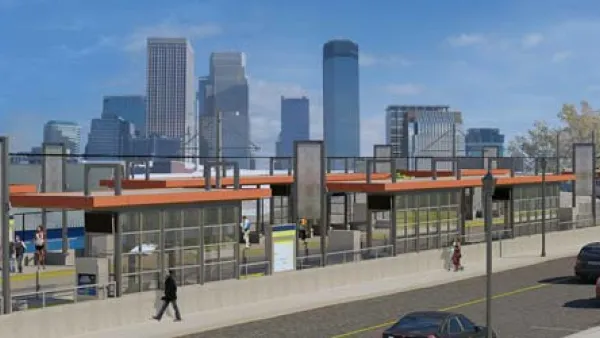
Minneapolis LRT Facing Delays, Cost Increases
Construction on the Kenilworth Tunnel has been plagued by problems and threatens the foundation of a nearby condo complex.
Twin Cities Climate Vulnerability: Extreme Heat
State climatologists are highly confident that heat waves are likely to trend upwards in future summers in Minnesota. To address extreme heat, researchers are identifying the factors that exacerbate extreme heat.

Planetizen Federal Action Tracker
A weekly monitor of how Trump’s orders and actions are impacting planners and planning in America.

The state-sanctioned urbicide of Austin
People don’t kill cities. Freeways do.

US to reduce Colorado River water deliveries to Mexico
A new Colorado Treaty amendment reduces Mexico’s Colorado River water allocation by 250,000 acre feet.

Baltimore to break ground on $50 million Transit Priority Project
The project will bring faster bus trips, safer streets and better bike connections to Baltimore.

Airbnb launches $250 million 'last-dollar financing' housing accelerator, makes first investment in Austin
The company will put $6.4 million towards affordable housing development in Texas’ capital.

Guerilla urbanists are building DIY bus stop benches in Chicago
A before-and-after of one of the bus stops with a new bench. The new benches are not officially sanctioned or permitted, but the residents who placed them hope they will be the start of a network of DIY benches across the city.

FREE Course: Walkable City 1: Why Walkability?
After describing his path towards focusing on walkability as the essence of good planning, Jeff Speck marches through his five principal reasons for making more walkable places.
Reinventing Malls: Planning Alchemy—Turning Gray Fields Into Gold
The course focuses on the opportunities and imperatives that shape reinvention of mall sites.

.jpg)
Eagle County Government
Harvard University Graduate School of Design
Nashville Planning Department
The Architects Foundation
University of Cincinnati Online
The Pocatello Development Authority
The Urban Renewal Agency of the City of Pocatello
Journal of the American Planning Association