The rollback of fuel standards was criticized even by the automotive industry. Now the New York Times finds evidence of oil companies pushing for the change.


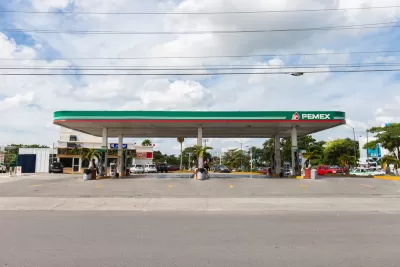
The Trump administration completely undid the Obama administration emission standards, and even the automotive industry spoke out against it. New reporting shows that the oil industry lobbied for the legislation. "In Congress, on Facebook and in statehouses nationwide, Marathon Petroleum, the country’s largest refiner, worked with powerful oil-industry groups and a conservative policy network financed by the billionaire industrialist Charles G. Koch to run a stealth campaign to roll back car emissions standards, a New York Times investigation has found," Hiroko Tabuchi writes for the New York Times.
Oil companies stood to gain if the regulation eventually went through, so they also invested online. "A separate industry campaign on Facebook, covertly run by an oil-industry lobby representing Exxon Mobil, Chevron, Phillips 66 and other oil giants, urged people to write to regulators to support the rollback," Tabuchi reports.
For their part, the Koch-brothers-backed Koch Industries claim no responsibility for the outcome, saying that their reputation for avoiding "corporate welfare" is well known.
FULL STORY: The Oil Industry’s Covert Campaign to Rewrite American Car Emissions Rules


Obama on the Record Against Sprawl, Inequality by Design
Former President Barack Obama was at the AIA’s national conference in Chicago earlier this month. His presentation included some strong words about the effects of sprawl.
Biden Proposes Gas Tax Holiday to Reduce Gas Prices
President Biden asked Congress on June 22 to suspend federal fuel taxes, unchanged since 1993, for three months to provide motorists 'relief' at the pump. Additionally, he asked states to follow suit and for oil companies to increase refining.
Time for a Federal Gas Tax Holiday?
Senate Democrats introduced legislation to lower gas prices by suspending the federal gas tax through the end of the year. General funds would be directed to the Highway Trust Fund to replace gas tax revenue.

Planetizen Federal Action Tracker
A weekly monitor of how Trump’s orders and actions are impacting planners and planning in America.

The state-sanctioned urbicide of Austin
People don’t kill cities. Freeways do.

US to reduce Colorado River water deliveries to Mexico
A new Colorado Treaty amendment reduces Mexico’s Colorado River water allocation by 250,000 acre feet.

Brightline West’s future may rely on $6 billion federal loan
The company has until Nov. 2 to make a $400 million equity investment into its proposed high-speed rail line.

LA Metro’s ultimatum: no extra buses for LA28 if federal funding isn’t imminently secured
If Metro does not provide additional buses, LA28 organizers will have to find a new way to manage Olympic traffic. LA28’s budget does not include a line item for transit.

Colorado’s Largest Data Center Could Rise Next to Homes — Without a Public Hearing
The proposed campus would consume 11 times the power of Denver International Airport; as it has across the country, opposition mounts.

FREE Course: Walkable City 1: Why Walkability?
After describing his path towards focusing on walkability as the essence of good planning, Jeff Speck marches through his five principal reasons for making more walkable places.
Reinventing Malls: Planning Alchemy—Turning Gray Fields Into Gold
The course focuses on the opportunities and imperatives that shape reinvention of mall sites.

Eagle County Government
Harvard University Graduate School of Design
Nashville Planning Department
The Architects Foundation
University of Cincinnati Online
The Pocatello Development Authority
The Urban Renewal Agency of the City of Pocatello
Journal of the American Planning Association