After a political stalemate, lawmakers now say they have a farm bill that will pass both the House and Senate.


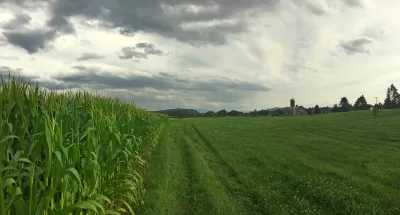
Erica Werner and Jeff Stein report that lawmakers say they have reached an agreement on the federal farm bill after months of stalled negotiations. The $400 billion bill covers farm subsidies, food assistance programs, and conservation programs.
Both the House and the Senate passed bills over the summer, but disputes over the Supplemental Nutrition Assistance Program kept the legislation from moving forward. House Republicans sought to add a work requirement for recipients and put restrictions on the ability of states to waive requirements.
Senate Republicans did not provide details about the compromise but say the revised bill will resemble the original Senate version, which did not include a work requirement.
“Negotiators also feuded over a forestry section of the farm bill, as the White House made a late push for provisions that would have allowed for the clearing of material from forests that they argued help spread fires,” say Werner and Stein. This issue emerged after the wildfires in California earlier this month.
FULL STORY: Lawmakers reach tentative farm bill deal after months-long impasse

Meet the New Federal Leadership on Transportation
New leadership on transportation issues steps to center stage as the result of Republicans taking control of both houses of Congress for the first time since 2006.

Brookings: A Demographic Post-Mortem of the Midterms
Young adults, according to a deep dive analysis by Brookings Metro demographer William Frey, were a key demographic group responsible for stopping the red wave that most polling predicted as the likely outcome of last month's midterm elections.

The Constitutional Clause Being Used to Threaten Climate Change Policies
An interstate commerce clause is being used to challenge climate change measures and regulations.

The state-sanctioned urbicide of Austin
People don’t kill cities. Freeways do.

US to reduce Colorado River water deliveries to Mexico
A new Colorado Treaty amendment reduces Mexico’s Colorado River water allocation by 250,000 acre feet.

New Jersey’s second-largest city bans standalone data centers
Jersey City will continue to allow co-location facilities, such as those meant for research institutions that store their own data.

Amtrak not solely to blame for New Jersey commuter rail's unreliability, report finds
A new study from the Garden State Initiative found that NJ Transit’s budget grew 20% across a 4 year period, but reliability declined significantly over the same period.

EPA erases limits on planet-warming pollution from power plants
Under Monday’s plan, power plants would still have some limits on how much mercury, arsenic and other contaminants they can emit.

Phoenix announces new on-demand transit service, more frequent RAPID buses
Both new services will launch in October, and are part of Phoenix's Project Effective Access Solutions for Easing Congestion.

FREE Course: Walkable City 1: Why Walkability?
After describing his path towards focusing on walkability as the essence of good planning, Jeff Speck marches through his five principal reasons for making more walkable places.
Reinventing Malls: Planning Alchemy—Turning Gray Fields Into Gold
The course focuses on the opportunities and imperatives that shape reinvention of mall sites.

Eagle County Government
Harvard University Graduate School of Design
Nashville Planning Department
The Architects Foundation
University of Cincinnati Online
The Pocatello Development Authority
The Urban Renewal Agency of the City of Pocatello
Journal of the American Planning Association