While not yet widely implemented in the United States, scramble intersections make life considerably safer and easier for pedestrians and drivers.


Rachel Quednau discusses the benefits of pedestrian scrambles, using her current hometown of Cambridge, Massachusetts, as an example. The intersections allow pedestrians to cross in any direction while keeping cars from turning. They work especially well, says Quednau, in areas with lots of pedestrians and on stroads, the street-road hybrids that can be treacherous for pedestrians to cross:
For me and my fellow walkers, it’s far more efficient to be able to safely cross to the diagonal corner of a street in a matter of seconds, protected by a light, than to fearfully wait for a break in traffic to dart across. It also seems more efficient for cars to then travel through the intersection on a green light without needing to worry about interactions with pedestrians during their trip.
She also argues that pedestrian scrambles are cost effective to put in, requiring only the adjustment of intersection signals and some public education about how to use them. In addition, she says that while the research on pedestrian scrambles is relatively scant, what is available suggests that the intersections do improve public safety.
FULL STORY: A Pedestrian Scramble Can Make an Intersection Safer For Everyone

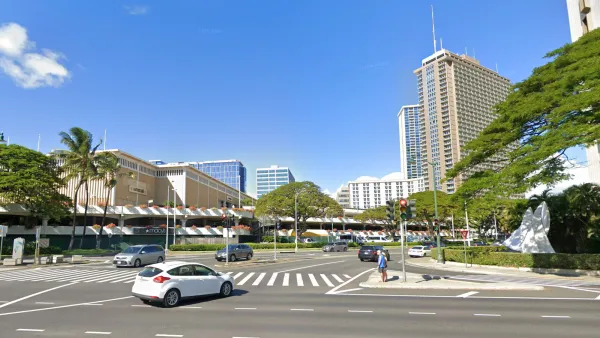
Hawaii DOT takes action after reporters call attention to dangerous crosswalk
The state made changes to a treacherous intersection after reporting revealed that traffic light timing was posting a threat to pedestrians.
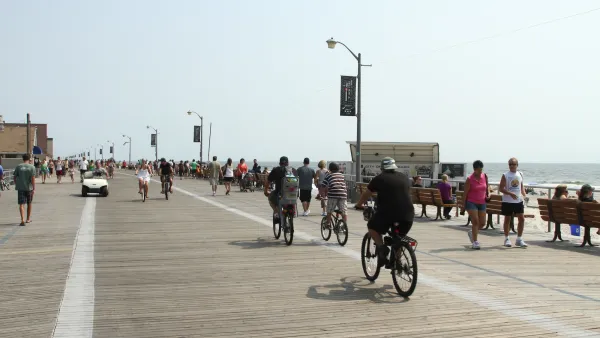
Long Beach, New York pledges $600K for pedestrian safety
The city will use $500,000 in community block development grant funding to improve pedestrian infrastructure.
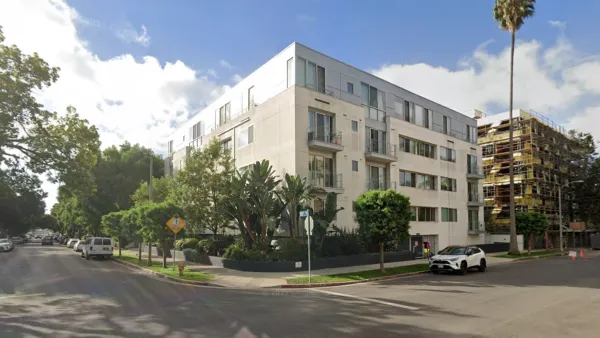
LA Cites Guerilla Crosswalk Painter With Vandalism
The LA Police Department stopped a group of volunteers who was painting missing crosswalks in a Westwood intersection.

The state-sanctioned urbicide of Austin
People don’t kill cities. Freeways do.

US to reduce Colorado River water deliveries to Mexico
A new Colorado Treaty amendment reduces Mexico’s Colorado River water allocation by 250,000 acre feet.

New Jersey’s second-largest city bans standalone data centers
Jersey City will continue to allow co-location facilities, such as those meant for research institutions that store their own data.

Amtrak not solely to blame for New Jersey commuter rail's unreliability, report finds
A new study from the Garden State Initiative found that NJ Transit’s budget grew 20% across a 4 year period, but reliability declined significantly over the same period.

EPA erases limits on planet-warming pollution from power plants
Under Monday’s plan, power plants would still have some limits on how much mercury, arsenic and other contaminants they can emit.

Phoenix announces new on-demand transit service, more frequent RAPID buses
Both new services will launch in October, and are part of Phoenix's Project Effective Access Solutions for Easing Congestion.

FREE Course: Walkable City 1: Why Walkability?
After describing his path towards focusing on walkability as the essence of good planning, Jeff Speck marches through his five principal reasons for making more walkable places.
Reinventing Malls: Planning Alchemy—Turning Gray Fields Into Gold
The course focuses on the opportunities and imperatives that shape reinvention of mall sites.

Eagle County Government
Harvard University Graduate School of Design
Nashville Planning Department
The Architects Foundation
University of Cincinnati Online
The Pocatello Development Authority
The Urban Renewal Agency of the City of Pocatello
Journal of the American Planning Association