Insight from Barcelona and Portland on how to plan and design an active, welcoming neighborhood square.


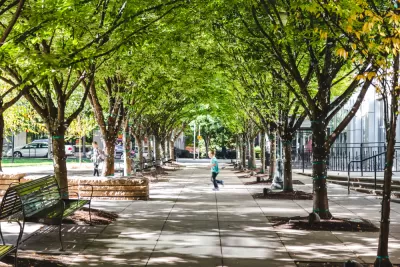
Dr. Suzanne H. Crowhurst Lennard writes with advice on how tot approach the planning of a neighborhood square, first distinguishing the neighborhood square from a city square:
Unlike a city’s main square that, from time to time, brings together representatives from all over the city for major festivals, concerts, and special events, a neighborhood square has certain unique social functions: it is frequented every day of the year by those who live in the neighborhood; it helps to strengthen social networks; and it builds community.
Those special functions require a special approach, according to Crowhurst Lennard. Those special functions are best embodied by European-style neighborhood squares. Successful examples in the Unnited States are scant, according to the article, Crowhurst Lennard cites the Conway Master Plan in NW Portland, launched over a decade ago, as a case study of a planning process focused on creating a neighborhood square.
The article proceeds to go into great depth about the proportions of the park, the heights of the surrounding buildings, and examines case studies from abroad, like Plaça del Raspali, Plaça del Diamant, and Plaça de John Lennon in Barcelona.
FULL STORY: Planning a Neighborhood Square

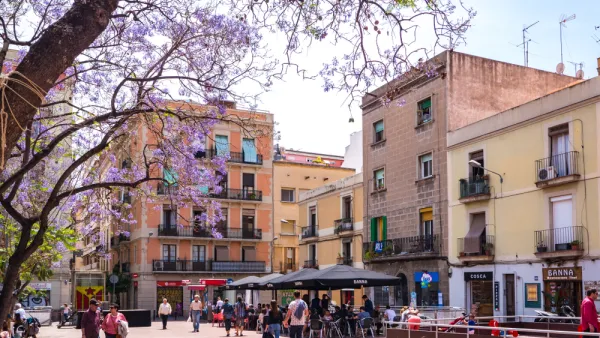
Could Los Angeles Emulate Barcelona’s ‘Superblocks’?
A proposal in the city council could bring the ‘superblock’ model to Los Angeles, opening up neighborhood streets to more biking, walking, and public amenities.

Portland Extends Pandemic Public Space Programs
PBOT will continue two highly successful COVID-era programs that allowed businesses and community groups to repurpose public spaces for pedestrian-oriented uses and engage with customers in safe, accessible outdoor settings.
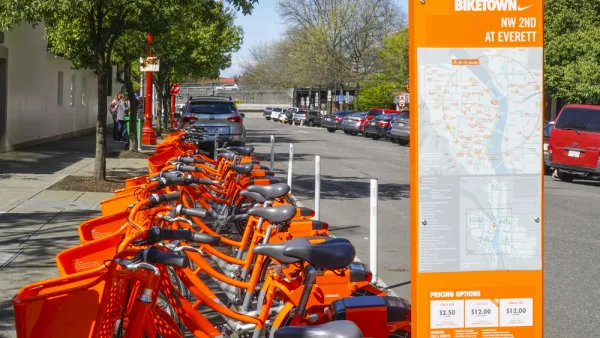
Draft West Portland Town Center Plan Seeks Public Comment
Always a closely watched planning jurisdiction, Portland, Oregon is proceeding with a new vision for the future of the western end of the city.

The state-sanctioned urbicide of Austin
People don’t kill cities. Freeways do.

US to reduce Colorado River water deliveries to Mexico
A new Colorado Treaty amendment reduces Mexico’s Colorado River water allocation by 250,000 acre feet.

New Jersey’s second-largest city bans standalone data centers
Jersey City will continue to allow co-location facilities, such as those meant for research institutions that store their own data.

Amtrak not solely to blame for New Jersey commuter rail's unreliability, report finds
A new study from the Garden State Initiative found that NJ Transit’s budget grew 20% across a 4 year period, but reliability declined significantly over the same period.

EPA erases limits on planet-warming pollution from power plants
Under Monday’s plan, power plants would still have some limits on how much mercury, arsenic and other contaminants they can emit.

Phoenix announces new on-demand transit service, more frequent RAPID buses
Both new services will launch in October, and are part of Phoenix's Project Effective Access Solutions for Easing Congestion.

FREE Course: Walkable City 1: Why Walkability?
After describing his path towards focusing on walkability as the essence of good planning, Jeff Speck marches through his five principal reasons for making more walkable places.
Reinventing Malls: Planning Alchemy—Turning Gray Fields Into Gold
The course focuses on the opportunities and imperatives that shape reinvention of mall sites.

Eagle County Government
Harvard University Graduate School of Design
Nashville Planning Department
The Architects Foundation
University of Cincinnati Online
The Pocatello Development Authority
The Urban Renewal Agency of the City of Pocatello
Journal of the American Planning Association