The Midsummer Classic is over, and the dog days of summer are looming. Not every team has a chance at October baseball, but some still offer a lot to love in the neighborhood outside the ballpark.


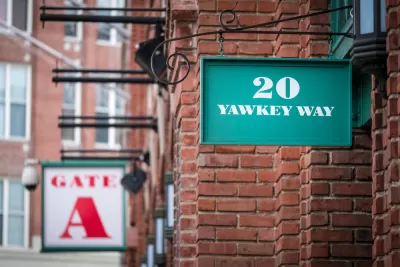
Anyone who has trekked across parking lots to get to parking lots in Los Angeles, Anaheim, or Oakland knows that not all ballparks were designed to integrate into the neighborhood. Go to the North Side of Chicago or Yawkey Way in Boston and you'll see the benefits of ballpark planning before car-centric planning was a thing.
A Chicago Tribune team has created an unscientific ranking of the neighborhoods outside the ballparks of the 30 teams in Major League Baseball, with somewhat predictable results at the top: Fenway Park in Boston at number one and Wrigley Field in Chicago at number two. Petco Park in San Diego might surprise some at number three. Most likely to be controversial, however, is the new suburban ballpark for the Atlanta Braves, SunTrust Park in Cobb County, which comes in at number four.
FULL STORY: Ranking all 30 MLB ballpark neighborhoods

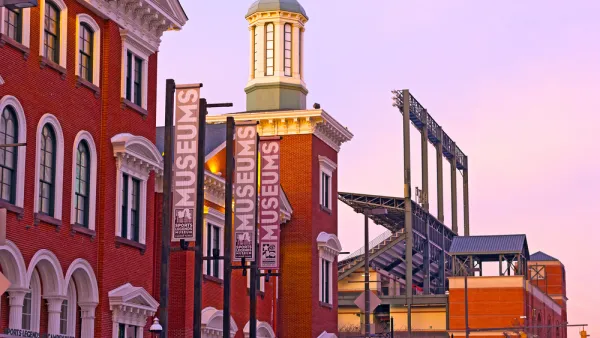
Take Me Out to the City
Architecture critic Paul Goldberger analyzes the evolution of baseball stadiums and celebrates their essential connection to cities in "Ballpark: Baseball in the American City."
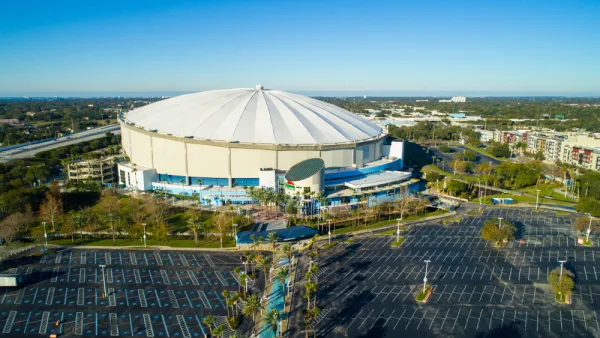
St. Petersburg Planning for a Post-Baseball Future
The Tampa Bay Rays still play at Tropicana Field, but they won't forever. The redevelopment opportunity for the site will be a game changer for the city.
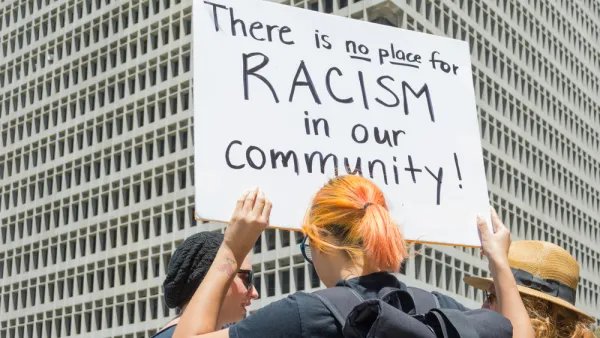
Anti-Racism at the Neighborhood Level
Communities across the country need to dismantle exclusionary barriers and rebalance spending to invest more equitably across neighborhoods, according to this article by the Urban Institute.

Planetizen Federal Action Tracker
A weekly monitor of how Trump’s orders and actions are impacting planners and planning in America.

The state-sanctioned urbicide of Austin
People don’t kill cities. Freeways do.

US to reduce Colorado River water deliveries to Mexico
A new Colorado Treaty amendment reduces Mexico’s Colorado River water allocation by 250,000 acre feet.

5 New England states march closer to 800 megawatt wind energy project
Securing federal approval for the project may be complicated under the Trump administration, which has historically been hostile towards domestic wind power.

Baltimore to break ground on $50 million Transit Priority Project
The project will bring faster bus trips, safer streets and better bike connections to Baltimore.

Airbnb launches $250 million 'last-dollar financing' housing accelerator, makes first investment in Austin
The company will put $6.4 million towards affordable housing development in Texas’ capital.

FREE Course: Walkable City 1: Why Walkability?
After describing his path towards focusing on walkability as the essence of good planning, Jeff Speck marches through his five principal reasons for making more walkable places.
Reinventing Malls: Planning Alchemy—Turning Gray Fields Into Gold
The course focuses on the opportunities and imperatives that shape reinvention of mall sites.

Eagle County Government
Harvard University Graduate School of Design
Nashville Planning Department
The Architects Foundation
University of Cincinnati Online
The Pocatello Development Authority
The Urban Renewal Agency of the City of Pocatello
Journal of the American Planning Association