Battles for inclusion and exclusion in the life of the city more often end in stand-offs than in skirmishes.


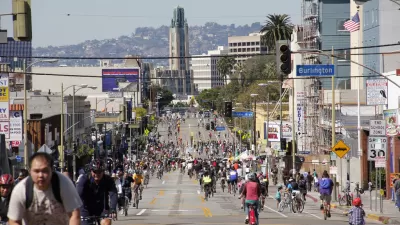
The promise of public space — and by extension, of the city in which it thrives — is that it is open to all. Strangers meet, learn from each other, and encounter one another as equals. But what if people don’t want to mix? Indeed, in Frederick Law Olmsted’s day, Central Park, that most democratic design, featured all sorts of devices to privilege refined over rowdy behavior. Prohibitions on active sports and alcohol favored the class of people (middle) who didn’t find these things fun. And if it’s hard for everyone to get along in public space, imagine the neighborhoods they call home. Forcing “the mingling of people who are not yet ready to mingle, and don’t want to mingle” was not going to work, Frederick Law Olmsted Jr. told a meeting of city planners one hundred years ago. Have we gotten any better at living together?
Read the full story: Public Space Arms Race

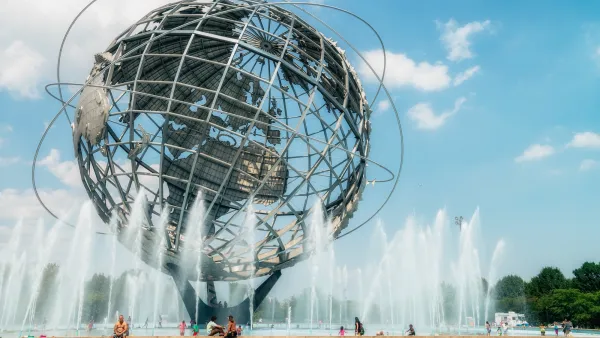
Historic Queens park is getting a $120M upgrade
The borough's largest park will undergo significant upgrades for accessibility, flood mitigation and historic preservation.
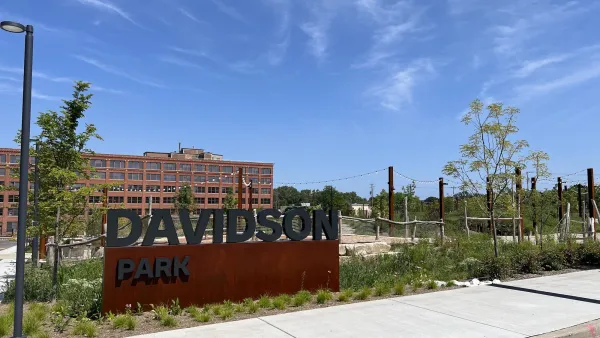
Harley-Davidson turned a Milwaukee parking lot into a green oasis
The park, adjacent to Harley-Davidson headquarters, doubles as stormwater retention infrastructure.
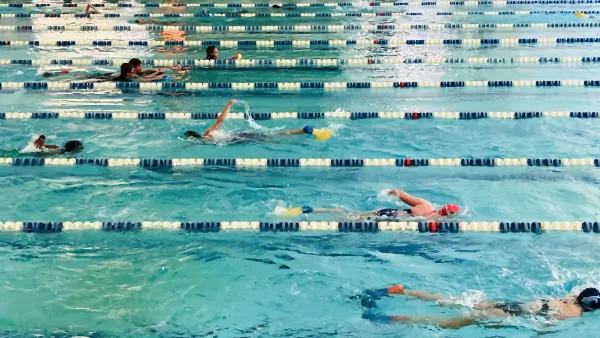
Jim Crow Robbed America of Public Pools. It’s Time to get Them Back.
Disparity amongst who can and can’t swim in America isn’t an accident — and it's deadly. Let’s reclaim the community pool as an essential public space.

Planetizen Federal Action Tracker
A weekly monitor of how Trump’s orders and actions are impacting planners and planning in America.

California plans to bury El Niño’s downpour
If the state plays its cards right, it may be able to store a billion acre-feet of El Niño’s water in aquifers.

Desperate measures: Advocates weigh draining Lake Powell to fill Colorado River
Draining the reservoir could reduce evaporation losses by a couple hundred thousand acre-feet.

California city breaks ground on transit connector
The project includes three mobility hubs and a pedestrian bridge.

After public outcry, Massachusetts city releases housing development tracker
Cambridge’s tracker currently shows 250 housing projects in various stages of development.

40 years after approval, Chicago breaks ground on new park
The park honors Jean Baptiste Point du Sable, the city’s first permanent non-native settler.

FREE Course: Walkable City 1: Why Walkability?
After describing his path towards focusing on walkability as the essence of good planning, Jeff Speck marches through his five principal reasons for making more walkable places.
Reinventing Malls: Planning Alchemy—Turning Gray Fields Into Gold
The course focuses on the opportunities and imperatives that shape reinvention of mall sites.

City of Rosemead
Rutgers University, Edward J. Bloustein School of Planning and Public Policy
One Hundred Miles
Hunter College, City University of New York (CUNY)
The Architects Foundation
University of Cincinnati Online
City of Cambridge
Montrose County
The Pocatello Development Authority