The former CEO of Uber, a highly controversial figure in urbanism circles, is still trying to influence the future of the built environment in a new post as CEO of a real estate investment startup.


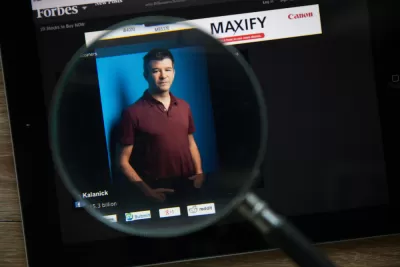
Travis Kalanick has landed on his feet after being ousted from Uber in June 2017—and his new gig is of obvious interest to planners and urbanists.
"The controversial Silicon Valley entrepreneur is joining a startup called City Storage Systems that focuses on repurposing distressed real estate assets like parking lots or abandoned strip malls and turning them into spaces suited for new industries, such as food delivery or online retail," report Johana Bhuiyan and Theodore Schleifer.
The company previously operated under the name CloudKitchens, but Kalanick's $150 million investment in the company will buy-out most of the company's previous outside investors, and place him in charge of the newly named startup as CEO.
The article includes more details about the ambitions of Kalanick in his new role.
FULL STORY: Travis Kalanick is buying a new company that rehabs real estate and will run it as CEO

Travis Kalanick, Uber's Controversial Founder, Finally Leaves the Company
The announcement finally severs the ties between the ride-hailing company and its founder and former CEO.
The Uber Story
A new book traces the path of the influential mobility company from its earliest days and through its many organizational and leadership ups and downs.
Uber's Complicated Story
Since its founding a decade ago, Uber has reshaped the world through a trajectory of highs and lows.

Planetizen Federal Action Tracker
A weekly monitor of how Trump’s orders and actions are impacting planners and planning in America.

The state-sanctioned urbicide of Austin
People don’t kill cities. Freeways do.

US to reduce Colorado River water deliveries to Mexico
A new Colorado Treaty amendment reduces Mexico’s Colorado River water allocation by 250,000 acre feet.

5 New England states march closer to 800 megawatt wind energy project
Securing federal approval for the project may be complicated under the Trump administration, which has historically been hostile towards domestic wind power.

Baltimore to break ground on $50 million Transit Priority Project
The project will bring faster bus trips, safer streets and better bike connections to Baltimore.

Airbnb launches $250 million 'last-dollar financing' housing accelerator, makes first investment in Austin
The company will put $6.4 million towards affordable housing development in Texas’ capital.

FREE Course: Walkable City 1: Why Walkability?
After describing his path towards focusing on walkability as the essence of good planning, Jeff Speck marches through his five principal reasons for making more walkable places.
Reinventing Malls: Planning Alchemy—Turning Gray Fields Into Gold
The course focuses on the opportunities and imperatives that shape reinvention of mall sites.

Eagle County Government
Harvard University Graduate School of Design
Nashville Planning Department
The Architects Foundation
University of Cincinnati Online
The Pocatello Development Authority
The Urban Renewal Agency of the City of Pocatello
Journal of the American Planning Association