The state of Oregon is already tinkering with a bike tax it approved last year.


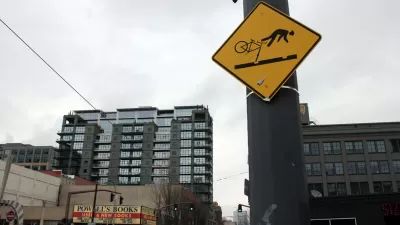
Jonathan Maus reports on the details of House Bill 4059, which would make substantive adjustments to the transportation bill approved by the state in 2017. Maus's main concern is the possibility that the state's new bike tax could be expanded to even more bikes.
"In a nutshell," writes Maus, "the tax will apply to more bicycles than before," if it's approved. "As currently written, “taxable bicycle” is defined as a bicycle with a wheel diameter of 26-inches or larger (so as not to tax children’s bikes) and a retail price of $200 or more. DOR’s proposal would drop the wheel-size stipulation from the definition and the tax would then apply to all bikes over $200," explains Maus. The bill would also expand the definition of bikes to cover e-bikes as well.
The bike tax was already unpopular with bike advocates and the bike industry, and neither are these changes. Maus details the pushback in the source article.
FULL STORY: Oregon mulls bike tax expansion that would include more kids bikes, recumbents, and folders


Revenue From Oregon Bike Tax Falling Short of Expectations
A tax on bikes in the state of Oregon, implemented in 2017, generated less tan half of the revenue as was expected.

L.A. Times: California Must Shift Transportation Spending Priorities
Despite its ambitious emissions reduction goals, California continues to spend a majority of transportation funds on car-centric infrastructure.
Court Throws Out Massachusetts 'Millionaire Tax'
The failed "Fair Share Amendment" would have taxed the wealthy to pay for transportation and education.

Planetizen Federal Action Tracker
A weekly monitor of how Trump’s orders and actions are impacting planners and planning in America.

The state-sanctioned urbicide of Austin
People don’t kill cities. Freeways do.

US to reduce Colorado River water deliveries to Mexico
A new Colorado Treaty amendment reduces Mexico’s Colorado River water allocation by 250,000 acre feet.

5 New England states march closer to 800 megawatt wind energy project
Securing federal approval for the project may be complicated under the Trump administration, which has historically been hostile towards domestic wind power.

Baltimore to break ground on $50 million Transit Priority Project
The project will bring faster bus trips, safer streets and better bike connections to Baltimore.

Airbnb launches $250 million 'last-dollar financing' housing accelerator, makes first investment in Austin
The company will put $6.4 million towards affordable housing development in Texas’ capital.

FREE Course: Walkable City 1: Why Walkability?
After describing his path towards focusing on walkability as the essence of good planning, Jeff Speck marches through his five principal reasons for making more walkable places.
Reinventing Malls: Planning Alchemy—Turning Gray Fields Into Gold
The course focuses on the opportunities and imperatives that shape reinvention of mall sites.

Eagle County Government
Harvard University Graduate School of Design
Nashville Planning Department
The Architects Foundation
University of Cincinnati Online
The Pocatello Development Authority
The Urban Renewal Agency of the City of Pocatello
Journal of the American Planning Association