A critique of New Jersey's housing policies lends historical perspective before taking an unexpected rhetorical turn.


Paul Mulshine writes an opinion piece on the subject of New Jersey's housing and land use policies, launching the narrative in 1973 with the help of a CBS proto-reality show called "We're Okey in Brick, N.J."
The appeal of fleeing the city to suburbs like Brick in 1973 is now obsolete, according to Mulshine. Suburbs are declining and migration patterns have reversed.
This all seems like the set up for an anti-sprawl argument, and it is, but the twist here relates to state-mandated affordable housing requirements. The popularity of urban living, according to Mulshine, "raises an obvious question about the state's insistence on imposing affordable housing quotas on the [suburban] towns: Why do the places where people don't want to go get hit with the highest housing quotas?"
Mulshine discusses a specific case study of a proposed development in Clinton Township that will build 793 units, including 445 affordable units, "in a rural setting near the beautiful Round Valley Reservoir" after a protracted legal battle. According to Mulshine, it's "as if our politicians are stuck in that reality show trying to recreate the planning practices that now have people fleeing from the suburbs instead of toward them."
Read the full story: State's Housing policy is stuck in the Disco Era

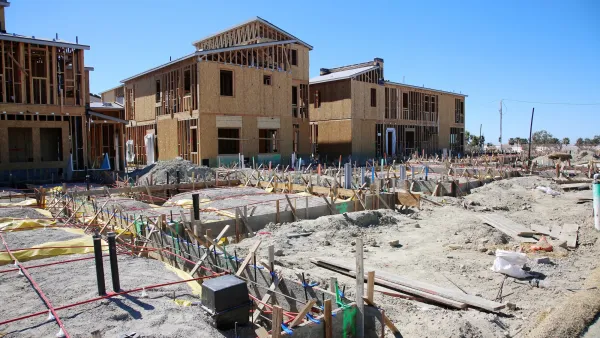
Less than 6% of California cities are building enough housing for very low-income households
Only five jurisdictions are on track to meet their housing goals for all income brackets.
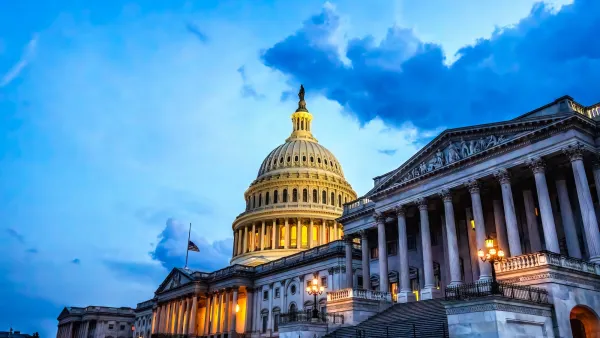
US Senate Passes Housing Bill With Focus on Financing, Deregulation
The proposal would ease regulations, allow banks to invest more in affordable housing, and change a rule that has been holding back manufactured housing.

House Bill Would Incentivize Housing Near Transit
The Build HUBS Act intends to make federal funding for TOD more available and streamline permitting for transit-adjacent housing.

Planetizen Federal Action Tracker
A weekly monitor of how Trump’s orders and actions are impacting planners and planning in America.

Amtrak, CN end decades-long dispute with eight-year agreement
The new operating agreement establishes an updated framework for the companies to work together, including processes to resolve disputes.

Judges permit Denver to divert 77,000 acre feet from the Colorado River for reservoir expansion
Overuse and climate change have caused the Colorado River’s water levels to plummet.

NYC DOT wants faster, more permanent street upgrades
The city is examining ways to build more concrete infrastructure without getting entangled in 'decades-long' projects.

'Something we’ve never seen before:' rising utility rates could strain city finances nationwide
Data centers, climate change and other factors have caused utility rates in the United States to increase by 38% since 2020.

Trump to overrule local leaders, lease millions of acres of America’s Pacific Island territories’ seafloors to mining companies
International law says that the Indigenous people of America’s territories have a right to prior and informed consent regarding projects that impact their countries.

FREE Course: Walkable City 1: Why Walkability?
After describing his path towards focusing on walkability as the essence of good planning, Jeff Speck marches through his five principal reasons for making more walkable places.
Reinventing Malls: Planning Alchemy—Turning Gray Fields Into Gold
The course focuses on the opportunities and imperatives that shape reinvention of mall sites.

Harvard University Graduate School of Design
KFH Group Inc.
Greater Baltimore Committee
The Architects Foundation
University of Cincinnati Online
The Pocatello Development Authority
The Urban Renewal Agency of the City of Pocatello