Contrary to the opinion of many, cyclists do a better job versus drivers of obeying traffic laws


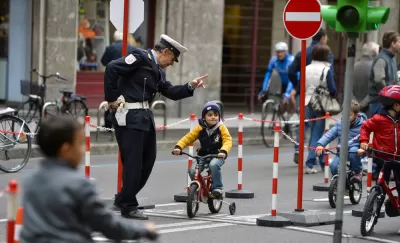
According to a new study by the University of South Florida’s Center for Urban Transportation Research reveals that cyclists were compliant with the law between 87 and 88 percent of the time, while drivers were compliant 85 percent of the time. The study, commissioned by the Florida Department of Transportation, was a "naturalistic behavior study," which outfitted 100 cyclists and their bikes with sensors and cameras, then monitored and tabulated their behavior.
Among the recommendations of the study are through lanes, reflective bike lane markings, better roadway lighten, and generally speaking, improved separation of cars and bikes to reduce conflict and improve safety.
Read the full story: Cyclists Are More Law-Abiding Than Drivers
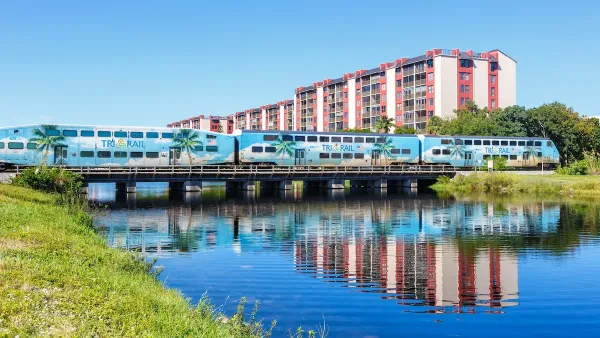
Florida’s Successful Commuter Rail Could Cease Operations in Two Years
After FDOT abruptly decreased its annual subsidy of Tri-Rail from $42 million to $15 million in July, the 80-mile rail line announced that without additional funding, it could cease operations by July 2027.
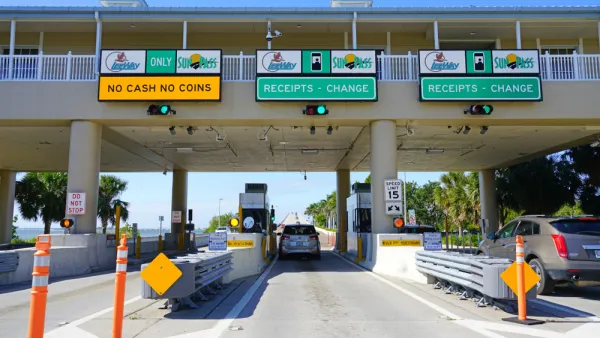
Florida to Provide Toll Relief for Frequent Commuters
It will be cheaper to drive around Florida, starting January 1.
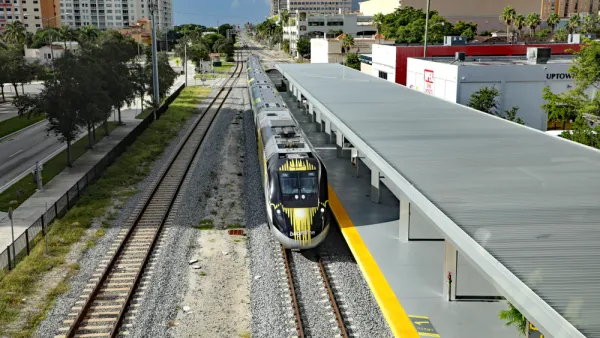
Deadline for Brightline Plan Comes With Strings Attached
Officials from Brightline recently signed an agreement that dictates terms for the study of an extension of the private rail system between Orlando and Tampa.

Planetizen Federal Action Tracker
A weekly monitor of how Trump’s orders and actions are impacting planners and planning in America.

California plans to bury El Niño’s downpour
If the state plays its cards right, it may be able to store a billion acre-feet of El Niño’s water in aquifers.

Desperate measures: Advocates weigh draining Lake Powell to fill Colorado River
Draining the reservoir could reduce evaporation losses by a couple hundred thousand acre-feet.

Mamdani’s pied-à-terre tax survives legal challenge
A panel of judges found that the plaintiffs failed to demonstrate injury as a result of New York City's implementation of the tax.

Eastern Nebraska is running out of electricity
Data centers and electrification are straining eastern Nebraska’s grid, throttling economic development.

Seattle passes record-breaking transit services expansion
Proposition 1 will double the city’s transit tax to add 95,000 more bus trips and preserve 180,000 bus trips annually.

FREE Course: Walkable City 1: Why Walkability?
After describing his path towards focusing on walkability as the essence of good planning, Jeff Speck marches through his five principal reasons for making more walkable places.
Reinventing Malls: Planning Alchemy—Turning Gray Fields Into Gold
The course focuses on the opportunities and imperatives that shape reinvention of mall sites.

City of Rosemead
Rutgers University, Edward J. Bloustein School of Planning and Public Policy
One Hundred Miles
Hunter College, City University of New York (CUNY)
The Architects Foundation
University of Cincinnati Online
City of Cambridge
Montrose County
The Pocatello Development Authority