A short and simple "explainer" post makes sense of why there seems to be so little ground on affordable housing issues in expensive urban areas.


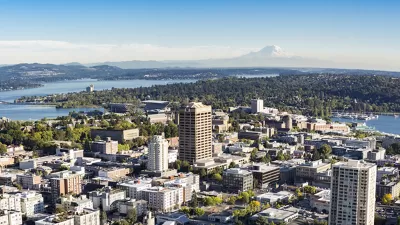
Mathew Yglesias explains the affordable housing problem in urban areas in the United States by calling out two definitions of "affordable." Both are "things that a reasonable person could be interested in," writes Yglesias:
- In one usage, the goal of improving affordability is to make it possible for more people to share in the economic dynamism of a growing, high-income city like Seattle.
- In the other usage, the goal of improving affordability is to reduce (or slow the rise of) average rents in an economically dynamic, high-income city like Seattle.
Because these two definitions are so different, different policies are required to further the goals desired in each case. Yglesias points out the shortcomings of both approaches, and suggests that the best option might be to pursue both.
Read the full story: What “affordable housing” really means
Feds Cap Rent Raises on Subsidized Housing
Owners of affordable housing developments that take advantage of federal tax incentives will be barred from raising rents more than 10 percent per year.
New York Residents Support Affordable Housing, Survey Says
Contrary to the dominant narrative about the negative perceptions of affordable housing projects among the public, a recent survey reveals widespread support for affordable housing in the New York-New Jersey-Connecticut metropolitan region.
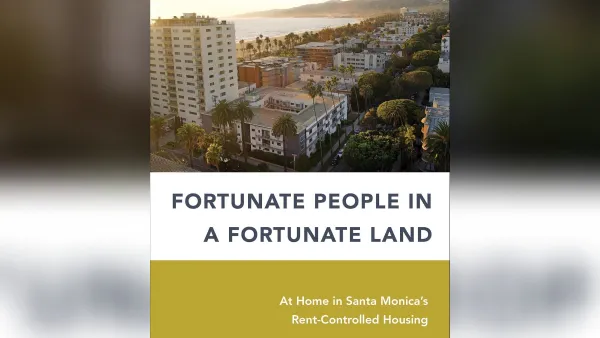
A masterful, human-centered defense of rent control
Book Review: "Fortunate People in a Fortunate Land" offers a human look at how rent control is more than just numbers and data in a spreadsheet.

Planetizen Federal Action Tracker
A weekly monitor of how Trump’s orders and actions are impacting planners and planning in America.

California plans to bury El Niño’s downpour
If the state plays its cards right, it may be able to store a billion acre-feet of El Niño’s water in aquifers.

Desperate measures: Advocates weigh draining Lake Powell to fill Colorado River
Draining the reservoir could reduce evaporation losses by a couple hundred thousand acre-feet.

Mamdani’s pied-à-terre tax survives legal challenge
A panel of judges found that the plaintiffs failed to demonstrate injury as a result of New York City's implementation of the tax.

Eastern Nebraska is running out of electricity
Data centers and electrification are straining eastern Nebraska’s grid, throttling economic development.

Seattle passes record-breaking transit services expansion
Proposition 1 will double the city’s transit tax to add 95,000 more bus trips and preserve 180,000 bus trips annually.

FREE Course: Walkable City 1: Why Walkability?
After describing his path towards focusing on walkability as the essence of good planning, Jeff Speck marches through his five principal reasons for making more walkable places.
Reinventing Malls: Planning Alchemy—Turning Gray Fields Into Gold
The course focuses on the opportunities and imperatives that shape reinvention of mall sites.

City of Rosemead
Rutgers University, Edward J. Bloustein School of Planning and Public Policy
One Hundred Miles
University of Michigan School for Environment and Sustainability (SEAS)
Hunter College, City University of New York (CUNY)
The Architects Foundation
City of Cambridge
Montrose County
The Pocatello Development Authority