The Denveright planning process kicked off in Spring 2016 with a goal to complete four citywide plans on the subjects of land use, mobility, parks, and recreational resources.


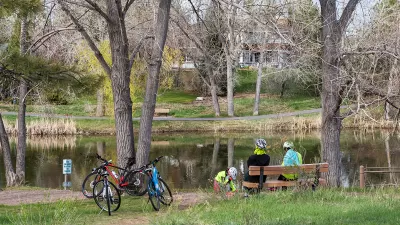
The city of Denver is making progress on its Denveright planning process—a four-part, multi-year planning process that sets a citywide vision for the quickly growing city.
Denveright recently released the first of four expected plans—the "Denver Moves: Pedestrians and Trails" plan. According to an article by Jon Murray, the Denver Moves plan "prioritizes projects to fill gaps in sidewalks across the city that could cost $800 million to $1.4 billion, with the higher figure also including the retrofitting of narrow sidewalks that don’t meet city standards. Add to that $400 million that the plan identifies in projects to complete the city’s trail network."
The plan admits that funding and implementation of these ambitious goals will pose significant challenges. Similar challenges are expected for the three plans forthcoming from Denveright: the Denver Parks and Recreation Game Plan, the Blueprint Denver master plan for land use and transportation, and the Denver Moves: Transit plan.
FULL STORY: Denver’s wishlist of sidewalk and trail projects would cost at least $1.2 billion

What Denver's Big 2040 Comprehensive Plan Means for 2019
Important distinctions about the difference between a comprehensive plan and zoning code changes, as well as details of the form-based influences of the new Denveright 2040 plan are reported here.
Analysis: Denver's 20-Year Vision for Not-Quite-Complete Streets
The Denveright plan puts pedestrians first, but could do more for public transportation and bikes, says a critique from Streetsblog Denver.
The Denveright Plan Charts a 20-Year Vision
The largest planning process in Denver's history has already completed two years of community engagement and planning work.

Planetizen Federal Action Tracker
A weekly monitor of how Trump’s orders and actions are impacting planners and planning in America.

The state-sanctioned urbicide of Austin
People don’t kill cities. Freeways do.

US to reduce Colorado River water deliveries to Mexico
A new Colorado Treaty amendment reduces Mexico’s Colorado River water allocation by 250,000 acre feet.

5 New England states march closer to 800 megawatt wind energy project
Securing federal approval for the project may be complicated under the Trump administration, which has historically been hostile towards domestic wind power.

Baltimore to break ground on $50 million Transit Priority Project
The project will bring faster bus trips, safer streets and better bike connections to Baltimore.

Airbnb launches $250 million 'last-dollar financing' housing accelerator, makes first investment in Austin
The company will put $6.4 million towards affordable housing development in Texas’ capital.

FREE Course: Walkable City 1: Why Walkability?
After describing his path towards focusing on walkability as the essence of good planning, Jeff Speck marches through his five principal reasons for making more walkable places.
Reinventing Malls: Planning Alchemy—Turning Gray Fields Into Gold
The course focuses on the opportunities and imperatives that shape reinvention of mall sites.

Eagle County Government
Harvard University Graduate School of Design
Nashville Planning Department
The Architects Foundation
University of Cincinnati Online
The Pocatello Development Authority
The Urban Renewal Agency of the City of Pocatello
Journal of the American Planning Association