The National Building Museum draws attention to the drastic change that has come to the American household. No longer does the nuclear family dominate the housing market, and a new era of housing development must be launched.


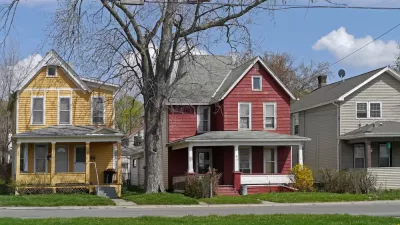
The National Building Museum today opens its new "Making Room: Housing for a Changing America" exhibition, which will run until September 2018.
The website announcing and promoting the exhibition notes the changing complexion of households in the United States. In 1950, nuclear families represented 43 percent of the nation's households, in 1970 it was 40 percent, and now it's 20 percent.
"A groundswell of action by housing entrepreneurs, however, is beginning to expand our options—making room for new models and design solutions," according to the NBM website. "Looking beyond typical choices and layouts, they are offering alternatives at all levels of the market, from micro-units, tiny houses, and accessory apartments to cohousing, co-living, and beyond."
The centerpiece of the "Making Room" exhibition is the Open House: a home designed for the exhibition by architect Pierluigi Colombo. "The Open House features a hyper-efficient layout, movable walls, and multifunctional furniture, allowing the space to meet the needs of a variety of today’s growing but underserved households," according to the website.
FULL STORY: Making Room: Housing for a Changing America

Five Key Statistics for Understanding Millennial Households
There has been a lot of speculation about the motivations of Millennials as they enter the workforce and the real estate market. The Pew Research Center starts with the facts.

More Young Americans Living With Their Parents Than Any Year Since 1940
The highest share of young Americans living with their parents hit a record high of 40.9 percent in 1940. In 2016, the share falls just short of that figure, at 40 percent.
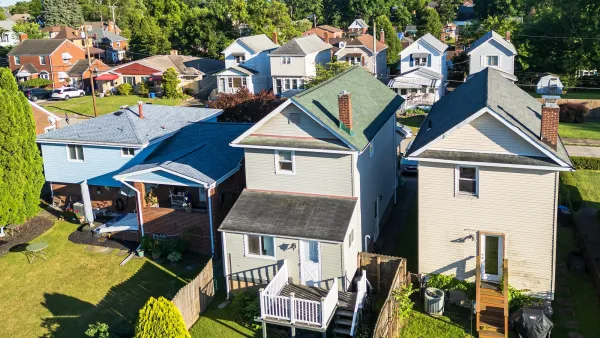
Pittsburgh Median Home Price is Lowest in the US at $250K
After the collapse of the U.S. steel industry, the city was left with a glut of affordable homes.

The state-sanctioned urbicide of Austin
People don’t kill cities. Freeways do.

US to reduce Colorado River water deliveries to Mexico
A new Colorado Treaty amendment reduces Mexico’s Colorado River water allocation by 250,000 acre feet.

New Jersey’s second-largest city bans standalone data centers
Jersey City will continue to allow co-location facilities, such as those meant for research institutions that store their own data.

Amtrak not solely to blame for New Jersey commuter rail's unreliability, report finds
A new study from the Garden State Initiative found that NJ Transit’s budget grew 20% across a 4 year period, but reliability declined significantly over the same period.

EPA erases limits on planet-warming pollution from power plants
Under Monday’s plan, power plants would still have some limits on how much mercury, arsenic and other contaminants they can emit.

Phoenix announces new on-demand transit service, more frequent RAPID buses
Both new services will launch in October, and are part of Phoenix's Project Effective Access Solutions for Easing Congestion.

FREE Course: Walkable City 1: Why Walkability?
After describing his path towards focusing on walkability as the essence of good planning, Jeff Speck marches through his five principal reasons for making more walkable places.
Reinventing Malls: Planning Alchemy—Turning Gray Fields Into Gold
The course focuses on the opportunities and imperatives that shape reinvention of mall sites.

Eagle County Government
Harvard University Graduate School of Design
Nashville Planning Department
The Architects Foundation
University of Cincinnati Online
The Pocatello Development Authority
The Urban Renewal Agency of the City of Pocatello
Journal of the American Planning Association